
Anonymous crypto casinos in Australia: where the no-ID line actually sits in 2026
 Available in AU

No-ID play in Australia, and where the line actually sits
You can open an account at a crypto casino with nothing but an email address, fund it from a wallet, spin pokies for a month and cash out to that same wallet without a single document changing hands. That part is true, and it works today from Australia. What does not exist is a site that will never ask. Anonymity at a crypto casino is not a switch the operator flicked on. It is a threshold, and every threshold has a number behind it.
That distinction is where most advice on this topic falls apart. A page tells you a brand is “no KYC,” you deposit on that basis, you have a good night on a high-volatility slot, and the verification request lands on the withdrawal that finally mattered. Nothing was misrepresented, exactly. The site was verification-free right up to the point where you stopped being a rounding error.
So the useful question is not which casinos are anonymous. It is where each one draws its line, what happens when you cross it, and — the part nobody covers — which link in your own money chain already has your legal name attached before the casino gets a look in. An Australian playing with Bitcoin bought on a local exchange has already handed over a passport. Just not to the casino.
Delayed, threshold or discretionary — the only three models that exist
Strip the marketing off and there are three verification models in this market. Delayed means documents before your first withdrawal — you play unverified, you cash out verified. 7Bit works this way, and so does BC.Game under its 2026 policy, which is notable given the brand spent years as a poster child for the opposite. Threshold means a published or observed number below which nobody asks: Cloudbet at A$2,200 a day, BC.Game at €10,000 a month, mBit at 1 BTC equivalent written into its terms. Discretionary means no number at all, checks firing on pattern rather than amount — BitStarz for crypto players, and a handful of smaller books.
Across brands that market themselves as verification-free, the documented trigger points bunch tightly between roughly $2,000 and $5,000 in daily or cumulative withdrawals. That is not coincidence or copycat pricing. It tracks the anti-money-laundering conditions that Curaçao and Anjouan attach to a licence, which is why the numbers converge even at sites with nothing else in common. The honest translation of “no KYC” in this market: no KYC until you look like a reporting obligation.
The three numbers that decide how anonymous your account is
Trigger height is the obvious one, and the least interesting. A site with a A$2,200 daily ceiling is more useful to a A$200-a-week player than a site with a A$10,000 monthly ceiling and a mandatory check on the first cashout.
Trigger type matters more, and almost nobody spells it out. A per-day cap resets every morning. A cumulative cap does not — every withdrawal you make walks you closer to a wall you cannot walk back from. A lifetime cap is worse again. Cloudbet is the clean example of why this matters: the widely quoted A$2,200 is a daily withdrawal allowance, but the same figure is also its total lifetime deposit ceiling for an unverified account. One resets forever, one never does, and the pages copying that number around treat them as the same fact.
Then there is the risk-flag list, which operates underneath every threshold at every site tracked here. A VPN exit node that disagrees with your stated address. Coins arriving with a mixer in their recent history. Money in and straight back out with barely any wagering between, which is textbook layering. Two accounts from one household. A timezone that does not match the profile. None of these care what you withdrew. They fire at A$50.
Are no KYC crypto casinos really anonymous?
No. They are anonymous to the casino, up to a threshold, which is a much narrower claim. Blockchain transactions are permanently public, Australian exchanges hold your verified identity by law, and the operator still logs your deposit address, withdrawal address, play pattern, IP and timezone from the first session onward.

The crypto casinos that actually take Australian players
Before any threshold comparison is worth reading, one filter has to run first: will the site accept an Australian at all. It is a boring question and it eliminates most of the field. Four of the biggest names in no-ID crypto gambling — including the brand sitting at number one on the most thorough competing guide to this exact topic — name Australia as a restricted jurisdiction in their own terms. More on those below, because you have probably already been pointed at them.
What follows is the set that takes Australian signups, ordered by how well each one actually answers the question in the heading. The last entry is on the list to be argued with.
| Site | Takes Australians | Verification trigger (and type) | Coins | Licence and licensee | Payout speed |
|---|---|---|---|---|---|
| BitStarz | Yes | Discretionary — crypto play needs no documents as standard; fiat play triggers collection | 9 incl. BTC, ETH, LTC, USDT; XMR via converter | Curaçao, historically Direx N.V. | ~10 min, 0% fee, no periodic cap |
| mBit | Yes | Above 1 BTC equivalent per payout (ToS 9.3); caps 3 BTC/week, 10 BTC/month | 9: BTC, ETH, LTC, DOGE, USDT, XRP, TRX, BNB, ADA | Curaçao GCB OGL/2024/1307/0748, Scores55 Tech B.V. | 0–24 hours, no platform fee |
| Mirax | Yes | No-KYC on most crypto withdrawals; checks reported after significant wins | 10 incl. BTC, BCH, ETH, LTC, DOGE, USDT, XRP, ADA | Curaçao, Hollycorn N.V. | Crypto stated instant; reports of multi-day holds |
| CoinCasino | Yes | Soft checks commonly cited above ~€2,000 in withdrawals, not stated in terms | 15–23 depending on cashier | Dual Anjouan and Curaçao, Igloo Ventures SRL | Median under 30 min including review |
| BetPanda | Yes | Reported ~2,000 USDT cumulative; documents by email, 24–72h review | ~13 incl. BTC, ETH, USDT, LTC, DOGE, SOL | None — Costa Rica business registration only, Star Bright Media S.R.L. | Lightning 8–47 seconds once approved |
| Vave | Yes | Reported ~€2,000 cumulative; terms allow checks before any payout, 14-day window | 9 incl. BTC, ETH, USDT, LTC, DOGE | Curaçao per most sources, one report of a Costa Rica shift | Minutes once approved; limits split by VIP tier |
| 7Bit Casino | Yes | Before the first withdrawal — ID, proof of address, payment screenshot | 6 plus AUD | Curaçao Gaming Authority, Scores55 Tech B.V. | Crypto within hours; fiat slower than advertised |
| Cloudbet | No — restricted | A$2,200/day withdrawals and A$2,200 lifetime deposits at email-only tier | 40+ | Curaçao, cited as 8048/JAZ | ~24 hours |
| Stake | No — restricted | Level 1 typed details mandatory before any withdrawal; documents ~$2,000–$10,000 cumulative | 20+ | Curaçao; separate Danish licence, no crypto | Minutes once approved |
| BC.Game | No — restricted | Before first withdrawal (2026 policy); €10,000/month unverified, €5,000 if balance exceeds 10× deposits | 100+ incl. native XMR | Anjouan, disputed, no public register | Around 24 hours |
| Jackbit | No — restricted | Discretionary under a sole-discretion clause; estimated near 2 BTC lifetime | 9, no SOL | Curaçao #1668/JAZ, Ryker B.V. | 6 min BTC measured, 1–2 min USDT-TRC20 |
BitStarz — no documents as standard, if you play in crypto
Running since 2014, which in this corner of the market is close to geological. BitStarz holds a Curaçao licence, was historically associated with Direx N.V., and is a pure casino with no sportsbook attached — around 6,300 titles including its own Originals. Australia does not appear on its published restricted list, and that list is not a short one: it names better than sixty jurisdictions, the United States, United Kingdom, France, Netherlands, Spain, Poland, Portugal, Hungary and Curaçao itself among them. Getting left off a list that long is a meaningful signal.
The reason it leads here is a sentence in the operator’s own help material rather than any threshold: play in cryptocurrency and you will not be asked for documents as standard, with the right reserved for suspected fraud or suspicious behaviour. Play in euros and the calculus changes, because fiat play brings Curaçao-mandated document collection in certain cases. So the lever at BitStarz is which currency you fund with, not how much you move — a genuinely different model from everything else here, and a more comfortable one for a player who intends to stay under the radar by habit rather than by arithmetic.
Payouts land in roughly ten minutes at zero fees with no weekly or monthly cap, which is the strongest combination in this set. Trustpilot sits at 4.4 across about five thousand reviews. Two things to file away: the VPN prohibition is enforced, and if a jackpot surfaces the fact that you were playing from a restricted country, the winnings go — so this only works if you are genuinely in Australia and not tunnelling in from somewhere else. Also the “no-deposit” spins cap out at $100 in winnings, dormant accounts pick up a $5 monthly fee after six months, and large wins can be paid in monthly instalments rather than one hit.
mBit — the 1 BTC line, written down
Also live since 2014, and one of the few sites here where the threshold is a term of service rather than a rumour. mBit is operated by Scores55 Tech B.V., registration 162990, Willemstad, under Curaçao Gaming Control Board licence OGL/2024/1307/0748 — the direct-licence regime introduced in 2024 rather than the old master-and-sub-licence arrangement most Curaçao brands still sit on. That is a dull distinction that happens to matter, because the newer structure puts the operator in a direct relationship with the regulator instead of renting compliance from a middleman.
Clause 9.3 provides for extra verification on payouts above 1 BTC equivalent, with the right reserved for smaller sums. Withdrawals cap at 3 BTC a week and 10 BTC a month. Crypto-only, nine coins, around 8,800 games from some 51 studios including Pragmatic Play, Evolution, Play’n GO, Nolimit City and Yggdrasil — and it prints theoretical return on the game thumbnails, which almost nobody does and which tells you something about how the operator expects to be judged. Tracked volume runs near $4.2 million a month across roughly 22,000 transactions at a $191 average deposit, so this is a mid-sized book, not a boutique.
The independent scoring is the best in this set: Casino.Guru rates safety 9.2 out of 10 with zero black points, and AskGamblers logs 24 complaints with 24 resolved at about a day’s average response. Against that, mBit halted all withdrawals for roughly five days in July 2025 citing technical maintenance, the terms allow voiding balances on accounts dormant for under four years, and the welcome package needs reading twice — 40x on the bonus, slots only while it is active, and a 28 USDT maximum bet that voids the lot if you forget it. One further fact belongs here rather than buried: the licensee group historically behind mBit has an Australian regulatory warning against it, which is covered further down.
Mirax — an AUD cashier and a no-KYC crypto exit on the same account
Launched June 2022 on the SoftSwiss platform under Hollycorn N.V., the same group behind Lucky Elf, on a Curaçao licence with games certified by iTech Labs. Around 3,600 titles from better than 99 studios — NetEnt, Microgaming, Play’n GO, Pragmatic Play, Nolimit City, BGaming, Evolution — of which roughly 3,000 are pokies, plus 100-odd live tables running Crazy Time and Monopoly Live. Ten coins, crypto withdrawals from the equivalent of A$20, and a stated no-verification policy on most crypto cashouts.
Mirax earns its place because it demonstrates the article’s central point on a single account. Fund it with Neosurf or a card in Australian dollars and you are in a fully identified banking chain; fund and withdraw in Litecoin and you are in a pseudonymous one. Same operator, same terms, two completely different privacy profiles depending only on which cashier button you press. The fiat side is real: Visa and Mastercard from A$20 to A$4,000, Neosurf from A$10, CashtoCode and Google Pay from A$20, with Australian dollar bank withdrawals from A$200 and a BSB required. Note that the public payments page oversells this — PayID, Skrill, Neteller, MiFinity and MuchBetter are displayed but are not actually offered to Australian dollar accounts.
The cautions are specific. Casino.Guru rates safety 8.5 but flags an unfair clause permitting confiscation of winnings for “low-risk play,” which is a live risk if you are clearing a bonus with even-money hedges. AskGamblers shows 8.1 across sixteen reviews with a two-day response and eight-day resolution. Trustpilot sits near 3.5, and the recurring complaint is that “instant” crypto payouts can run to days, alongside a smaller but more serious theme of accounts locked pending verification specifically after a significant win. The three-day bonus expiry and 45x wagering on free-spin winnings are the kind of terms that make the “bonus” less of a present than it looks on the banner.
CoinCasino — two licences and the fastest median payout here
Crypto-first, operated by Igloo Ventures SRL, and the only site in this group holding two licences: Anjouan and Curaçao together. Sources disagree on when it launched — one says 2021, another 2023 — and rather than pick the flattering one, take the disagreement as the finding. A brand whose founding date is contested in public records is a brand with thin documentation, whatever the licence count. Around 3,000 games from 71 studios, somewhere between 15 and 23 coins depending on which cashier you land on, zero transaction fees, and play available through Telegram.
The number that recommends it: a median crypto withdrawal clearing in under thirty minutes including compliance review, which is the fastest end-to-end turnaround in this set once you account for approval rather than just blockchain time. Daily caps sit around A$10,000 for standard accounts and A$25,000 for the VIP tier. Verification is commonly cited as kicking in above roughly €2,000 in withdrawals, though that figure appears nowhere in the terms, so treat it as observed behaviour rather than a promise you can hold anyone to.
Two catches, both real. The welcome package carries 60x wagering, the harshest here by a distance, which makes the headline figure closer to decoration than value. And there is a documented pattern of verification loops — documents submitted, rejected on quality grounds, resubmitted, rejected again — which stalls payouts without ever formally refusing them. That is a specific failure mode worth knowing before a balance you care about is sitting behind it.
BetPanda — payouts in seconds, and nobody to complain to
The fastest thing in this research, and the least protected. BetPanda launched around 2023, is listed in registration records as Star Bright Media S.R.L. in Costa Rica, and runs a crypto-only casino and sportsbook on one wallet with roughly thirteen coins. Bitcoin Lightning withdrawals were measured by independent testers at eight to forty-seven seconds, with the operator framing it as seconds to about ten minutes once approved. Minimum cashout sits near $10, signup is an email and a password, and the terms tolerate a VPN.
The licence line needs saying without softening: there isn’t one. A Costa Rica registration is a business permit, not a gaming licence, and there is no regulator standing behind it to mediate a dispute. If a balance is frozen here, your options are the operator’s support queue and a public complaint, in that order, and then nothing. Casino.Guru rates safety 5.4, below average. Trustpilot sits around 2.3. The recurring pattern in those complaints is the one this whole page is about: players who deposited, played freely, started winning, and only then met a verification request, sometimes with the balance held pending a review of “suspicious betting behaviour.”
The reported trigger is around 2,000 USDT cumulative, with documents requested by email and a 24-to-72-hour review. Caps are roughly $5,000 a day, $15,000 a week and $45,000 a month on paper, but individual accounts have reported daily limits as tight as $300, and Lightning payouts are capped near 0.05 BTC per transaction. Which describes the honest use case precisely: small, frequent cashouts on a bankroll you have made peace with losing. The provably fair Originals — Dice, Crash, Plinho-style drop games, Mines — do publish verifiable seed pairs, so the games themselves can be checked even where the operator cannot.
Vave — the rare site that permits a VPN in writing
Launched 2022, casino and sportsbook sharing a single crypto balance, nine coins, low coin-dependent minimums, and a large slots library with a full live-dealer section. The licence position is genuinely unclear: most sources say Curaçao, at least one credible review reports the licence shifted to a Costa Rica registration. That ambiguity is the finding, and the correct instruction to a reader is to open the site footer and read the current licence yourself before depositing rather than trusting any third-party summary — this one included.
What earns Vave a place is a clause most of its competitors use as a trapdoor. VPN use is explicitly permitted in its terms. Everywhere else in this market, the VPN clause is the standard mechanism for voiding a balance after the fact: play for months, win, and discover at verification that a connection choice you made in week one has retroactively broken the agreement. Vave taking that weapon off the table is worth more to a privacy-minded player than a slightly higher threshold would be.
Reported trigger sits around €2,000 cumulative withdrawals, and the terms allow identity checks before any payout with a fourteen-day window to complete them — a fortnight your balance spends waiting if you are slow finding a utility bill. Approved payouts clear in minutes. Withdrawal limits scale with VIP tier, meaning a large single win gets split into instalments rather than paid at once. Against all that, it is a 2022 brand with a short track record, and one independent no-KYC-focused review put it at 3.8 out of 5 — respectable, not remarkable.
7Bit Casino — the one on every no-KYC list that checks you before your first cashout
Trading since 2014, pokies-led, with an Australian dollar cashier alongside six cryptocurrencies and a A$20 minimum deposit. Operated by Scores55 Tech B.V. under a Curaçao Gaming Authority licence — the same licensee entity now behind mBit, which is a portfolio concentration worth noticing if you were planning to spread risk across both. Withdrawal caps run A$4,000 per transaction, A$20,000 a week and A$80,000 a month, and crypto payouts clear within hours while the fiat side runs slower than the marketing suggests.
It is here to be argued with. 7Bit appears on essentially every “no verification casino Australia” list in circulation, and it requires verification before your first withdrawal — photo ID, proof of address and a screenshot of your payment method. Not on a threshold. Not after a big win. Before the first dollar leaves. By any working definition that is a delayed-KYC casino, not an anonymous one, and a threshold map that quietly left it off to keep the list tidy would be less useful to you than one that names it and explains the misfiling.
None of which makes it a bad site. Eleven years of continuous trading, a large pokies catalogue aimed squarely at Australian tastes, and strong ratings in Australian-facing directories. If you don’t mind verifying once and want fast crypto payouts afterward, it is a perfectly sensible choice — it just isn’t the choice you came here for. The reason it matters to the rest of this list is calibration: if a guide tells you 7Bit is anonymous, every other claim on that guide needs checking too.
How much can I withdraw from a crypto casino without ID?
Depends entirely on the site and the type of limit. Cloudbet allows A$2,200 a day but only A$2,200 in lifetime deposits. BC.Game permits €10,000 a month, halved to €5,000 once your balance exceeds ten times your deposits. Across the market, document requests land between roughly $2,000 and $5,000.

The big names every other list recommends — and quietly blocks you
Here is the thing that should reorganise how you read every other guide on this subject. The four brands most consistently recommended to Australians looking for no-ID crypto gambling all name Australia as a restricted jurisdiction in their own published terms. Not “discouraged.” Not “grey area.” Restricted, in the document you agree to at signup.
They still deserve breakdowns, for two reasons. You have almost certainly been sent to one of them already, and their verification models are the best-documented in the industry — which makes them the clearest teaching material even when you cannot use them.
Cloudbet — ranked first for Aussies, restricted to Aussies in clause 7.1.3
The most thorough competing guide to this exact query puts Cloudbet at number one for Australian players, leads with its A$2,200 threshold, and builds its whole recommendation around it. Cloudbet’s terms, clause 7.1.3, list Australia among roughly twenty countries and territories where you may not be located while using the site — alongside Germany, the United Kingdom, Spain, the United States, Austria, Belgium, France, the Netherlands, Malta and Singapore. Both of those things are currently true at the same time, which tells you how much of this market’s advice is assembled from other people’s pages rather than from the source.
Which is a shame, because the verification structure is genuinely the clearest anywhere. Three levels. Level 1 is email only: A$2,200 in lifetime deposits and A$2,200 a day in withdrawals, no documents at all. Level 2 adds a phone number, unlocks your full profile — and raises neither limit, which makes it a convenience step dressed up as progress. Level 3 is full identification: government photo ID, proof of address dated within three to six months, and a selfie holding the document or a note with the date, taking a few days to clear and removing every cap.
The triggers are equally explicit: exceeding A$2,200 in withdrawals in a day, hitting the A$2,200 lifetime deposit ceiling, cycling deposits and withdrawals rapidly, suspected linked accounts, or unusual login patterns. Cloudbet has taken crypto bets since 2013 with no reported loss of customer funds to a breach, carries 40-plus coins, and is a well-run book by the standards of the category. It just isn’t open to you, and if you get in anyway, the jurisdiction breach surfaces at exactly the moment a large win forces verification.
Stake — the biggest, and not for this postcode
Roughly $2.12 billion in monthly deposit volume makes Stake the largest crypto casino in the world, and it restricts Australia alongside the United States, United Kingdom, Netherlands, France and Curaçao. It picked up a five-year Danish licence in March 2026, but that runs through a separate entity which does not take cryptocurrency, so it changes nothing for an Australian.
The model is worth understanding because it is where the industry is heading. Four levels. Level 1 is typed details only — full legal name, date of birth, country, residential address, keyed into a form in about a minute with no document upload — and it is mandatory before any withdrawal. That is what people mean when they call Stake no-KYC, and it is a defensible use of the phrase, but it is not anonymity: they have your name and address, just not a scan. Level 2 is government ID plus a liveness selfie. Level 3 is proof of address dated within three months. Level 4 is source of funds — payslips, tax returns, exchange statements.
Stake publishes no threshold, deliberately, and its reasoning is sound: a fixed public number is a map for anyone laundering money, so the logic stays risk-based and opaque. Anyone quoting you an official Stake limit is inventing it. Community reports across 2024 to mid-2026 put the document-free zone at roughly $2,000 to $10,000 cumulative, with checks landing far earlier on a large single win, on rapid in-and-out cycling, on card-funded deposits through a payment provider, and on any mismatch between typed address, IP and payment country. Standard reviews clear in one to three days. Source-of-funds escalations run days to weeks with the balance locked, which is the scenario worth planning around before it applies to you.
BC.Game — tightened its own gate in 2026
Established 2017, operator listed as Twocent Technology Limited, running on an Anjouan licence that is disputed, carries no confirmed number, and has no public register to check it against. It restricts Australia, along with Austria, France, Germany, the Netherlands, Spain, the United Kingdom, the United States, Hungary, Ontario, China, the Comoros and Curaçao. Which is a long list for a site with 7,200-plus games, better than 100 coins and one of the few genuine native Monero cashiers in the business.
BC.Game matters because of the direction it moved. This is the brand that did more than any other to popularise no-ID crypto gambling, and its 2026 policy now requires verification before the first withdrawal. Clause 8.3 permits document requests before any payout and again at any point afterward. Clause 8.6 sets the arithmetic: €10,000 a month for unverified accounts, cut to €5,000 the moment your balance exceeds ten times your deposits. Read that second clause slowly. The better your session went, the lower your anonymous ceiling drops. A punter who turns A$500 into A$6,000 has just had their limit halved by the win itself.
The documented failure case is instructive. In January 2025 a 7,800 USDT withdrawal was frozen when an automated check flagged the player’s selfie as AI-tampered — a false positive on a genuine photo — and it cleared in two days only after the player escalated publicly on a forum. Enhanced due diligence, when it lands, has been documented running to ten days. So the practical risk at a large site is not that someone steals your money. It is that a machine misreads your face and your balance sits still until a human is embarrassed into looking at it.
Jackbit — the loosest checks in the business, behind a hard geo-block
Launched 2022, operated by Ryker B.V. under Curaçao licence 1668/JAZ, same parent as Bitsler. Seven thousand games, 500 live tables, nine chains covering Bitcoin, Ethereum, both USDT rails, USDC, Litecoin, Dogecoin, Tron, BNB and XRP but no Solana, 100 genuinely wager-free welcome spins, and 30% rakeback credited automatically without an opt-in. Independent testers ran the full cycle twice — signup in 22 seconds, deposit credited in about eight minutes, withdrawal broadcast in six — with no document request at any step. The practical trigger is estimated near 2 BTC in lifetime withdrawals under a sole-discretion clause. Complaint resolution runs about 88% on AskGamblers, Trustpilot better than 4.0 across 900-plus reviews.
It is, on the evidence, the most permissive verification policy in this entire market. And it hard geo-blocks Australia, along with the United States, United Kingdom, France, Netherlands, Spain, Germany and Italy. A VPN may get you past signup, and the anti-money-laundering system will flag the mismatch between your connection and your payout address at withdrawal time — the exact moment you least want scrutiny. Which is the joke this category keeps telling: the site that would genuinely never ask for your passport is the one that will not let you through the door.
Can I use a VPN to access a crypto casino that blocks Australia?
Technically often yes, practically it’s a bad trade. Bypassing a geo-block breaches the terms you agreed to, and the mismatch between your connection and payout address surfaces precisely when a large win forces verification. Operators void balances on that basis, and with no Australian regulator over them, you have no recourse.
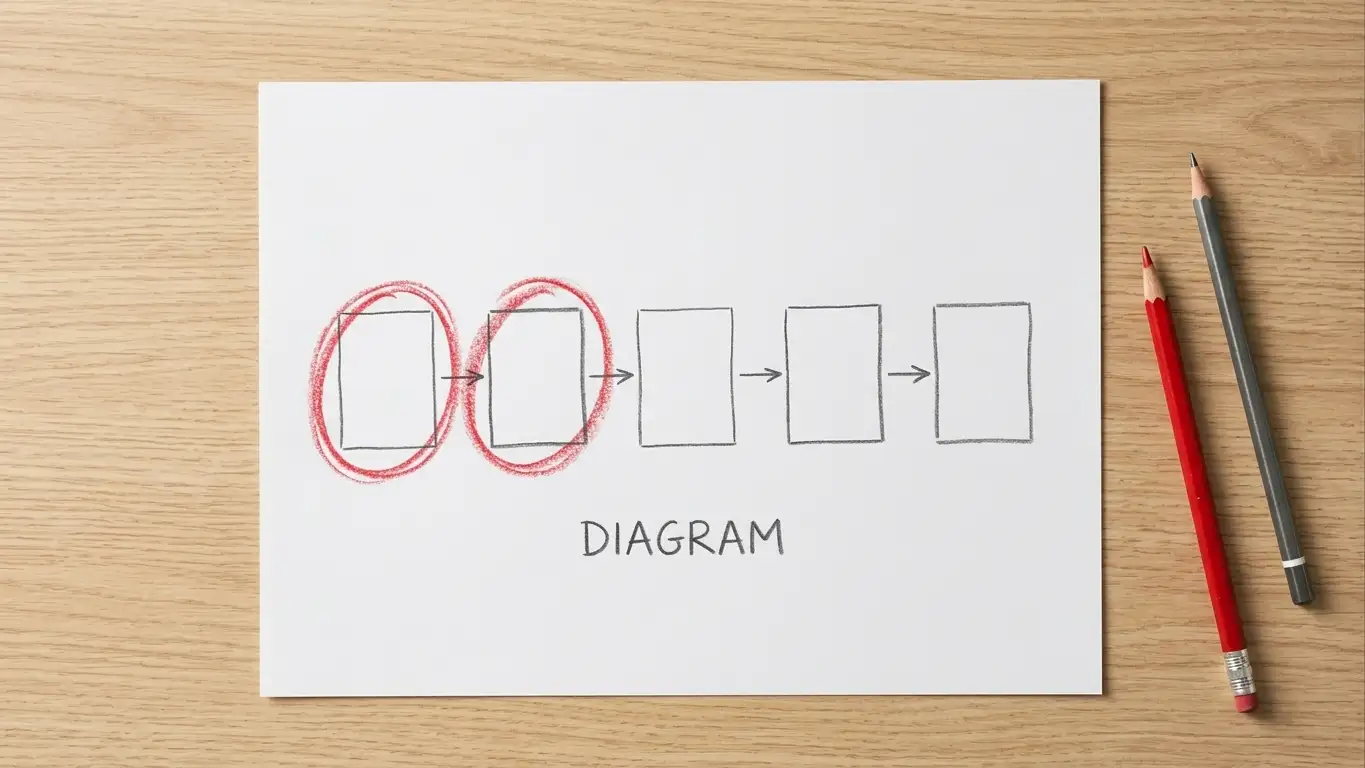
Where your anonymity actually breaks, in order
Every guide on this subject treats the casino’s verification policy as the thing standing between you and exposure. It is the fifth link in a five-link chain, and usually the last one to give.
Work through your own money instead. An Australian funding a crypto casino typically moves value from a bank account to an exchange, from the exchange to a wallet, from the wallet to the casino, and plays over an ordinary domestic connection. Four handoffs. Your legal name is attached at the first one, by law, before a casino has heard of you. Optimising the last link while leaving the first three untouched is the analytical error this entire category makes.
Link one: your bank already flagged the exchange
The Commonwealth Bank publishes a hard rule on this, and it is worth quoting exactly rather than paraphrasing, because the number is the point:
> We may limit the amount you can pay to certain accounts or merchants, for example those we believe to be associated with cryptocurrency exchanges, to no more than $10,000 in total from all your accounts each calendar month. We’ll continue to decline and hold certain payments to cryptocurrency exchanges. — Commonwealth Bank, Changes to cryptocurrency and other payments
Read that against the casino thresholds in the table above. A$10,000 a month, across every account you hold with them, with certain payments held for up to 24 hours regardless of amount. For a CommBank customer, the binding constraint on how much value they can move toward a crypto casino is not any casino’s verification trigger. It is their own bank, and it sits below several of the limits being marketed to them as an anonymity ceiling. The bank’s stated reason is scam prevention rather than gambling — the National Anti-Scam Centre recorded $945 million lost to investment scams in 2024 — but the effect on you is identical either way.
Nor is CommBank alone in adding friction. Westpac has blocked transfers to certain exchanges outright, including Binance. HSBC declines crypto payments. Macquarie stopped new transfers in 2024. Withdrawals coming back the other way, from an exchange to your account, are generally untouched — the restriction is one-directional. So the trace this leaves is a bank statement naming an exchange, held by an institution with a seven-year record-keeping habit, and an exchange account holding verified identity because Australian law requires it.
Link two: from 1 July 2026 the exchange has to pass your name along
This is the change nobody covering this topic has mentioned, and it landed weeks ago. The Anti-Money Laundering and Counter-Terrorism Financing Amendment Act 2024 passed Parliament on 29 November 2024 and received Royal Assent on 10 December 2024. New obligations for virtual asset service providers commenced on 31 March 2026. And the travel rule — the Financial Action Task Force standard that Australia has now adopted — commenced on 1 July 2026.
In practice that means an Australian exchange sending a transfer must collect, hold and transmit information identifying the originator and the beneficiary: name, account or transaction reference, and either address, national identity number, customer identification number, or date and place of birth. Before crediting an incoming transfer, it must collect beneficiary information too. The Act also replaced the narrower “digital currency” definition with the broader FATF-aligned “virtual asset,” and ongoing customer due diligence under the reformed rules became mandatory from 31 March 2026 with no transitional grace period.
The obligation attaches to providing a designated service to a customer in Australia, regardless of where the entity is incorporated, and there is no exemption for offshore providers serving Australians remotely. Operating an unregistered exchange service is a criminal offence under section 76A. What that adds up to for a player: the hop from exchange to personal wallet, which used to be the point where your name fell away, now carries identity data by design. The rails got more talkative in the same year the casinos got more relaxed.
Link three: the wallet hop, and how people collapse it
This is the only genuinely pseudonymous step, and it is fragile in a way that is easy to miss. A self-custody wallet holds no identity. But an address that once received a withdrawal from your verified exchange account is permanently linked to that account on a public ledger, and reusing it to fund a casino joins the two records with a single query. Chain analysis tools do this automatically and cheaply.
Which means the hop only does its job if the address funding the casino has no history pointing back at an identified account. That is achievable and it takes deliberate handling — a fresh receive address, no reuse across contexts, and no mixer in the path, because tumbled coins get flagged at every operator tracked here and turn a privacy measure into a red flag. Monero sidesteps the problem entirely at protocol level, which is covered further down along with the reason that solution is mostly theoretical for Australians.
Links four and five: the casino account and the connection itself
Only now does the casino’s policy matter. From your first session it logs the deposit address, the withdrawal address, the play pattern, the IP and the timezone — none of which requires a document. The threshold governs when it asks you to confirm what it has largely inferred.
The connection is the quiet one. A VPN feels like a privacy measure and functions as a liability at most of these sites, because the terms treat a mismatch between connection and stated location as grounds to void. Vave permitting VPNs in writing is the exception that proves how the rest of the market uses that clause. And the ordering conclusion falls out of all this cleanly: a reader who picks a casino purely on its verification threshold has carefully secured the least exposed link in their chain while leaving the bank statement, the exchange record and the ledger trail exactly as they were. The one route that removes the first two links entirely is a cash voucher, and it comes with its own bill.

What the law actually says about an Australian playing offshore
The legal position here is unusual, widely misreported, and simpler than the hedging in most guides suggests.
The offence belongs to the operator, not to you
The Interactive Gambling Act 2001 makes it illegal to provide certain online gambling services to people in Australia. Online casino games are expressly on the banned list, alongside in-play sports betting, unlicensed sports betting and betting on lottery outcomes. The operative provisions, subsections 15(2A) and 15AA, create offences aimed squarely at the provider. The Act contains no offence directed at an individual player, and there is no record of an Australian being prosecuted for placing a bet at an offshore casino.
So the answer to the question you actually asked: the operator is breaking Australian law by serving you. You are not breaking it by playing. That asymmetry is deliberate and it has held since 2001 through two rounds of amendment.
What follows from it is less comfortable. Your exposure is commercial rather than criminal, and commercial exposure at an unlicensed offshore site is close to total. No Australian regulator supervises the operator. No Australian court will enforce a payout for you in any practical sense. There is no chargeback on a crypto deposit — the transaction is final the moment it confirms. BetStop, the national self-exclusion register, covers Australian-licensed wagering services only, so it does not reach a single site named on this page. Playing is not a crime and losing the balance is not a remedy. Both things are true.
Consider what does exist locally, because the absence is structural rather than an oversight. There is no Australian online casino licence at Commonwealth, state or territory level — not a hard one to obtain, simply nonexistent. Licensed Australian online wagering does exist for sports and racing, and since 11 June 2024 the Interactive Gambling Amendment (Credit and Other Measures) Act 2023 has banned those operators from accepting credit cards, credit-related products and digital currency. The one licensed online gambling category in the country is legally barred from taking crypto at all, and runs full identity verification at registration under state licence conditions. It is the precise opposite of what you are looking for.
What the blocklist is, and what it tells you about a brand
ACMA asks internet providers to block domains it finds in breach of the Act. The 20 August 2026 round added Casea and Crown96, bringing the running total to 1,788 gambling and affiliate marketing sites blocked since the first request in November 2019. More than 230 services have withdrawn from the Australian market since ACMA began enforcing the 2017 rules.
The mechanism is a DNS-level request, not a prosecution, and it is trivially circumvented — which is why treating it as a barrier misses the point. Read it as a signal about the operator instead. A brand that has attracted a blocking request is a brand ACMA has investigated and concluded is serving Australians unlawfully, and that is information about how it handles compliance generally. Note also that the list covers affiliate marketing sites, not just casinos. Some of the pages ranking for this very search are themselves blockable.
The regulator has already warned two of the operators on the lists you’ve been reading
This is the part that should give you pause about the recommendations circulating. ACMA issues formal warnings under section 64A of the Act to operators it finds in breach. Two names on that record are directly relevant here.
Dama N.V. — the licensee group historically behind mBit, and also King Billy, PlayAmo and JooCasino — was found to have contravened subsection 15(2A) by providing a prohibited interactive gambling service to customers physically present in Australia, with a formal warning published in July 2025 in relation to its RocketPlay brand. Hollycorn N.V., which operates Mirax and Lucky Elf, received a formal warning in a November 2025 round covering several Curaçao-based operators, alongside NovaForge, Luster N.V. and Santeda International.
Both of those licensees sit behind brands recommended freely across this market, including in the table further up this page, and none of the guides recommending them mentions the enforcement record. That does not make the brands unusable — an Australian playing at either is committing no offence, as established above. It does mean the regulator has already formed a view about the operator’s compliance posture, and a player weighing whether a site will honour an awkward payout is entitled to weigh that too.
Is it illegal for Australians to play at an anonymous crypto casino?
No. The Interactive Gambling Act 2001 makes it an offence to provide online casino services to people in Australia, and the offence sits with the operator. The Act creates no player offence, and no Australian has been prosecuted for betting at an offshore site. Your risk is losing money with no recourse, not prosecution.
Do I have to pay tax on crypto casino winnings in Australia?
Recreational winnings are not assessable income under ATO Ruling IT 2655, regardless of amount or whether the operator is licensed here. Losses aren’t deductible either. But spending crypto is a disposal, so funding a deposit with appreciated coin is a capital gains event separate from the gambling result.
What changes on 1 January 2027
Parliament passed the Interactive Gambling Amendment (Gambling Reform) Bill 2026 on 19 August 2026, and most of its provisions commence on 1 January 2027. The headline measures target advertising: restrictions across television, radio, online and sports venues, a global opt-out register, limits on direct marketing of inducements to new account holders in their first fourteen days and to customers identified as at risk of harm, and a ban on paying staff or affiliates commission based on customer activity.
Two elements reach further than advertising. BetStop gets strengthened, though its coverage still stops at Australian-licensed wagering. And enforcement against illegal gambling services is being boosted, including powers to take down advertisements and the services themselves — a meaningful escalation from asking providers to block a domain.
The direction is unambiguous: pressure rises on the supply side and on the promotion of offshore play, while the player-side position stays exactly where it has been for a quarter century. Offshore operators are estimated to account for something in the order of 15% of total Australian gambling activity, and nothing in the 2026 package addresses why. It squeezes the channel and leaves the demand alone, which historically produces smaller, less accountable operators rather than fewer of them.

Which coin keeps you unverified longest
The rail you choose changes two things: how long the account stays unverified, and how readable your money is to anyone who cares to look. Those are separate properties and they do not move together.
| Rail | Measured payout time | Privacy property | Where it breaks | Accepted at |
|---|---|---|---|---|
| Bitcoin (BTC) | 6–12 min on-chain; 8–47 sec via Lightning where offered | Pseudonymous, fully transparent ledger | Any address that touched a verified exchange withdrawal | Every site here |
| Litecoin (LTC) | 4–6 min | Pseudonymous, transparent, low fees | Same as BTC; no privacy layer | Every site here |
| Tether (USDT) | 1–2 min on TRC-20; 3–5 min on ERC-20 | Pseudonymous, transparent, value-stable | Same as BTC, plus the issuer can freeze specific addresses | Every site here |
| Ethereum (ETH) | 3–5 min | Pseudonymous, transparent, fee-sensitive | Same as BTC; no advantage over it | Every site here |
| Monero (XMR) | Varies by cashier | Private at protocol level, always on | Not on-chain — at the casino’s verification threshold | Native at 2 of 30 casinos surveyed; converter-only at BitStarz |
| Neosurf voucher | Deposit only, credited 2–15 min | No bank, no exchange, no ledger entry | On the way out — withdrawals cannot return to a voucher | Mirax from A$10, 7Bit, various AU-facing sites |
Bitcoin — the default, and the most readable
Accepted everywhere, which is its whole case. Measured on-chain withdrawals run six to twelve minutes, and where Lightning is offered — BetPanda being the standout — payouts arrive in eight to forty-seven seconds, capped near 0.05 BTC per transaction.
Its privacy properties are the weakest of any rail here, and the reason is structural rather than fixable. The ledger is public and permanent. Every amount, every address, every hop, visible to anyone with a browser and searchable forever. The pseudonymity holds only while no address in your chain has been linked to a verified account, and for an Australian who bought coin on a local exchange, one already has. Bitcoin is an excellent settlement rail and a poor privacy one, and conflating the two is how this market sells the idea of anonymity.
Litecoin — boring, cheap, and boring is the point
Four to six minutes, fees low enough to ignore, and accepted at every site named on this page. Technically it offers nothing Bitcoin doesn’t: same transparent ledger, same pseudonymity, same exposure through the on-ramp.
Its case is behavioural. Risk engines at these operators are watching for patterns that look like laundering, and the profile that sails through is coin in, ordinary play, coin out to the same wallet, in unremarkable amounts on an unremarkable rhythm. Litecoin lets you do that cheaply enough that splitting a A$1,500 cashout into three tranches across a fortnight costs you almost nothing in fees — which is the single most effective legitimate way to stay under a cumulative threshold. Nothing exotic. That’s the appeal.
Tether — steady value, one extra counterparty
The TRC-20 rail is the fastest common route in this market at one to two minutes with negligible fees, against three to five minutes and real cost on ERC-20. Pick the wrong network at deposit time and the funds can be unrecoverable, so this is the one rail where the dropdown deserves actual attention.
Value stability is its real argument, and it matters more than it sounds. If verification lands on your withdrawal and the balance sits for three days pending review, a stablecoin sits still while Bitcoin does whatever Bitcoin does. When the thing you are managing is a delay you didn’t choose, holding value flat is worth more than a marginally faster chain.
Against that, one risk the transparent coins don’t carry: the issuer can freeze balances at specific addresses. You are trusting a company as well as a network. And Tether happens to be the cleanest illustration of the tax point most guides skip entirely. Buy 1,000 USDT at A$1.50 for A$1,500. Deposit it at a casino when the unit price is A$1.60, and you have disposed of A$1,600 of value — a A$100 capital gain, reportable, regardless of whether the session then went well or badly. Small amounts per transfer, real record-keeping obligation.
Ethereum — broad support, no privacy dividend
Three to five minutes, supported in every cashier here, and fee-sensitive in a way that makes small withdrawals annoying when the network is busy. On privacy it offers precisely nothing over Bitcoin: same transparent ledger, same linkage through the exchange, same permanence. If you already hold ETH it works fine. There is no reason to acquire it for this purpose specifically, and no guide should imply otherwise.
Monero — the only coin that actually hides you, and almost nobody takes it
Monero is the genuine article. Every transaction conceals sender, receiver and amount at protocol level, there is no transparent-versus-shielded split as with Zcash, and there is no way to switch the privacy off. It is what people imagine Bitcoin to be.
Which is exactly why you cannot use it. Of thirty crypto casinos in one 2026 survey, two accept native XMR, with a third — BitStarz — taking it only through a converter that swaps to a house balance at deposit, which defeats most of the purpose. A chain that analysis tools cannot read is a compliance liability, so operators drop it to keep their payment monitoring functional. The supply side is no better: Binance delisted Monero in early 2024 and other exchanges followed, making the coin harder for an Australian to buy in the same period it became harder to spend. Several sites still get tagged as Monero casinos in guides — Cloudbet, Stake, FortuneJack — and take no such thing. Of the two genuine native acceptances, one restricts Australia.
And here is the part that matters even if you solve all of that. Monero protects the chain, not the account. A casino’s threshold is an account rule — it counts what you withdrew and looks at how you played, and none of that arithmetic cares which network carried the value. Reach the limit in XMR and you will be asked for a passport exactly as you would in Bitcoin. The private coin buys you a private trail, not an exemption.
Neosurf — the cash voucher that skips two links entirely
The best privacy tool available to an Australian on this page is not a cryptocurrency. Neosurf is a prepaid voucher from Neosurf Cards SAS, a French payment institution regulated by the ACPR, and it works on closed-loop mechanics: pay at a physical counter, receive a receipt carrying a ten-digit PIN loaded with a fixed Australian dollar value, redeem the PIN at the casino cashier. No card. No CVV. No bank link, no wallet, no blockchain.
Look at what that removes from the chain in the earlier section. Link one, the bank statement naming an exchange — gone. Link two, the exchange holding your verified identity and now obliged to transmit it under the travel rule — gone. You walk into a Coles, a 7-Eleven, an Australia Post branch or a newsagent, hand over cash, and walk out with spendable value that nothing connects to you. Coles processes gift-card sales under merchant category code 5947 rather than the gambling code 7995, so the purchase generally clears even where a card-funded gambling transaction would be declined outright.
The bill for that comes in three parts, and it deserves stating plainly rather than buried in a footnote. The retailer commission is steep at small denominations and falls as the value rises: roughly 15% on a A$10 voucher, 7.5% at A$20, 5% at A$30, 4% at A$50, and about 3.5% at A$100. So buy one A$100 voucher rather than five A$20s. Unused vouchers start losing value to dormancy fees after around twelve months, so this is not a store of value. Some casinos add a redemption fee of up to 3%. Crediting takes two to fifteen minutes. And Neosurf sells no PINs online in Australia, so third-party resellers charging 10–20% markups are both expensive and a counterparty risk you don’t need.
Then the structural catch, which is the whole reason this isn’t the universal answer: a voucher is deposit-only. Winnings have to leave by another route — crypto to a wallet, or bank transfer to an identified account — and that exit re-introduces everything the entry avoided. Neosurf gives you a genuinely anonymous way in and no way out. Used deliberately, that is still valuable: it keeps the funding side of your play off every record while you decide how much you care about the withdrawal side. Mirax accepts it from A$10, 7Bit takes it, and it is common across Australian-facing offshore cashiers.
Which cryptocurrency is best for anonymous casino play in Australia?
Monero is the only genuinely private coin, and it’s accepted natively at barely any site that takes Australians. For practical use, Litecoin or USDT on TRC-20 — cheap and fast enough to withdraw in small tranches under a threshold. Privacy comes from how you move value, not which coin carries it.
Can I use Australian dollars at a no KYC crypto casino?
At some, yes. Mirax and 7Bit both run Australian dollar cashiers with cards, Neosurf, CashtoCode and Google Pay. But fiat is where identity re-enters: card deposits link a verified bank, and Australian dollar withdrawals need a BSB. Neosurf bought with cash is the exception that stays anonymous.
Payout speed, caps, and what “instant” is measuring
Every site on this page advertises instant or near-instant crypto withdrawals, and the measured times back most of those claims up. The claims are still misleading, because of two words that appear in the fine print at essentially every operator: once approved.
Approval is where verification lives. Blockchain settlement is fast and largely uninteresting — the network does its job in minutes. What varies by hours or days is how long the operator holds the request before it broadcasts anything. Which means advertised speed and verification trigger are not two features to weigh against each other. They are the same variable measured at two different points, and a site can honestly claim two-minute payouts while a player waits nine days.
Measured times by rail, not advertised ones
Independent testing across these operators produces a consistent ranking once approval is out of the picture. USDT on TRC-20 settles in one to two minutes with negligible network cost. Ethereum and USDC run three to five. Litecoin four to six. On-chain Bitcoin six to twelve, which is the network’s confirmation requirement rather than any operator’s sloth. Bitcoin over Lightning, where offered, arrives in eight to forty-seven seconds — genuinely the fastest money movement in gambling, and capped near 0.05 BTC per transaction, which tells you what it is designed for.
Compare that with what the same brands promise. Nine chains at Jackbit all badged “instant”; a measured six-minute Bitcoin withdrawal against a two-minute USDT one. Neither is dishonest. Both are described by one word that flattens a six-fold difference. If speed genuinely matters to you, the rail choice does more work than the brand choice.
The caps that bite before the threshold does
Verification thresholds get all the attention, and for a lot of players a withdrawal cap will bind first. These vary wildly and rarely appear on landing pages.
mBit caps at 3 BTC a week and 10 BTC a month. BetPanda’s published limits look generous at roughly $5,000 a day, $15,000 a week and $45,000 a month — until you notice individual accounts reporting daily limits as tight as $300, which is a different product entirely. JustCasino runs €4,000 a day, €8,000 a week, €30,000 a month. CoinCasino allows around A$10,000 daily for standard accounts and A$25,000 for VIPs. 7Bit permits A$4,000 per transaction, A$20,000 a week, A$80,000 a month. Cybet’s ceiling is a single $100,000 withdrawal. BC.Game’s unverified monthly cap is €10,000.
Vave’s structure deserves separate mention because it is the one most likely to surprise you: withdrawal limits scale with VIP tier, so a large win gets split into instalments determined by how much you have already wagered there. BitStarz does something similar with very large wins, paying in monthly instalments. Neither is hidden, and neither is what a player picturing a single celebratory payout expects.
When it goes wrong: the selfie, the freeze and the ten-day review
Three documented cases show what failure actually looks like here, and none of them is theft.
A BC.Game player had a 7,800 USDT withdrawal frozen in January 2025 when an automated check flagged their selfie as AI-tampered. The photo was genuine. The system was wrong. It cleared in two days, and only after the player escalated publicly on a forum rather than through the support queue. That is the modern failure mode: not a dishonest operator, a false positive from a machine, with your balance parked until someone is embarrassed into looking.
mBit suspended all withdrawals for roughly five days in July 2025, citing technical maintenance. Whatever the cause, the effect on a player mid-cashout was a working week of silence. And enhanced due diligence — the source-of-funds tier, where you are asked for payslips, tax records or exchange statements — has been documented running to ten days at BC.Game, with Stake’s equivalent escalations taking days to a few weeks with the balance locked throughout.
The pattern across every complaint database is the same and it is worth internalising: verification arrives after the win, not before. Which is precisely when it costs the most, and precisely when a player has the least leverage. Reducing that risk is mostly unglamorous hygiene. Keep one account, never two. Use a consistent self-custody wallet so your trail is boring and explainable. Withdraw in steady tranches rather than one panicked lump at 4am. Keep your own records of exchange purchases and transaction IDs, so a review is one upload instead of three weeks of email. And skip the mixer — tumbled coins get flagged instantly and turn a privacy measure into a compliance file.
What happens if the casino asks for verification and I refuse?
Your withdrawal stops and the balance typically stays frozen indefinitely. Operators are entitled to hold funds pending verification under their terms, and at an offshore site with no Australian regulator, refusing leaves you no escalation path beyond public complaint. Submitting clean documents clears most reviews within 24 to 72 hours.
Why do casinos still ask for KYC later if they advertise no verification?
Because their licence requires it. Curaçao and Anjouan conditions impose anti-money-laundering obligations that kick in at transaction thresholds, so “no KYC” describes onboarding rather than a permanent exemption. Large withdrawals, rapid cycling, big single wins and pattern flags all trigger checks the operator is contractually obliged to run.
Bonuses, no-deposit offers and the verification tripwire
Bonus terms at these sites are more generous than at licensed operators, for the unromantic reason that lower compliance overhead leaves more room to spend on acquisition. Welcome matches run 100% to 200% commonly, occasionally higher across a multi-deposit package: mBit’s three-stage offer reaches 4 BTC plus 325 spins, Mirax spreads four deposits to A$7,000-odd plus spins, CoinCasino headlines up to 1 BTC.
The wagering is where the value goes. Forty times the bonus is the market standard here and roughly the ceiling of reasonable. CoinCasino’s 60x is not. Mirax layers 35x on deposit-plus-bonus with a separate 45x on free-spin winnings and a three-day expiry, which for a casual player is a mathematical near-impossibility dressed as a “gift” — and no casino has ever given away money for the pleasure of it. Max-bet clauses are the other trapdoor: mBit voids the bonus if you exceed 28 USDT on a spin while it is active, BitStarz caps at $5, and these get breached by accident constantly.
The reason bonuses belong in a discussion about anonymity is narrower and more useful. Claiming promotional value raises your risk weighting. Accounts that take a welcome offer get more scrutiny on later withdrawals than accounts that don’t, bonus abuse is an explicit trigger in the terms at every operator here, and a no-deposit offer is the cheapest possible way to get yourself examined — you have contributed nothing, so the operator has no reason to extend you the benefit of the doubt. Mirax’s confiscation clause for “low-risk play” is a live example of what that scrutiny can produce. If staying unverified is the actual goal, depositing your own money and skipping the promotions is the quieter path.
New sites, apps, and the small-brand trade
New operators genuinely do check less. A site three months old with a thin compliance function and an acquisition target has every incentive to keep onboarding frictionless, and the risk engine it is running is usually somebody else’s software on default settings. Several brands in this market were at their most permissive in their first year.
That cuts both ways, hard. A new operator has no payout record for you to check, no complaint history to read, and nothing to lose from a dispute — which is the calculation that matters when a five-figure balance is sitting behind a review. BetPanda is the instructive case: fastest payouts in this research, a Costa Rica registration that is not a gaming licence, a 5.4 safety rating and a Trustpilot near 2.3. The looseness and the fragility are the same property viewed from two angles. Churn is the other problem — brands in this tier appear, get recommended, and change hands or vanish inside two years, which is why naming specific new sites as recommendations has a short shelf life.
On apps, the answer is short: there mostly aren’t any. No-verification crypto casinos ship mobile browser sites rather than store-listed native apps, because Apple and Google both enforce gambling licensing and identity requirements as a condition of listing. A brand that cannot satisfy a regulator will not satisfy an app store review. What you get instead is a progressive web app you can pin to your home screen — BitStarz runs exactly this, browser-only with no native build — which works fine and quietly tells you something about the operator’s regulatory standing.
Are no KYC casinos safe, and what recourse do I have if they don’t pay?
Safety varies enormously with licensing. A Curaçao licensee offers a basic dispute path; BetPanda’s Costa Rica registration offers none, as it is a business permit rather than a gaming licence. Crypto deposits have no chargeback, and no Australian regulator will intervene. Your realistic leverage is public complaint and mediation sites.
How this list was put together
The filter order matters more than the criteria, and step one is where most guides on this topic fail.
First, does the operator accept Australians — checked against the site’s own terms and restricted-jurisdiction list, not against another guide’s ranking. This eliminated four of the most-recommended brands in the market, including one sitting at number one on the most detailed competing page. Second, the verification trigger and its type: a number is useless without knowing whether it resets daily, accumulates forever, or caps a lifetime. Third, licence and licensee entity, verified as a named company with a number where one exists, and recorded as unresolved where sources disagree — as with Vave’s licence and CoinCasino’s launch year. Fourth, measured payout behaviour rather than advertised claims, separating blockchain settlement from approval time. Fifth, dispute record: complaint volumes, resolution rates and response times from independent mediation databases, plus any regulatory enforcement against the licensee.
What deliberately carried no weight: bonus size, game counts and anything self-reported by the operator about its own trustworthiness. A 200% match behind 60x wagering is a worse offer than no bonus, and a game count is a licensing artefact of the aggregator rather than a quality signal.
Two honest limitations. Thresholds at these sites are risk-based and change without notice, so every figure here is the position at the time of checking rather than a guarantee — and several are observed player behaviour rather than published terms, flagged as such wherever that is the case. And the sites that publish their limits are not necessarily the strictest ones; they are simply the ones being honest about a number the rest keep deliberately vague.

Playing without ID, and staying in control of it
One thing about anonymous play deserves flagging that has nothing to do with money laundering. BetStop, Australia’s national self-exclusion register, lets a person block themselves from every licensed online and phone wagering service in a single step. It does not reach one site named on this page. Not one. The register covers Australian-licensed operators, and by definition nothing here is licensed in Australia.
So the protection an Australian player is most likely to reach for, if play stops being fun, does not function in this corner of the market. That is a real gap and it deserves to be said plainly rather than buried under a footer disclaimer. What is left is whatever the operator provides voluntarily — deposit limits, session timers and cooling-off tools exist at the better brands and are worth setting up on day one, before you need them, because the version of you that needs them will not go looking.
Crypto adds its own friction problem. Value that moves in seconds is value you can redeposit in seconds, which removes the accidental cooling-off period a two-day bank transfer used to provide. A practical counter: keep your bankroll in a separate wallet from your main holdings, so there is a deliberate step between a loss and the next deposit. Fixed amount decided before the session, not during it. And the ordinary arithmetic still applies — the house edge is the product, the “VIP programme” is a loyalty scheme with the paint still wet, and free spins are the lolly at the dentist’s front desk. Free entry, and you are still the one in the chair.
If gambling is causing harm, the National Gambling Helpline is on 1800 858 858, staffed 24 hours a day, every day of the year, and Gambling Help Online runs free chat and email counselling. Neither asks for a passport either.
Crypto Casino Australia 2026 — Bitcoin, Ethereum, USDT, Litecoin & More
Content created by the «CasinoPay» team