
Casinos that accept Bitcoin in Australia: the licence-by-licence rundown for 2026
 Available in AU
Start with the fact that reframes everything else on this page. There is no such thing as an Australian-licensed online casino. Not one state, not one territory, not the Commonwealth. So when you search for a casino that accepts Bitcoin and land on a ranked list of eleven glossy brands, every single one of them is offshore, and the question stops being “which is best” and becomes “which one can I actually verify”.
That is what follows. Eleven operators that take BTC deposits from players in Australia, each with the company that holds the licence, the licence number where one is published, the minimum deposit, and the payout window the operator itself advertises. Then the parts the ranked lists skip: what the Interactive Gambling Act actually prohibits and who it prohibits it for, why a 5 BTC welcome package is worth a fraction of 5 BTC, and what you hand over the moment your coins leave an Australian exchange.

Why every Bitcoin casino an Australian can reach sits offshore
The domestic market has a hole in it, and Bitcoin lives in that hole. Australians can legally back a horse, punt on the AFL before the first bounce, buy a lottery ticket and play keno, all through operators licensed by a state or territory regulator. What they cannot legally be offered is an online pokie, a hand of blackjack, a roulette spin or an in-play sports bet. The supply side of that market is prohibited outright, so no licensed operator builds it, so no licensed cashier ever needed a Bitcoin option.
What the Interactive Gambling Act actually bans, and who it bans it for
The Interactive Gambling Act 2001 prohibits the provision of online casino games, online pokies and in-play sports betting to a person in Australia. Read that sentence twice, because the direction of the prohibition is the single most misunderstood thing in this entire subject. The Act points at the operator. It does not create an offence for the person placing the bet. No Australian has been prosecuted for depositing at an offshore casino, and the enforcement machinery is not built to do it — it is built to make the site unreachable and to make supplying it commercially painful.
Which is a narrower comfort than it sounds. Not being prosecuted is not the same as being protected. When the operator is the illegal party and the operator is also the party holding your balance, you have no domestic legal relationship worth invoking. Australian Consumer Law does not reach a company in Willemstad. There is no regulator you can complain to about a refused withdrawal, because the service was never authorised here in the first place.
Is it illegal for an Australian to deposit Bitcoin at an online casino?
No. The Interactive Gambling Act 2001 places the prohibition on operators supplying online casino games to people in Australia, not on the people playing. Nobody here has been prosecuted for placing a bet. What you lose is recourse: no local consumer protection, no regulator to complain to, no way to recover a stranded balance.
The June 2024 rule that pushed Bitcoin out of the legal market
On 11 June 2024 the Interactive Gambling Amendment (Credit and Other Measures) Act 2023 came into force, and with it a ban on credit cards, credit-related products and digital currency as funding methods for licensed interactive wagering. Operators who fail to enforce it face penalties running to A$234,750 per the Government’s own announcement.
Follow the logic through. The one corner of online gambling that Australia does licence — pre-event wagering — is now legally barred from touching Bitcoin. The corner that would happily take Bitcoin — casino games — is not licensed here at all. Between those two rules there is no path to a compliant, locally regulated Bitcoin casino. It is not a gap the market has yet to fill. It is a gap the statute book keeps open on purpose.
What ACMA can do to a site, and what it cannot do for you
The Australian Communications and Media Authority investigates complaints about illegal offshore gambling, issues formal warnings, refers matters for civil penalty proceedings, and asks internet providers to block domains. That last power gets used constantly. Since the first blocking request in November 2019, more than 1,700 illegal gambling and affiliate websites have been blocked, and more than 230 services have withdrawn from the Australian market. Recent rounds have named the likes of Lucky Mate, Vegastars, Wombet, Cosmobet, Fortune Play, Fortunica, Rolletto and Velobet. The regulator has also gone public about illegal crypto-casino advertising running on Meta’s platforms after being warned.
Here is what none of that does. It does not get your money back. ACMA cannot compel an offshore operator to pay you, cannot recover funds, cannot compensate a balance that becomes unreachable the day your provider starts returning a blocked page instead of a login screen. The enforcement is aimed at the supply of the service, not at making individual players whole. Two different projects entirely.

How to read a licence before you read a bonus
Every operator below publishes something it calls a licence. The strings are not equivalent, and telling them apart takes about fifteen seconds once you know what you are looking at. This is the most useful skill on the page, so it goes before the list rather than after it.
The Curaçao reform that made half the licence numbers on the internet obsolete
Curaçao licenses most of the crypto casino industry, and for two decades it did so through four master licences whose holders sold sub-licences to everybody else. That model is gone. The National Ordinance on Games of Chance — the LOK — was approved by the Curaçao Parliament on 17 December 2024 and came into force on 24 December 2024. It abolished master licences and sub-licences, replacing them with direct single-tier licences issued by the regulator itself, which was rebranded from the Gaming Control Board to the Curaçao Gaming Authority. Sub-licences issued under the old framework expired in January 2026. On 8 April 2026 the authority went further and required licensed operators to spell out every deposit and withdrawal method, with expected processing times, inside their terms.
So the format tells you the vintage. A current licence reads OGL/2024/328/0599 — the letters OGL, a year, then two sequence numbers, checkable against the authority’s published register. Anything in the shape #5536/JAZ or GLH-OCCHKTW0702282021 belongs to the pre-reform world. Two operators in the list below still publish exactly those legacy strings on their own pages in 2026, and neither has put a current-format number where a player would look for one. That is not a technicality. It is a live compliance question the operator has chosen not to answer.
Anjouan, Costa Rica and the “licence” that is only a company registration
Anjouan, an autonomous island in the Comoros, issues gaming licences in the ALSI format, levies no tax on gross gaming revenue, and is cheaper and lighter-touch than post-LOK Curaçao. An Anjouan licence is a real authorisation. It is also, by common consent across the industry, a weaker credential — thinner compliance expectations, less enforcement history. One brand in this list migrated from Curaçao to Anjouan during 2026, in the same window the LOK was tightening. Draw your own conclusion; it is not a hard one.
Costa Rica is a different beast, and the difference matters. Costa Rica does not issue gaming licences at all. Companies there hold ordinary commercial registrations, and a gambling site can be perfectly legally incorporated in San José while holding no gambling authorisation whatsoever. When an affiliate page tells you a Costa Rican operator is “licensed”, the page is either careless or lying. One operator below sits in exactly that position, and it is included precisely because the anonymity-first corner of the market is where readers keep ending up.

The sites that take Bitcoin from Australian players
Eleven operators, ordered by how much of their licensing and payment position you can independently verify rather than by how loud their bonus is. The table carries the parameters side by side; the breakdowns underneath carry the parts a table cannot hold.
| Operator | Licence and licensee | Minimum BTC deposit | Reported payout window | Distinguishing feature |
|---|---|---|---|---|
| Cloudbet | Curaçao CGA OGL/2024/328/0599, Halcyon Super Holdings B.V. (co. 148526) | 0.001 BTC | Timed at 4 min 11 s by a third-party test | No withdrawal cap once verified; names an independent dispute route |
| BitStarz | Curaçao CGA OGL/2024/165/0185, Gareton B.V. | 0.0001 BTC or A$20 | 8–11 minutes, operator-published | Trading since 2014, catalogue above 6,300 titles |
| Stake | Curaçao CGA OGL/2024/1451/0918, Medium Rare N.V. | 0.0001 BTC | 0–1 hour, operator-published | No welcome bonus at all; rakeback and provably fair Originals |
| BC.Game | Curaçao sub-licence CIL under Master gaming Licence #5536/JAZ, BlockDance B.V. (reg. 158182) | From roughly 0.000874 BTC on withdrawal side | 5–15 minutes, operator-published | Fastest timed payout in the set at 3 min 47 s; monthly caps from 10,000 EUR |
| 7Bit Casino | Curaçao CGA OGL/2024/1307/0748, Scores55 Tech B.V. (reg. 162990) | A$20 equivalent | Commonly inside the hour | Offers priced in Australian dollars, live since 2014 |
| KatsuBet | Curaçao CGA OGL/2024/1307/0748, Scores55 Tech B.V.; historically Dama N.V. under OGL/2023/174/0082 | 0.004 BTC on the high-roller tier | Timed at 11 min 6 s by a third-party test | High-roller lane with no cashout ceiling |
| Vave | Curaçao, published as GLH-OCCHKTW0702282021 (pre-reform format) | 20 USDT equivalent to qualify for the offer | Not published as a window | Lightest cashier friction; sportsbook margins around 4.8% |
| Wild.io | Anjouan ALSI-202504044-FI2, Stack Gaming Ltd. | Not published | Not published as a window | Crypto-only cashier, no fiat rails at all |
| Jack.com | Curaçao, Data Link Digital B.V. (formerly Ryker B.V.) | Not published | Under 10 minutes, operator-claimed | Rebranded from JackBit in April 2026; 30% rakeback |
| FortuneJack | Anjouan | A$20 per bonus stage | Not published as a window | 500% headline offer, cashout capped at 5× the bonus |
| Betpanda | None. Star Bright Media S.R.L., a Costa Rican company registration | No stated minimum | Not published as a window | No identity check for standard play, and no regulator behind it |
Cloudbet
The oldest operation here, trading since 2013, and the only one whose paperwork stands up to every check without a caveat. Cloudbet is operated by Halcyon Super Holdings B.V., Curaçao company number 148526, registered on Abraham Mendez Chumaceiro Boulevard in Willemstad, under Curaçao Gaming Authority licence OGL/2024/328/0599. Current format, published on the operator’s own licence page and repeated in its terms, checkable against the authority’s register. Casino.Guru rates its safety index at 9.2, the highest in this group.
What the credentials buy you is visible in the cashier. Minimum deposit 0.001 BTC. No withdrawal ceiling once you are fully verified — an unusual position in a market where caps tend to appear precisely when a player starts winning. Fees are published as numbers rather than hidden behind a “processing charge” clause, and the terms name an independent dispute-resolution body, which not one other operator in this set does. Identity checks trigger around US$2,200 in cumulative withdrawals, so a casual player may never see one and a serious one certainly will.
The welcome offer is US$2,500 in rakeback at zero wagering across a 30-day window. Read that as what it is: not a match bonus, a rebate on losses. Nothing to clear, nothing to forfeit, no 40× arithmetic to work through. In a category built on inflated headline figures, an offer with no playthrough attached is the rarest thing on the shelf. A third-party timed test recorded a Bitcoin cashout at 4 minutes 11 seconds.
BitStarz
The other 2014 survivor, operated by Gareton B.V. under Curaçao Gaming Authority licence OGL/2024/165/0185, issued in July 2024 and confirmed against the regulator’s public register by independent reviewers. Hybrid cashier — fiat and crypto both work — and a catalogue above 6,300 titles, the widest here. A decade of continuous trading under a named company is a credential no new brand can manufacture.
The welcome package reads up to 5 BTC plus 180 free spins across four deposits, and the terms attached to it are where the number deflates. Wagering runs 40× on the bonus amount, the bonus expires in seven days, the free spins expire in one, and your maximum bet while clearing is A$5. Minimum deposit is A$20 or 0.0001 BTC, and the published withdrawal window is 8 to 11 minutes.
One thing to weigh against the track record. For an operator of this vintage the player-protection tooling is threadbare: no deposit limits, no loss limits, no wagering limits, no cooling-off period, and self-exclusion available only by emailing support and hoping someone reads it. If you want a cashier that can stop you, this is not it.
Stake
Crypto-native, no fiat rails on the main property, operated by Medium Rare N.V. from Seru Loraweg 17-B in Curaçao under licence OGL/2024/1451/0918. The company was established in 2017. One clarification worth making because it trips people up constantly: Stakeshop Pty Ltd, which runs an Australian share-trading service under a similar name, has nothing to do with casino play. Different business, different entity, no casino licence in Australia, because no such licence exists to hold.
Stake’s distinguishing feature is a refusal. There is no welcome bonus. The model is rakeback plus a house catalogue of Originals — Dice, Mines, Plinko and relatives — each with provably fair verification you can recompute yourself. No headline percentage means no wagering multiple, no cashout cap, no validity window, nothing to lose by withdrawing on Tuesday instead of Friday. For a player who has ever watched a bonus balance evaporate against a max-bet clause, that trade looks better every year.
Minimum deposit 0.0001 BTC, published processing window zero to one hour, and a third-party timed cashout of 8 minutes 22 seconds. Registration wants an email and a mobile number, nothing more, at the point of signup. The practical risk for an Australian is the profile: Stake is one of the most recognisable names in the category, which makes its domains a standing target for blocking requests.
BC.Game
The fastest payout in this set and the least reassuring paperwork behind it, which is an uncomfortable combination to hold in one hand. BC.Game is operated by BlockDance B.V., Curaçao trade register number 158182, on Emancipatie Boulevard Dominico F. “Don” Martina 31. Launched 2017, sportsbook bolted on in 2022. Its own anti-money-laundering and privacy pages describe the operation as running under “a sublicense CIL pursuant to Master gaming License #5536/JAZ”.
That string is the problem. Master licences and sub-licences are the framework Curaçao abolished under the LOK, with the old sub-licences expiring in January 2026. An operator still citing one on its own compliance pages in 2026 is either mid-transition and silent about it, or relying on readers not to notice. No current-format OGL number appears where a player would go looking. Trustpilot has removed the brand’s rating.
Against that, the measured performance is genuinely the best here: a third-party test recorded a Bitcoin cashout at 3 minutes 47 seconds, against a published 5-to-15-minute window. The welcome offer runs 380% to US$4,000 plus 400 free spins at 40× wagering over fourteen days. Then read the withdrawal limits, which are the real story — 10,000 euros per month, dropping to 5,000 euros once your balance exceeds ten times what you have deposited. The ceiling tightens exactly when you are ahead. A cap that responds to your success is not a limit, it is a mechanism.

7Bit Casino
Operated by Scores55 Tech B.V., registered in Curaçao under number 162990 at Scharlooweg 39 in Willemstad, holding Curaçao Gaming Authority licence OGL/2024/1307/0748. Trading since 2014, which makes it the third of the decade-old brands here. If you find a review quoting licence 8048/JAZ2020-13 for this site, you have found a review nobody has re-checked since the reform — useful as a dating tool for affiliate content generally.
The pitch for an Australian is prosaic and effective: the offers are denominated in Australian dollars rather than euros, which removes a conversion step and a mental arithmetic problem from every bonus term you read. The welcome offer sits around A$500 plus 100 free spins at 45× wagering — the harshest multiple in this group, so treat the number with the suspicion it earns. There is a documented no-deposit free-spin offer too, at 45× on winnings, capped at A$100 maximum cashout, expiring in seven days.
Pokies are the core of the catalogue rather than an afterthought, and Bitcoin withdrawals are commonly quoted inside the hour. The brand shares its licensee with KatsuBet, which matters more than it sounds — see below.
KatsuBet
Japanese-themed, launched 2020, and a small case study in what the Curaçao reform did to corporate paperwork. KatsuBet spent years operating under Dama N.V. with Gaming Control Board licence OGL/2023/174/0082. Its current terms cite Scores55 Tech B.V. under OGL/2024/1307/0748 — the same licensee, same licence, as 7Bit Casino. The two brands are stablemates. Spreading a bankroll across both to reduce counterparty risk reduces nothing at all, and that is the sort of thing a comparison table will never tell you.
The catalogue runs above 7,000 titles from more than 80 studios. The standard welcome offer is 100% to €500 plus 100 free spins at 40× wagering, with a separate high-roller lane at 50% to 0.04 BTC, 45× wagering, minimum deposit 0.004 BTC — and no cashout ceiling. That last detail is the genuinely unusual one. Most bonus structures cap what you are allowed to take out no matter how well the session goes; this one does not. Its no-deposit offer also carries the lowest documented multiple here at 30× on winnings, against the same A$100 cap and seven-day expiry the category standardises on.
The trade-off is speed. Of the four operators with independently timed cashouts, KatsuBet was slowest at 11 minutes 6 seconds. Which is still eleven minutes. Perspective helps: the slowest Bitcoin payout in this list beats every bank transfer you have ever waited on.
Vave
Launched 2022, crypto-first casino and sportsbook, with a lobby reported near 16,900 titles plus a dozen in-house Originals. Reviewers consistently place it first on one metric: how few questions the cashier asks. Deposit, play, withdraw, minimal friction, no document upload for standard activity. If that is what you came for, this is the site that delivers it most cleanly.
The licensing is the weak point and it needs stating plainly. Vave’s own pages cite “Curacao (License Number GLH-OCCHKTW0702282021)” — the pre-reform master-sublicence format, not a post-LOK OGL number. A separate brand, Vavada, does hold a verified current licence under Vavada B.V.; the two are frequently conflated in affiliate content and they are not the same property. Do not let one brand’s register entry reassure you about another’s.
Commercially: the welcome offer is a 100% cashback bonus up to 1 BTC on the first casino deposit, qualifying from 20 USDT, and sportsbook margins run around 4.8%, which is competitive without being remarkable. The honest way to hold Vave is as a straight trade. Fewest questions at the door usually means the questions arrive later, at the withdrawal window, when you have a balance worth arguing about and no register entry to point at.
Wild.io
Crypto-only, with no fiat option anywhere in the cashier, launched in 2022 and now operated by Stack Gaming Ltd. under the Government of the Autonomous Island of Anjouan, licence ALSI-202504044-FI2, stated on its own homepage. Before that it ran for years as a Curaçao operation under Nonce Gaming B.V. Both the operator entity and the jurisdiction changed during 2026.
That migration is the fact worth thinking about. An operator moved from Curaçao to Anjouan in the same period the LOK was killing sub-licences, imposing direct oversight and expanding mandatory terms disclosure. Anjouan charges no tax on gross gaming revenue and asks less. There are dull commercial reasons a brand might relocate, and there is one obvious one. Neither reading is provable from the outside, which is exactly why it belongs in front of you rather than buried.
On the plus side, the corporate paper trail runs longer than most crypto-native brands can claim, the cashier handles 15-plus coins, and withdrawals are advertised as instant with no stated limits. Welcome offers are quoted anywhere between 300% and 400% depending on which listing you read, and the figures are inconsistent enough across sources that only the shape is reliable, not the number. Check the terms on the site itself before you commit a satoshi to any of them.
Jack.com, the site that used to be JackBit
Launched as JackBit in 2022, rebranded to Jack.com in April 2026 with existing accounts carried across, and the operating company changed too — Data Link Digital B.V. now, Ryker B.V. before. Curaçao licensed. Catalogue above 7,000 titles, casino and sportsbook, 30% rakeback, and a pitch built on anonymous accounts with payouts to a personal wallet in under ten minutes.
Two names and two operators inside a single year creates a practical problem for anyone doing homework. A review written in 2025 describes a brand that no longer exists under a company that no longer runs the site. If you check a register, check the current entity.
The more instructive part is the anonymity claim, because Jack.com is the cleanest illustration of how these claims work across the whole category. The marketing says no identity verification. The anti-fraud provisions in its own terms reserve the right to demand full identity documents, proof of address and video verification whenever the operator decides circumstances warrant it. Both statements are true simultaneously. “No KYC” means no KYC until there is a reason, and a large withdrawal is a reason. Read it as a default, never as a guarantee.
FortuneJack
One of the original Bitcoin-native brands, trading since 2014, and now licensed in Anjouan rather than Curaçao. The headline offer is the biggest here — 500% spread across four deposit “missions” plus up to 5,000 free spins — and it is also the clearest demonstration of why headline offers deserve no respect at all.
The terms: 10× deposit wagering per mission, a 30× default rollover, seven-day validity, A$20 minimum per stage, maximum bet A$10 while clearing, and cashout capped at 5× the bonus. That cap is the whole story. A 500% offer you cannot withdraw more than five times the bonus from is worth less than a modest 100% offer with no ceiling, regardless of which number is printed larger. Bonus mathematics does not care about typography.
The reputation signals are the worst in this set and should be read before anything else. Trustpilot removed FortuneJack’s rating after identifying fake reviews. Of the 182 reviews that remain, 61% are one star, and the operator has not responded to any of them since March 2026. A decade of trading history is a real asset; a decade of trading history plus a scrubbed review profile plus a lighter-touch jurisdiction is a different picture entirely.
Betpanda
Launched 2023, privacy-first, no fiat rails, a catalogue in the 5,000-to-6,000 range, 100% match up to 1 BTC, no stated minimum deposit, and 10% weekly cashback that unusually includes live casino play. No identity verification for standard activity. For the reader who arrived searching specifically for an anonymous Bitcoin casino, this is the concrete answer, and it deserves to be given rather than dodged.
It also deserves the full disclosure. Betpanda is run by Star Bright Media S.R.L., a Costa Rican company, and it holds no gaming licence. Not a weak licence, not a lapsed one. None. Costa Rica does not issue gambling authorisations, so the corporate registration that affiliate pages cite as a licence is nothing of the kind. Casino Guru rates the operator 5.4 out of 10, “Below Average”, with explicit notes that it does not follow several fundamental fair-play practices.
The consequence is structural, not reputational. With every other operator on this page, a dispute has somewhere to go after the support desk says no — the Curaçao authority, the Anjouan regulator, in Cloudbet’s case a named independent body. Here the escalation path ends at the support desk. That is the actual price of maximum privacy, and it is not paid in fees.
What is the minimum Bitcoin deposit at these casinos?
Most sit between 0.0001 and 0.001 BTC. Stake and BitStarz start at 0.0001 BTC, Cloudbet at 0.001 BTC, KatsuBet’s high-roller tier at 0.004 BTC, Vave from 20 USDT to qualify for its offer. Betpanda states no minimum at all. The miner fee is yours, so tiny deposits lose a disproportionate slice.
How this list was put together
Licensing came first and everything else came second. Each operator was checked for a named licensee company, a licence number in a format the issuing jurisdiction currently uses, and a jurisdiction with a public register. Where the number was legacy-format or absent, that is stated in the breakdown rather than smoothed over. Payment terms came next: minimum deposits, published processing windows, withdrawal caps, and whether caps move in response to a player’s balance. Then bonus mechanics, read as terms rather than as headline percentages. Then reputation signals from third parties who publish their methodology.
What this list is not is a set of measurements taken by us. The timed cashout figures for BC.Game, Cloudbet, Stake and KatsuBet come from a third party that published timestamps and transaction hashes; they are single tests at single amounts, on specific days, and a single test is an anecdote with better documentation. Every other speed figure is what the operator itself advertises, which is a claim, not a result. Catalogue sizes are operator-reported. Bonus figures for two brands are inconsistent enough across sources that only the shape of the offer is stated here, not a number.
Newness was deliberately given no weight. A brand launched last quarter has no payment history, no dispute record, and no track record of behaving well when a player wins big — three of the only things that actually matter at an offshore cashier. There are always fresh Bitcoin casinos with the loudest percentages in the category, and there is a reason a new site has to shout. If you want to try one, treat the first withdrawal as the test and keep it small enough that failing the test costs you nothing you will remember.
Moving Bitcoin in and out: what actually happens
Sending Bitcoin to a casino is not a card payment with extra steps. It is a transfer you construct yourself, to an address a stranger generated, on a network you have to select correctly, with no chargeback and no reversal. Nobody is coming to fix a mistake. That framing makes the mechanics worth ten minutes of your attention before the first deposit rather than after it.
From an Australian exchange to a casino cashier, step by step
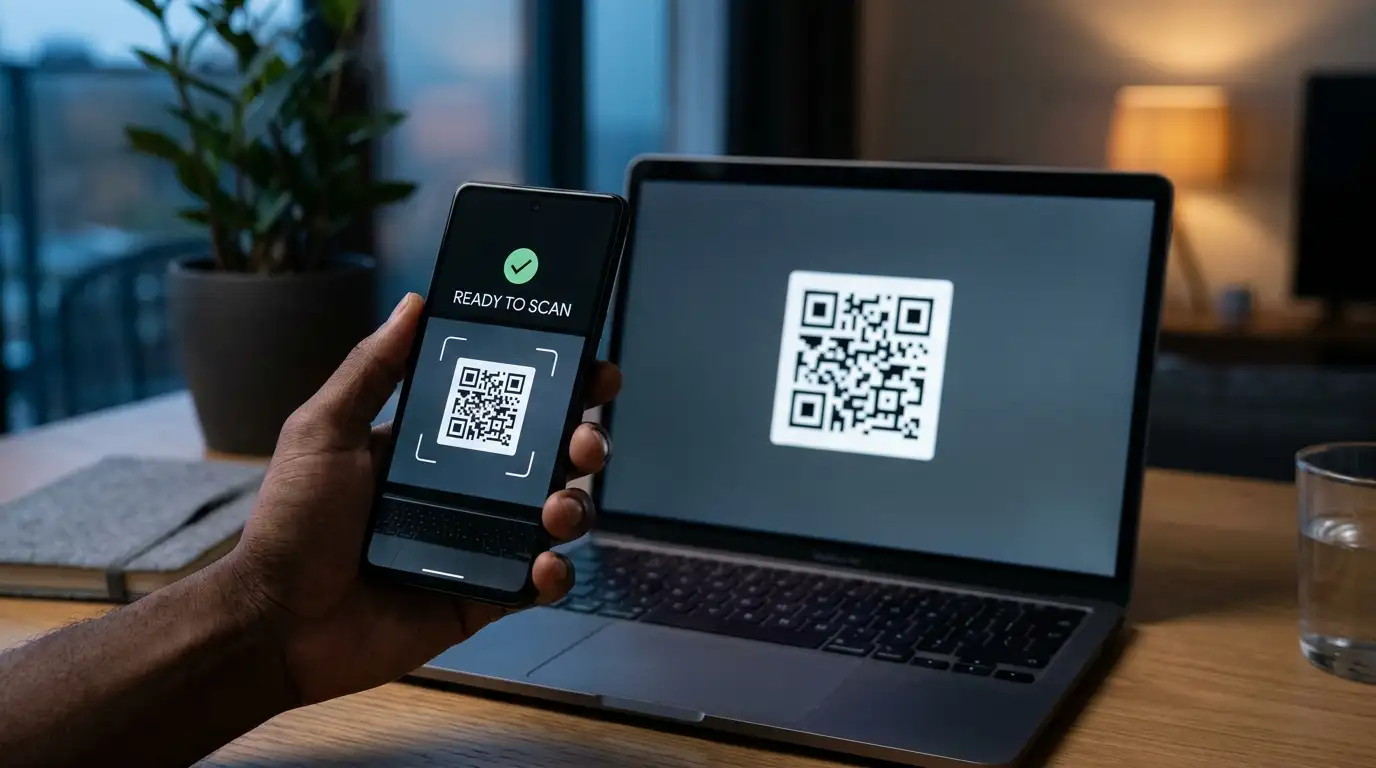
Buy the coin on an Australian exchange with AUD — PayID and bank transfer are the usual local rails, and both settle fast. The coin lands in your exchange account. Then open the casino cashier, choose Bitcoin, and it generates a deposit address, typically as a string and a QR code. Copy the address, go back to the exchange, and send. Verify the first and last four characters of the pasted address against the original before confirming, because clipboard-hijacking malware exists and rewriting a copied wallet address is precisely what it does.
The transfer then needs confirmations. Bitcoin mainnet produces a block roughly every ten minutes, and most casinos credit after one to three confirmations, so a deposit shows up in ten to thirty minutes depending on the operator’s threshold and how busy the network is. Some cashiers display the balance as pending immediately and unlock it on confirmation. Casinos do not usually charge a deposit fee; the network fee is yours and it comes out of the send, which is why a A$20 deposit is a worse idea than a A$200 one.
Withdrawals run the reverse path with one extra party in it: the operator’s own review queue. You request the payout to your wallet address, the operator approves it, and the chain does its ten-minute thing. The chain is almost never the slow part.
Why “instant withdrawal” describes your second payout, not your first
The gap between advertised and experienced payout speed is almost entirely a compliance queue, and it lands on the first withdrawal. First-time verification, source-of-funds checks on anything unusual, manual review of a betting pattern the risk system flagged — any of these turns a ten-minute payout into a 24-to-72-hour one. Once you have cleared it, subsequent cashouts genuinely can land in minutes, which is where the marketing copy comes from. It is describing withdrawal number two.
Other things that add delay: weekend staffing, since a manual approval queue does not run on Sunday at the same depth as Wednesday; mempool congestion, when the network is busy and a low fee leaves your transaction waiting; and coin choice, which matters more than people expect. Bitcoin mainnet settles in roughly ten minutes. USDT on Tron and USDC on Solana settle in under a minute. Ethereum mainnet runs from twelve seconds to a few minutes. Lightning is faster again — a published 30-day pilot covering 237,000 payments reported a 99.94% success rate at an average of 1.86 seconds.
| Network | Typical settlement | Where it matters |
|---|---|---|
| Bitcoin mainnet | Roughly 10 minutes per block, 1–3 confirmations to credit | The default; fine for deposits you are not in a hurry about |
| Lightning Network | Under two seconds on the pilot data above | Small, frequent transfers where the mainnet fee would dominate |
| USDT on Tron (TRC-20) | Under a minute | Moving value fast without Bitcoin’s block interval |
| USDC on Solana | Under a minute | Same use case, different chain, usually lower fee |
| Ethereum mainnet | 12 seconds to a few minutes | Only if the casino’s ETH option is the one you hold |
Networks, fees and the mistake that costs you the lot
The single most expensive error in crypto gambling has nothing to do with gambling. It is sending a coin on the wrong network — Bitcoin to a BEP-20 address, USDT on Tron to an ERC-20 deposit address, any mismatch between what you sent and what the casino’s address expects. The funds do not bounce back. They sit at an address nobody controls, and the support ticket you open will be answered politely and unhelpfully.
Every cashier labels the network next to the address. Read the label, match it in the sending wallet, and send a small test amount first when you are using a site for the first time. A A$20 probe that arrives correctly is cheap insurance against a A$2,000 transfer that does not.
How long does a Bitcoin withdrawal actually take?
Two answers. The blockchain takes roughly ten minutes. The operator’s queue takes minutes to three days, slowest on your first withdrawal, when verification and source-of-funds checks run. Published windows range from 5–15 minutes at BC.Game to an hour at Stake. Timed tests recorded 3 min 47 s to 11 min 6 s.
What happens if I send Bitcoin on the wrong network?
You lose it. No reversal, no chargeback, no authority to appeal to — the coins sit at an address nobody controls. Casino support cannot recover funds sent to a network their address does not serve. Check the network label in the cashier against your sending wallet, and send a small test amount first.
Bonus arithmetic, or what 5 BTC is really worth
Bitcoin casino bonuses are advertised as ceilings and read as gifts. They are neither. The headline figure is the maximum theoretically obtainable by someone who deposits the maximum at every stage, and the terms underneath are engineered to make the expected cost of extracting it exceed its face value. This is not a scandal. It is arithmetic, and the arithmetic is public.
The three levers that shrink every headline figure
Wagering multiple first. Take BitStarz’s up-to-5-BTC package at 40× on the bonus. Five bitcoin at forty times is 200 BTC of turnover before a withdrawal is permitted. At a representative pokie return of 96.5%, the house expects to keep 3.5% of everything wagered, so pushing 200 BTC through the games costs an expected 200 × 0.035 = 7 BTC. Seven, against a bonus of five. That is the average outcome, not a guarantee — variance is why anyone plays — but it is the number the offer is built around. Where terms apply the multiple to deposit plus bonus rather than bonus alone, roughly double the turnover and double the expected cost.
Second lever: game contribution. Pokies typically count 100% toward wagering. Table games run 10 to 20%. Live dealer tables often contribute 5 to 10%. Clear a bonus on live blackjack at 5% contribution and your 200 BTC requirement becomes 4,000 BTC of turnover. The offer is not smaller in that scenario, it is arithmetically unreachable.
Third: the ceiling and the clock. FortuneJack caps withdrawals from its 500% offer at 5× the bonus, which quietly converts the largest headline in this list into one of the smallest actual outcomes. Bonus validity runs seven days at BitStarz, FortuneJack and 7Bit, fourteen at BC.Game, thirty on Cloudbet’s rakeback. Free spins are worse — BitStarz gives them a single day. And max-bet clauses, A$5 at BitStarz and A$10 at FortuneJack, cap the rate at which you can legally chew through the requirement. Breach one and the bonus and everything won from it disappears, which is usually buried in a clause nobody reads until the balance is gone.
Cloudbet’s zero-wagering rakeback is the exception that proves the pattern. Nothing to clear means nothing to forfeit. That is why it is worth more than an offer three times its size.
No-deposit offers: what a “free” spin is actually for
Let us retire the pretence. A casino is not a charity, no business hands out money it expects to lose, and a “free” spin is a customer-acquisition cost with a wagering clause stapled to it. Once you accept that, the terms make perfect sense.
Market-standard no-deposit offers run 0.0001 to 0.001 BTC in value, 30 to 60× wagering on winnings, cashout caps between A$100 and 0.01 BTC, and expiry from 24 hours to seven days. Three operators here publish documented terms, all capped at A$100 maximum cashout with seven-day expiry: BitStarz at 40× on winnings, KatsuBet at 30×, 7Bit at 45×. Do the sum on the best of those. Turn 0.0005 BTC into something, wager the winnings thirty times, and walk away with a hundred dollars maximum.
Which makes a no-deposit offer useful for exactly one thing, and it is not profit. It is a free test of the cashier. Register, play the spins, request whatever small withdrawal you end up with, and watch what happens. How quickly does verification start? What documents get requested? Does support answer in hours or days? You have just tested the only part of an offshore casino that matters, at a cost of nothing. Treat the hundred dollars as a bonus.

Anonymous play, KYC and what provably fair does not prove
Privacy is the second-strongest reason Australians use Bitcoin casinos, behind availability. It is also the area where marketing copy and contractual reality diverge most sharply, and the divergence is entirely predictable once you know where to look.
Where the identity check actually sits
Offshore operators are outside AUSTRAC’s anti-money-laundering obligations, so the depth and timing of identity checks is a commercial choice rather than a legal floor. In practice nobody in this set demands a passport at registration. Stake takes an email and a mobile number. Cloudbet’s checks trigger around US$2,200 in cumulative withdrawals. BitStarz triggers above a withdrawal threshold. Betpanda asks for nothing at all during standard play, which is consistent, given it holds no licence obliging it to.
Every one of them reserves the contractual right to demand documents before paying you. Jack.com markets anonymous accounts while its anti-fraud clauses reserve full identity verification, proof of address and video verification at the operator’s discretion. Both things are in writing, both are enforceable, and there is no contradiction — the second clause is what the first one means. The pattern holds across the category: light checks at the door, full checks at the till, and the till is where your money is.
There is a version of this trade that is genuinely rational. If you want a cashier that does not build a documentary trail linking you to a gambling account, no-KYC delivers. Understand the corollary: no documentary trail also means nothing to hand a dispute body, and combined with a missing licence it means no dispute body to hand it to.
Do Bitcoin casinos ask for ID?
Rarely at registration, frequently before a significant withdrawal. Stake takes only an email and mobile number. Cloudbet’s checks trigger around US$2,200 in cumulative withdrawals. Every operator here, including those marketing “no KYC”, reserves the right to demand identity documents or video verification before paying out. Anonymity is a default, not a guarantee.
Provably fair: what the maths covers and what it leaves out
Provably fair is real cryptography and it does something genuinely useful. The operator commits to a hashed server seed before play, your client contributes its own seed, a nonce increments per round, and afterwards you can recompute the result and confirm it matches the commitment. The outcome could not have been altered after you bet. BGaming pioneered the approach in this market and Stake’s Originals are its most-used implementation.
Now the boundary. It proves the randomness of a result. It says nothing about whether the operator is solvent, whether player funds are segregated from operating capital, whether the licence is current, or whether anyone will approve your withdrawal on Monday. A provably fair dice game at a site with no gaming licence is a mathematically verifiable roll at a counterparty with no supervision. The maths is not the risk. The counterparty is.
Does provably fair mean the casino cannot cheat me?
It means the outcome cannot be altered after you bet, and you can verify that by recomputing the hash. It says nothing about solvency, whether player funds are segregated, or whether your withdrawal gets approved. Verifiable randomness at an unlicensed operator is still an unsupervised counterparty holding your balance.
Pokies on Bitcoin: where the RTP actually sits
The game itself does not know what you funded it with. A pokie loaded at a Bitcoin cashier is the same certified title running the same random number generator as the one at a fiat casino — the coin changes the payment rail, not the mathematics. What differs is which titles the offshore catalogues carry, and how much control the operator has over their settings.
The studios behind Bitcoin pokies
The names doing the work are the same names doing it everywhere. NetEnt carries the highest published averages in the category, with Mega Joker running up to 99% and Blood Suckers at 98% — outliers by design, built as loss-leaders. Pragmatic Play supplies the volume titles Australians actually play, Sweet Bonanza at 96.51% with a 21,175× maximum and Gates of Olympus at 96.50% with 5,000×. Play’n GO’s Book of Dead publishes 96.21% and 5,000×. BGaming, which built its business crypto-first, offers Elvis Frog in Vegas at 96.79% and is the studio behind much of the provably fair implementation in this market. Nolimit City sits lower on average at 96.05% and higher on volatility, which is the trade its audience wants.
Provider averages tell you more than any single title: NetEnt around 97.50%, BGaming 97.00%, Pragmatic 96.47%, Nolimit City 96.05%. A percentage point of return does not sound like much until you put turnover behind it. On the 200 BTC of wagering that a 40× bonus condition implies, the difference between 97.5% and 96.05% is roughly 2.9 BTC of expected cost. Game selection while clearing a bonus is not a stylistic preference.
Configurable RTP, the setting nobody advertises
Here is the part that undermines every RTP list on the internet, including the numbers above. Many titles ship to operators with multiple selectable return settings, and the operator chooses. Book of Dead is documented at five configurations running from 96.21% all the way down to 84.18%. Same game, same artwork, same name in the lobby, twelve percentage points of difference in what it pays back.
So a published RTP is a range, not a promise, and the figure in a review is whatever setting that reviewer’s session happened to load. Some operators disclose the configuration in the game information panel. Most do not. Where a title shows its RTP in-game, check it rather than trusting the list you arrived with — it is the only place the actual number lives.
Live dealer tables and Bitcoin
Live casino at a Bitcoin site means Evolution and Pragmatic Play Live, the same two studios that supply the licensed European market, streamed from the same production floors. Blackjack and roulette carry the traffic. The tables have no idea what currency funded the seat, and the theoretical returns are the best in the building: live blackjack sits around 99.5% with optimal play, European roulette at 97.3%, and American roulette at 94.7% purely because of that second zero. Avoid the American wheel. There is no reason to accept a house edge nearly triple the alternative on an identical game.
Bet sizing is where Bitcoin play at live tables gets awkward. Tables are denominated in fiat, your balance is in BTC, and the conversion happens at whatever rate the operator applies at the moment you sit down. A table minimum that read comfortably yesterday reads differently after a 6% move in the coin overnight. Players who take live tables seriously tend to hold a stablecoin balance for exactly this reason — the same reason nobody quotes a mortgage in bitcoin.
And then the bonus trap, which is worth flagging because it catches thoughtful players specifically. Live tables usually contribute 5 to 10% toward wagering requirements. So the game with the best theoretical return in the building is the worst possible vehicle for clearing a bonus: pick live blackjack at 5% contribution and a 200 BTC requirement becomes 4,000 BTC. The optimal strategy is boringly simple. Clear bonuses on pokies at 100% contribution, then play live tables with cleared funds and no strings attached.
Playing on a phone, and the new-brand question
Almost all of this happens in a mobile browser, and not by design. App stores restrict real-money gambling apps heavily, so offshore operators ship progressive web apps and mobile-optimised sites instead of native downloads. In practice that costs you very little — a modern mobile lobby loads the same catalogue, and the cashier flow is arguably better on a phone, since your wallet app lives on the same device and the QR code scan replaces copying a 42-character address between windows. Fewer opportunities to paste the wrong string.
Where an operator does offer an Android APK for direct download, weigh it carefully. You are installing an unsigned package from a site with no local regulator, which sidesteps every review process the app store exists to provide. The browser costs you nothing by comparison.
New brands launch in this category constantly, each with a bigger headline percentage than the last, and the shortest useful section on this page is the one explaining why that should not move you. A site launched last quarter has no payment history, no dispute record, and no evidence of how it behaves when a player wins more than the marketing budget anticipated. Those three things are most of what “trustworthy” means at an offshore cashier, and none of them can be manufactured. The percentage is loud precisely because nothing else is available to say.
If a new site genuinely appeals, make the first withdrawal the test. Deposit small, play briefly, cash out, and observe. What you learn in that cycle is worth more than every review of the site in existence.
What happens if the casino’s website gets blocked while my balance is still there?
You are on your own. ACMA can direct providers to block a domain but cannot recover your funds — more than 1,700 sites have been blocked since November 2019. Operators usually reappear on mirror domains, so the account may still be reachable, but nothing guarantees it. Keep balances small and withdraw regularly.
What you are actually trading away, and where to get help
Stack up what an Australian playing at a locally licensed service gets, then remove it item by item. Australian Consumer Law recourse if the operator misrepresents its terms: gone. A regulator to escalate a refused withdrawal to: gone, because ACMA’s remit covers stopping illegal supply, not adjudicating your balance. AUSTRAC oversight of the operator’s anti-money-laundering controls: gone. A state regulator with the power to suspend a licence over player-fund handling: gone. What remains is the licensing authority in Curaçao or Anjouan, which is a real avenue and a slow, distant one, and in Betpanda’s case not even that.
Then the harm-minimisation gap, which is the one that does actual damage. BetStop, the National Self-Exclusion Register, covers Australian-licensed interactive wagering services only. At 31 July 2026 it held 67,480 registrations with 41,290 still active, 78% of registrants under 40 and 38% choosing lifetime exclusion. Every one of those people can open an account at every operator on this page tomorrow. The register they used to protect themselves has no reach past the Australian licence boundary, and offshore cashiers will process their deposits without a flicker.
The operator-side tooling is thin too. BitStarz, a decade-old brand, offers no deposit limits, no loss limits, no wagering limits and no cooling-off period, with self-exclusion available only by emailing support. That is the standard rather than the outlier. If you need a wall between yourself and a cashier, an offshore Bitcoin casino will not build it for you, and a device-level blocker plus a bank-level gambling block plus not holding the coins in a hot wallet is a more honest set of defences than anything in a site’s account settings.
Roughly 2.1% of Australian adults — about 430,000 people — are affected by problem gambling, and the AIHW put the high-risk figure at 1.8% in 2022. If the fun has stopped, the National Gambling Helpline runs on 1800 858 858, free, 24 hours, and Gambling Help Online provides chat and counselling. Both are worth the call well before things feel like an emergency.
Are Bitcoin casino winnings taxable in Australia?
Recreational gambling winnings are not assessable income for Australian individuals. The coin is separate: the ATO treats crypto as a capital gains tax asset, and disposing of it — selling or swapping — is a CGT event. Winning is not taxed; what you then do with the Bitcoin can be. Keep records.
Can I use BetStop to block myself from Bitcoin casinos?
No. BetStop covers Australian-licensed interactive wagering services, and every Bitcoin casino is offshore, so registration does not reach them. A self-excluded person can still deposit at every site on this page. Use device-level blocking software and a bank gambling block instead, and call 1800 858 858 for support.
Bitcoin solves a supply problem and creates a counterparty problem. The list above is the honest state of play in 2026: eleven operators, four with licence documentation that stands up cleanly, several with strings that belong to a framework Curaçao abandoned, one with no licence whatsoever. Check the licensee, check the number format, deposit what you can afford to write off, and make your first withdrawal early and small. That is the whole discipline. The bonus percentages are marketing; the cashier is the product.
Crypto Casino Australia 2026 — Bitcoin, Ethereum, USDT, Litecoin & More
Content created by the «CasinoPay» team