
Pay by Phone Casinos in Australia: the rails that work and the ones that never did
 Available in AU
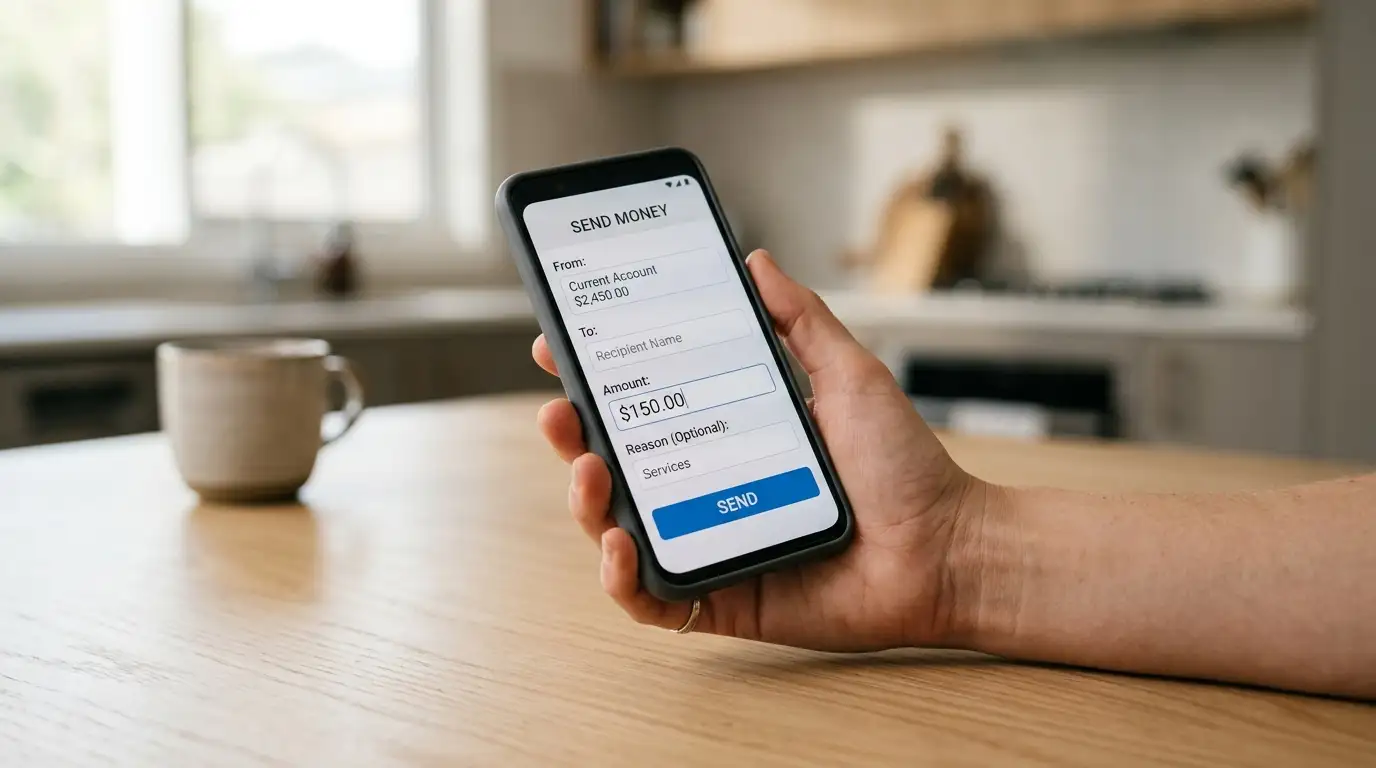
The short version — what pay by phone buys you in Australia
Telstra stopped charging third-party content to mobile accounts on 15 December 2021. Optus pulled its Direct Carrier Billing capability from 30 September 2021. That is the whole story behind the search term. There is no Australian casino in 2026 where you tick a box and the deposit lands on next month’s phone bill, because the two carriers that could have carried it walked away from third-party billing years ago and never came back.
What replaced it is better, which is the part the imported guides skip. Australians deposit at casinos from their phones using PayID keyed to their mobile number, Apple Pay or Google Pay confirmed with a fingerprint, a MuchBetter wallet tied to a phone number, or a Neosurf voucher code bought on the handset. Four rails. All faster than carrier billing ever was, all cheaper, and one of them — PayID — settles in under ten seconds and pays winnings back the same way.
So when a page promises “pay by phone bill casinos Australia” and lists twelve brands with Boku logos, it has copied UK material and changed the currency symbol. Payforit and Fonix are British payment schemes. Boku has carrier partnerships in Australia for Spotify and Google Play, but its gambling vertical excludes this country outright. Nothing on an Australian SIM bills a casino deposit.
The practical question is which sites take which rail, what the deposit floors are, and where the money can go when you want it out. That is what the rest of this covers — seven operators accepting Australian players with a phone-native cashier, five rails compared on the one axis that matters most, and the legal position stated without the usual hand-waving.

Why your phone bill stopped being a casino wallet
Carrier billing works, in the countries where it works, because the telco extends you short-term credit. You tap, the carrier authorises, the amount lands on your statement, and the carrier settles with an aggregator who settles with the merchant. The telco carries the fraud risk, which is why per-transaction caps sit low — Boku’s ceiling is around thirty US dollars.
Australia had this infrastructure. It got dismantled, and not by accident.
The ACCC took Telstra to court over its Premium Direct Billing service and Telstra was ordered to pay $10 million in penalties. Then, on 17 October 2018, the ACCC commenced proceedings against Optus over Direct Carrier Billing. Optus admitted making false or misleading representations under the ASIC Act and agreed to jointly seek orders including a $10 million penalty. The numbers underneath that case explain the industry’s retreat: Optus had run DCB since May 2012, charging around two million customers each financial year, and admitted knowing since at least April 2014 that a significant number of them were being billed for content they had never agreed to buy. Roughly 240,000 customers were affected. A total of $31 million was refunded — $12 million paid directly by Optus, $19 million by the third-party providers. Optus ceased offering the service on 24 August 2018 as part of resolving the investigation.
After that, third-party charging on Australian mobile accounts became a compliance liability rather than a revenue line. Optus removed the residual Direct Carrier Billing capability from 30 September 2021. Telstra ended Premium SMS charging on 15 December 2021, which killed the 19xx-number rail that had once handled everything from TV voting to ringtone subscriptions. Neither carrier has shown any appetite for rebuilding it, least of all for gambling — a category that would have attracted regulatory attention on a scale that ringtones never did.
There is also no Australian scheme sitting between casinos and carriers. Payforit was a UK consortium product. Fonix is a UK mobile payments platform. Siru Mobile is Finnish, focused on Nordic markets, and operators had largely walked away from it by 2026. None of them ever held Australian carrier agreements. The UK “pay by EE” and “pay by Vodafone” cashier tiles, the BT phone bill queries, the Sky Mobile variants — all of it is British market furniture. Reading it as advice for an Australian handset is how people end up hunting for a deposit button that does not exist.
Can I charge a casino deposit to my Telstra or Optus phone bill in 2026?
No. Telstra ended Premium SMS charging on 15 December 2021 and Optus removed Direct Carrier Billing from 30 September 2021, both after ACCC enforcement action over unwanted third-party charges. No Australian carrier bills gambling deposits. PayID, Apple Pay, Google Pay, MuchBetter and Neosurf are what Australians use instead.
Boku — the name on every search, absent from every Australian cashier
Boku Inc. is not vapourware, and that is worth saying plainly, because the volume of “pay by phone casino no Boku” searches suggests a lot of people think it is either everywhere or a scam. It is neither. Founded in 2009 by Mark Britto, Erich Ringewald, Ron Hirson and Javier Martell, the company listed on the London Stock Exchange’s AIM market on 20 November 2017 in a £125 million float. It bought the mobile authentication business Danal in 2018 and its carrier-billing competitor Fortumo in 2020, which consolidated most of the world’s carrier-billing capability under one roof. The network reaches more than ninety countries and something on the order of seven billion consumer payment accounts, with merchants including Apple, Google, Meta, Microsoft, Netflix, Sony, Spotify and Amazon.
None of that helps you. Boku’s gambling vertical is a narrow slice of the broader business, concentrated at UK-regulated operators where the integration runs deep, thin across continental Europe on an operator-by-operator basis, and absent from the United States entirely. Canada’s regulated operators route through Interac instead. Australia sits outside the gambling scope despite Boku’s Australian carrier-network presence for ordinary merchants — the network is here, the gambling product is not. And even where it does work, Boku is deposit-only by architecture, with a per-transaction cap around thirty US dollars. The one-way design is not a policy choice: carriers have no mechanism to credit a merchant refund back onto a phone bill, so there is nothing to reverse.
Is Boku available at Australian casinos?
No Australian-facing casino offers Boku. Boku’s carrier network operates in Australia for merchants like Spotify and Google Play, but its gambling vertical excludes the country and is concentrated at UK-licensed operators. Australian players use PayID, Apple Pay, Google Pay, MuchBetter or Neosurf. Boku is also deposit-only everywhere it works.
The five rails that actually work from an Australian handset
Strip away the branding and every phone-based deposit rail answers three questions: what gesture confirms it, how small a deposit it will accept, and whether money can travel back the other way. The third question decides everything else, and it is the column most comparison tables leave out.
| Rail | How you confirm it | Typical deposit floor | Pays winnings back | What it costs you |
|---|---|---|---|---|
| PayID | Banking-app biometric or PIN, plus a reference code | A$10 at Neospin, A$20–A$30 elsewhere | Yes, 5–40 minutes typical | Nothing at the casino; check your bank’s outgoing-transfer schedule |
| Apple Pay | Face ID, Touch ID or device passcode | A$20–A$30 | No | 1–3% at some operators |
| Google Pay | Fingerprint or screen unlock in Chrome | A$20–A$30 | No | 1–3% at some operators |
| MuchBetter | Biometric ID inside the MuchBetter app | A$10–A$20 | Yes, minutes to 24 hours after approval | 0% on both casino legs; 0.99% currency conversion; 2–2.5% to bank out |
| Neosurf | A ten-character voucher PIN typed at the cashier | A$10 voucher | No | 4–8% retailer purchase fee, plus a dormancy fee if unspent |
PayID — your mobile number as the payment address
This is the actual Australian pay-by-phone rail, and almost nobody frames it that way. PayID launched in 2018 as the addressing layer on the New Payments Platform, run by NPP Australia under Australian Payments Plus. It links a mobile number, an email address or an ABN to a BSB and account number, so you send money to a phone number instead of a string of digits off the back of a card. Settlement rides on Osko, BPAY’s overlay service, and clears in under ten seconds, twenty-four hours a day, every day of the year. The NPP processed close to two billion transactions in 2025.
At a casino cashier, the flow inverts the usual arrangement. The operator hands you a temporary PayID — normally a phone number or email registered to its payment processor — along with a reference code, and the pair is typically valid for about thirty minutes. You send the money from your banking app. The reference code is what lets the operator’s system match your transfer to your account without a human touching it, which is why a missing reference turns a four-second settlement into a live-chat conversation.
Where PayID bites is the daily cap, and the caps are wildly uneven between banks. CBA and Bankwest default to around A$20,000 a day, liftable towards A$50,000 with NetCode confirmation. NAB and ubank sit near A$25,000. Westpac, St.George and BankSA hold about A$20,000 with an SMS one-time-code path higher. ANZ runs around A$25,000. Bendigo and Adelaide and BOQ sit near A$10,000, MyState around A$5,000. Then there is ING, whose conservative default is A$1,000 a day — adjustable in-app with a slider, but it catches people out constantly, because the decline arrives with no useful explanation attached.
One thing PayID does not do: hide you from the operator. The privacy runs one way. You never see the recipient’s BSB and account number, but the recipient’s bank sees yours, exactly as it would on any ordinary Australian transfer. If keeping the operator away from your banking details is the point, a voucher is the tool, not PayID.
Apple Pay
Tap, glance at the screen, done. Apple Pay’s advantage over every other rail here is the confirmation gesture — Face ID takes less time than reading the amount you just typed. Underneath, the wallet uses device-specific tokenisation, so the operator’s payment processor receives a single-use token rather than your card number. The card itself never crosses the wire, which removes the specific failure mode where a leaked cashier database becomes a card-fraud problem six months later.
Availability is the catch, on two fronts. Whether your card works depends on your Australian issuer’s participation, and the cashier tile appears at a growing but far from universal set of AU-facing operators — it comes and goes as sites change payment processors. Some operators also clip 1% to 3% on the rail. The bigger limitation is structural: Apple Pay is built for push payments, you paying a merchant. Casinos cannot push money back to it. Deposit with Apple Pay and you will be nominating a second rail before your first withdrawal clears, so set that up on day one rather than discovering it with a balance you want out.
Google Pay
Mechanically identical to Apple Pay — tokenised card, biometric confirmation, no card details reaching the operator — and it usually appears in the same cashier list, because operators tend to enable the pair together. Acceptance across AU-facing sites is thinner than Apple Pay’s in 2026 despite the identical plumbing, which is a commercial quirk rather than a technical one.
Android hardware introduces one wrinkle worth knowing. Budget handsets sometimes have NFC implementations that Google Pay treats as unreliable, which breaks the tap-to-pay flow. The browser-based path sidesteps it entirely: you tap your saved card inside Chrome and confirm with the screen unlock, no NFC involved. Same push-only limitation, same 1% to 3% possibility at the operator’s end, same need for a separate withdrawal rail.
MuchBetter
MuchBetter was built for gambling cashiers rather than adapted to them, and it shows. MIR Limited runs it out of London under Financial Conduct Authority electronic money institution licence 900704, which means customer balances sit in segregated, safeguarded accounts — the same structural protection UK banks operate under, and materially stronger than what an offshore-licensed wallet offers. It launched in 2017 as a deliberately mobile-first answer to Skrill and Neteller, and there is no web cashier at all. The account is keyed to your mobile number and every transaction is confirmed by biometric ID inside the app.
The performance numbers explain the loyalty it attracts. Published testing puts MuchBetter deposits at an eight-second average completion against Skrill’s thirty and Neteller’s thirty-five. Currency conversion runs 0.99% where the older wallets charge 3.99%. Casino deposits and casino-to-wallet withdrawals both cost nothing; taking money from the wallet out to a bank via SEPA runs 2% to 2.5%. And it is two-way at casinos, which puts it in a category of two alongside PayID.
Two Australian caveats. The prepaid Mastercard that European users lean on is EEA-only, so it is unavailable here — the wallet works, the plastic does not. And AU-facing casino acceptance is patchier than PayID’s near-universal coverage, so check the cashier before you fund the wallet rather than after. Where MuchBetter quietly wins is bonus eligibility: operators carved Skrill and Neteller out of welcome offers after the arbitrage problems of the late 2010s, and MuchBetter, being newer and harder to multi-account against, mostly escaped that blanket.
Neosurf
A Neosurf voucher is a ten-character PIN and nothing else. You buy it, you type the code into the cashier, the balance lands. No bank rail sits inside the transaction and no line reading anything like a casino name appears on a card statement, which is the entire reason it survives in a market full of faster options.
In Australia the vouchers come in fixed denominations — A$10, A$20, A$30, A$50, A$100 are the common face values, with higher tiers running up towards A$500. Fixed means fixed: you cannot ask the register for A$37. Physical vouchers turn up at select Coles stores, some 7-Eleven outlets, Australia Post outlets and independent newsagents. The phone-native path is the online one, where you buy a code with a card and it arrives by email in seconds, which is what qualifies Neosurf as a deposit you can complete entirely from a handset in a car park.
The costs are real and they are quiet. Retailer purchase fees typically run 4% to 8%, so a A$50 voucher can cost A$54 before a single spin. Leave a code unspent past its validity period and a dormancy fee starts nibbling. And Neosurf is push-only, with a specific consequence at withdrawal: a deposit history made entirely of voucher codes gives the operator no verified counter-party rail on file, which reliably triggers a stricter document check when you first ask for money out. The privacy you bought at the register gets billed back at the cashier.
What is the smallest deposit I can make from my phone?
A$10 is the practical floor. Neospin accepts PayID from A$10 and Joe Fortune sets both deposit and withdrawal minimums at A$10. MuchBetter cashiers usually start at A$10 to A$20, and the smallest Neosurf voucher sold in Australia is A$10. Most other operators want A$20 to A$30 per transaction.

The sites — who takes phone-native deposits in 2026
Seven operators accepting Australian players run a cashier you can drive entirely from a handset. The ordering below tracks how well the phone rails actually work at each one, not the size of the welcome figure on the banner. A A$10,000 bonus attached to a cashier that drops PayID transfers is worth less than a clean deposit flow and a nine-minute payout.
None of them holds an Australian licence. That is not a knock on the list — no such licence exists, and that gap is covered further down. What each one does hold is an offshore permit, and the specifics vary more than the marketing suggests.
| Operator | Licence | Withdrawal speed | Minimum deposit | Distinguishing feature |
|---|---|---|---|---|
| Neospin | Hollycorn N.V., Curaçao, registration 144359 | PayID and crypto in minutes; 13 withdrawal methods | A$10 via PayID | Lowest tested PayID floor in the market plus QR scanning in the mobile cashier |
| SkyCrown | Offshore; attribution disputed between sources | About 9 minutes on PayID, pre-approved queue under A$2,000 | A$30 | Fastest observed PayID payout, against documented unpaid-win complaints |
| Ricky Casino | Dama N.V., Curaçao eGaming 8048/JAZ2020-013 | PayID both directions, A$30 minimum cashout | A$20 | Longest continuous run in the Australian market, live since 2021 |
| Joe Fortune | Ridley Media N.V., Curaçao OGL/2024/676/0726 | Crypto under 15 minutes; KYC gates the first payout | A$10 | Published licence string and Bitcoin Lightning support |
| Casinonic | Curaçao | Advertised inside 24 hours | A$20 | Seventeen-plus cashier methods, so a failed rail is never a dead end |
| Wild Card City | Curaçao eGaming 8048/JAZ | Mixed reports, PayID fastest | Low teens | 175-plus live dealer tables and a part-of-offer x1 wagering term |
| Spinko | Fortuna Games N.V., Curaçao | Low per-request withdrawal ceilings | A$20 | 300 genuinely wager-free spins in the welcome package |
Neospin
Hollycorn N.V. runs Neospin under Curaçao registration 144359, from a registered office at Abraham de Veerstraat 9 in Willemstad — the same address block that hosts a good portion of the Curaçao gaming industry. The site launched in 2022 on the SoftSwiss platform and carries a sportsbook on the same account as the casino, which matters if you would rather not hold two balances. The lobby runs somewhere between 5,800 and 8,000 titles depending on when you count, with AUD accounts and no conversion charge on Australian dollars.
For a phone-first player, Neospin’s headline number is A$10. That is the lowest PayID minimum in published Australian testing, and it changes how you can approach an unfamiliar operator: instead of committing A$30 to find out whether the cashier works, you spend ten dollars proving the rail before it matters. The cashier carries eighteen deposit and thirteen withdrawal methods, and the mobile interface scans QR codes for crypto addresses rather than making you copy a forty-character wallet string on a phone screen — a small thing that prevents an expensive class of mistake.
The trade-off is the usual one for a Curaçao operator with an aggressive promotional calendar. Daily cashback runs up to 20% at the higher tiers, and the arithmetic on those tiers rewards volume, which is a polite way of saying the generous-looking number is aimed at people who play a lot. Dispute resolution under a Curaçao licence is thinner than what an Australian-licensed wagering provider would offer, and no amount of neon on the homepage changes that.
SkyCrown
SkyCrown is the fastest payer on this list and the one carrying the loudest warnings, which is an awkward combination to write about honestly. On speed: published Australian testing recorded roughly a nine-minute average on PayID withdrawals, helped by a pre-approved queue that skips manual review for verified accounts cashing out under A$2,000. Nothing else here matches that. The lobby runs past 7,000 titles with a live-dealer floor that punches above the site’s weight, deposits start at A$30 via PayID or Apple Pay, and ten cryptocurrencies sit alongside them.
Licensing is where the story gets murky. Australian reviews attribute the site to Hollycorn N.V. under Curaçao; others name Metlait SRL operating on a Tobique Gaming Commission permit numbered 0000064. Those are materially different regulators with materially different complaint processes, and the disagreement between sources is itself the finding. Anyone treating a licence badge as the reason to trust an operator should note that here the badge cannot even be pinned down.
The harder caveat: at least one Australian review desk rates SkyCrown 2.5 out of 5 and flags it High Risk, citing documented unpaid wins, verification loops and responsible-gambling failures. That coexists with the nine-minute average, and both are probably true — fast when it pays, ugly when it does not. The defensible way to use a site with that profile, if you use it at all, is small stakes and early withdrawals, taking money out while the amounts are boring enough not to attract a manual review.
Ricky Casino
Dama N.V. has operated Ricky Casino under Curaçao eGaming licence 8048/JAZ2020-013 since 2021, which makes it the longest continuously running brand on this list — four years of Australian traffic is not a track record that impresses in other industries, but in the offshore casino market it is close to venerable. The platform is SoftSwiss, which is why the cashier and lobby will feel oddly familiar if you have used a Dama sister brand. Three to four thousand titles come from Pragmatic Play, Evolution, NetEnt, Play’n GO, BGaming and Hacksaw Gaming, with live blackjack tables running around the clock.
The banking is the reason it sits high here. PayID works in both directions, deposits start at A$20 on mainstream rails, and the minimum withdrawal is A$30 — low enough that you are not forced to let a small win sit in the account until it grows into a withdrawable amount, which is exactly the mechanism by which small wins stop being wins. Ricky charges no commission on deposits, with per-transaction maximums quoted between A$4,000 and A$5,000 depending on the rail.
The welcome package spreads AU$7,500 across ten separate deposits, and that structure deserves a translation. Ten-deposit ladders are engineered so the headline number is unreachable without depositing repeatedly over weeks; the money is real, the framing is not. Treat the first-deposit tier as the actual offer and the remaining nine as a schedule someone hopes you will follow.
Joe Fortune
Joe Fortune publishes its licence string, which sounds like a low bar until you try to find the equivalent elsewhere on this list. Ridley Media N.V. operates the site under Curaçao Gaming Authority licence OGL/2024/676/0726 — a number you can check rather than a footer badge you cannot. The brand has been serving Australian players long enough to have accumulated a reputation, and the lobby sits around 2,100 pokies plus a live dealer floor. Smaller than SkyCrown’s by a factor of three. It is also curated rather than padded, which some players prefer and others find limiting.
The cashier is built for phone-only players in a specific way: A$10 minimum deposit and A$10 minimum withdrawal, symmetric, which is the lowest matched pair here. Six cryptocurrencies are supported including Bitcoin Lightning, unusual in the AU-facing set and genuinely useful if your crypto lives in a mobile wallet — Lightning settles in seconds for cents, where an on-chain Bitcoin transfer can cost more than a small deposit is worth. PayID and Neosurf both appear alongside, so the phone rails are covered without touching crypto at all.
Verification is enforced before the first withdrawal, not after the first deposit. That ordering is standard and it is also the single most common source of complaints across this whole market, because a player who deposits on Friday and wins on Saturday discovers the document requirement precisely when patience is lowest. Upload the licence and the utility bill on the day you register.
Casinonic
Casinonic will not win a design award. Reviewers describe the lobby as mid-size and the interface as dated, and the 2,500 to 3,000 titles include a jackpot section and online lotteries rather than a bottomless pokies catalogue. Curaçao licensing, AUD support, PayID, A$20 minimum deposit, withdrawals advertised inside twenty-four hours. On paper it reads unremarkable.
The reason it belongs on a phone-deposit list is seventeen. That is the number of payment methods in its cashier, and it is the highest here by a wide margin. Rail redundancy is an underrated property: PayID transfers fail for prosaic reasons — a bank’s daily cap, a fraud-flag on an offshore processor identifier, a temporary PayID that expired while you were finding the reference code — and at most operators a failed rail means a support conversation. Here it means picking a different tile. If you have ever had a deposit decline at eleven at night with no explanation, the appeal is obvious.
What Casinonic does not offer is a standout on any single axis. The bonus ladder spreads AU$7,500 across ten deposits, same engineered structure as Ricky’s. The lobby is adequate. The payout window is advertised rather than independently timed. It is a competent utility site, and there is a real argument for keeping one of those in reserve for the nights when your preferred cashier is misbehaving.
Wild Card City
Wild Card City has been online since August 2020, which makes it the second-oldest brand here, and it carries JokaRoom heritage — the previous incarnation of the same operation. It runs under Curaçao eGaming 8048/JAZ, the same licence family as Ricky Casino, which tells you something about how concentrated the Australian-facing market actually is behind the branding.
The numbers are lopsided in an interesting way. The overall lobby is modest at roughly 1,200 to 1,600 titles, with more than a thousand pokies and only twenty-five-odd table games. But the live dealer floor runs past 175 tables, which is a genuinely large live operation attached to a small casino, and it makes the site a reasonable pick for someone whose phone play is mostly live blackjack rather than reels. Keno and virtual sports fill out the edges. Deposits arrive via PayID, Neosurf, POLi, Visa, Mastercard, bank transfer and several cryptocurrencies.
The welcome structure advertises x1 wagering on part of the offer, and that is worth reading carefully rather than dismissing. A one-times playthrough on a bonus component is unusually light and it is the kind of term that actually changes the value of an offer, as against the “bonus” that a player can look at but never quite convert into money. On the other side of the ledger, payment reviewers report mixed payout speeds and a thinner Australian-specific rail menu than Casinonic’s. PayID remains the fastest route out.
Spinko
Spinko launched in 2026 under Fortuna Games N.V. with a Curaçao permit, and the interface is the most distinctive thing about it — stripped back to the point where it reads more like a wallet app than a casino, which on a phone screen is an advantage rather than an aesthetic choice. The catalogue runs past 9,000 titles, the largest here, and the promotional machinery is elaborate: a thirty-level VIP ladder, daily cashback advertised up to 35%, and a five-deposit welcome ladder.
The part worth naming is the 300 wager-free spins in the Australian-facing package. Free spins normally arrive wrapped in playthrough conditions that make the winnings theoretical, and the industry has spent two decades calling that arrangement a “gift”. Wager-free means the winnings are cash when they land. That is a real term, not a framing exercise, and it is rare enough to be the main reason to look at a brand this new.
Against it: a 2026 launch means no payout track record worth the name, reviewers flag low per-request withdrawal ceilings and short bonus validity windows, and at least one review desk notes that verifiable licence information on the site itself is thin. Fortuna Games N.V. is a real Curaçao entity, but the documentation you would want in order to trust it with a meaningful balance is not on display. A wager-free welcome offer is a good reason to try a site with a small deposit. It is not a reason to keep a bankroll there.
Which casinos accepting Australians let me deposit with just my phone number?
Neospin, SkyCrown, Ricky Casino, Joe Fortune, Casinonic, Wild Card City and Spinko all accept PayID, which uses your registered mobile number as the payment address. Neospin sets the lowest floor at A$10; SkyCrown and Ricky add Apple Pay. Every one of them holds an offshore licence, not an Australian one.
How the deposit actually goes through, step by step
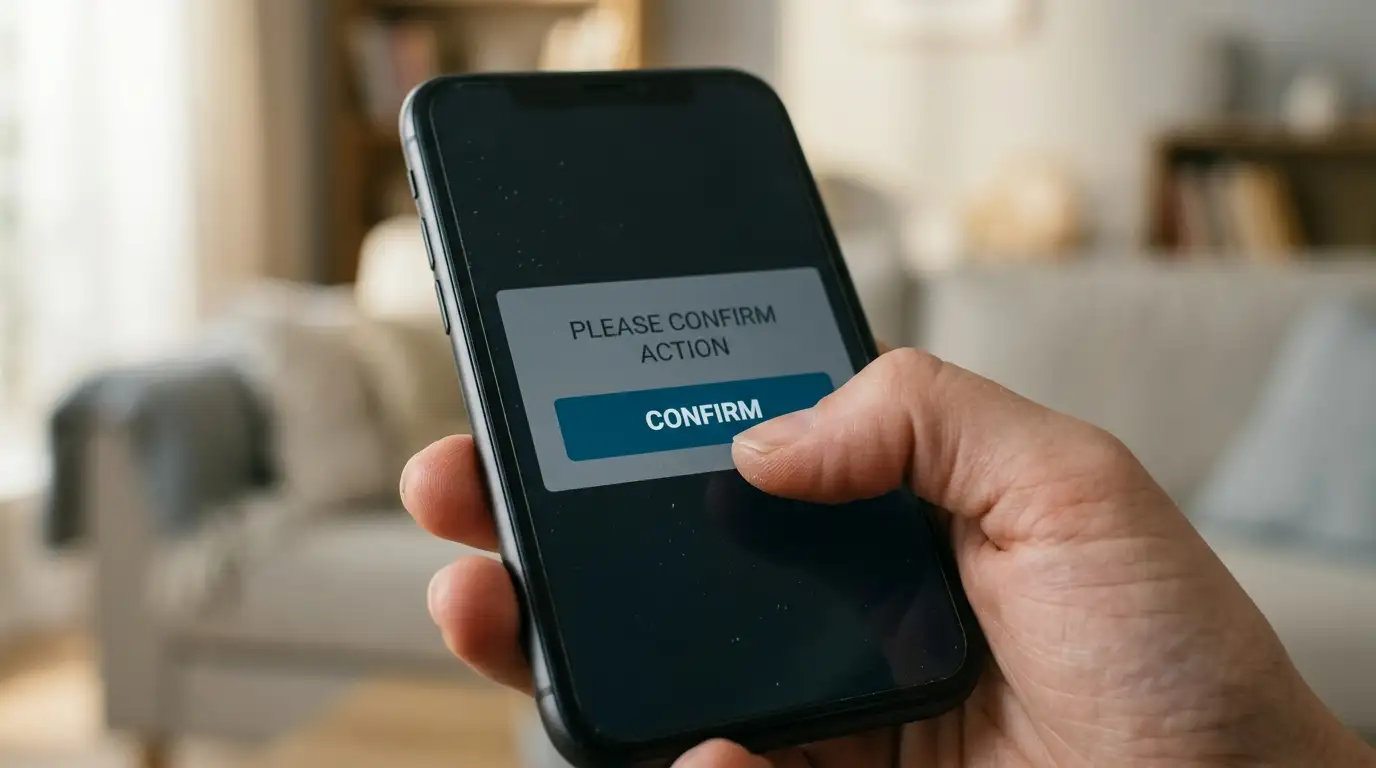
The PayID flow involves leaving the casino and coming back, which sounds fragile and is not. Your session survives the switch, and understanding the sequence removes the two failure modes that generate most of the support tickets.
Open the operator’s cashier on your phone and select PayID. The screen returns a PayID address — usually a phone number or email belonging to the payment processor — plus a reference code, and a clock. That address is temporary, commonly valid for about thirty minutes, and it is not permanent between deposits, so a saved payee from last week is a transfer into a void. Switch to your banking app, create a new PayID payment, paste the address, enter the exact amount, and put the reference code in the description field. Confirm with the app’s biometric or PIN. Settlement takes four to eight seconds. Switch back and the balance is usually already there.
Two things break this. Skipping the reference code means the money settles correctly but has nothing to match it to your account, so it sits in the processor’s ledger until a human reconciles it — the fix is live chat with your transaction reference, and it takes about an hour rather than a day. Hitting your bank’s daily cap produces a decline with a message so unhelpful that most people conclude the casino rejected them. Raise the cap in your banking app before you need it, ideally a day ahead, since some banks’ limit changes take twenty-four hours to clear their own fraud layer.
The wallet and card rails compress all of this into a single gesture, which is their entire proposition. Apple Pay and Google Pay never leave the browser: tap the tile, confirm with Face ID or a fingerprint, and the tokenised charge goes through the card networks. MuchBetter bounces you into its own app for a biometric check and back again, averaging eight seconds end to end. A Neosurf code needs no confirmation at all beyond typing ten characters, which is precisely why an exposed code is spendable by anyone who reads it — treat a voucher PIN like cash, because functionally that is what it is.
The one-way valve — why winnings never come back down the same pipe
Three of the five rails above are push-only. Apple Pay, Google Pay and Neosurf move money towards a merchant and have no architecture for moving it back, and the same was true of Boku and every carrier-billing scheme before it. This is not an operator policy you can argue with. Card wallets are designed for the customer-pays-merchant direction; a voucher is a bearer instrument that gets consumed; a phone bill has no mechanism for accepting a merchant credit.
Where this collides with reality is the same-method rule. Most operators require withdrawal via the deposit method, for anti-money-laundering reasons that are entirely legitimate. Deposit with a push-only rail and that rule cannot be satisfied, so the operator asks you to nominate and verify a different one — a bank account for PayID, or a wallet. You are now doing first-time verification on a rail with no transaction history at the exact moment you want money out. That is where the delay lives. Not in the payout queue.
The timings, once you are through it, are unremarkable. PayID withdrawals typically clear in five to forty minutes, with the fastest observed Australian average around nine minutes at SkyCrown for verified accounts under A$2,000. MuchBetter lands in your wallet within minutes to twenty-four hours of operator approval. USDT on a low-fee network averages under fifteen minutes. First cashouts run longer regardless of rail because the document check gates them — published testing on a fresh account put the full first-withdrawal cycle around twenty-six hours including verification. Amounts above roughly A$5,000 to A$10,000 commonly trigger manual compliance review, adding anywhere from an hour to a day. And while the New Payments Platform settles on Sundays quite happily, offshore approval desks tend to keep business hours, so a Saturday-night request often means a Monday-morning release.
The practical instruction is short. Whatever rail you deposit with, set up PayID or MuchBetter and pass verification on day one, before you have anything to withdraw.
Can I withdraw winnings back to my phone bill or Apple Pay?
No. Apple Pay, Google Pay, Neosurf and carrier billing are push-only — they move money to a merchant with no return path. PayID and MuchBetter are the two-way rails, and crypto is a third option. Nominate one of those and complete verification before your first withdrawal request, not after.

Legal position, BetStop, and what “not on BetStop” really means
The Interactive Gambling Act 2001, amended in 2017, prohibits supplying interactive gambling services — online casino games among them — to Australian residents. It aims at operators. There is no provision under which an individual commits an offence by placing a bet at an offshore site, and no Australian has been prosecuted for doing so. That asymmetry is the whole shape of the market: illegal to offer, not illegal to use.
Enforcement runs through the ACMA, which asks internet service providers to block sites under section 313 of the Telecommunications Act 1997. The first blocking request went out in November 2019. By the ACMA’s notice of 20 August 2026, 1,788 illegal gambling and affiliate websites had been blocked, and more than 230 illegal services had withdrawn from the Australian market since enforcement of the current rules began in 2017. There is no Australian register of licensed online casinos to consult, because none are licensed. The register the ACMA does maintain covers wagering services — sports and racing betting — and that distinction is the key to the next part.
Does BetStop block offshore pay by phone casinos?
No. BetStop binds Australian-licensed online and phone wagering providers, which means sports and race betting operators. Offshore casinos hold no Australian licence, so the register has no legal reach over them. A site advertising itself as “not on BetStop” is describing a missing consumer protection, not a feature.
That deserves more than forty words, because the search volume behind “pay by phone casino not on BetStop” suggests a lot of people read it as a selling point. BetStop — the National Self-Exclusion Register — launched on 21 August 2023 as the tenth and final measure of the National Consumer Protection Framework for Online Wagering, and the ACMA runs it. Registration needs a mobile number, an email address and one of an Australian driver’s licence, an Australian passport or a Medicare card. Once you are on it, every licensed provider must refuse to open an account for you, must refuse your bets, must close accounts you already hold, and must stop marketing to you. Exclusion runs from a minimum of three months to a lifetime. Ending it early is deliberately difficult: you can apply only after three months have elapsed, and only with a Commonwealth statutory declaration confirming you have discussed the decision with a counsellor or a general practitioner, after which a further seven days pass before removal.
The uptake numbers are worth sitting with. ACMA statistics to the end of the fourth quarter of the 2025–26 financial year record 65,430 people registered since launch, with 40,160 active exclusions as at 30 June 2026. Those are people who decided the frictionless version of gambling was working against them and took a step that cannot be undone on a Friday night.
So an offshore casino sitting outside BetStop’s reach is not offering you freedom. It is offering you the absence of the one mechanism that works when nothing else does. If you have ever thought about registering, the fact that a site cannot see your registration is the reason to avoid it, not the reason to sign up.
Is it illegal for me to play at an offshore casino from Australia?
No. The Interactive Gambling Act 2001 makes it illegal for operators to supply online casino games to Australian residents, but creates no offence for the individual player. You carry the practical risk instead: no local dispute resolution, no BetStop coverage, and no Australian regulator to complain to if a payout stalls.
What you can play once the money lands
The rail does not touch the lobby. Depositing by PayID rather than card does not unlock or lock any category of game, and the pool of searches for “pay by phone slots” and “mobile casino games you can pay by phone bill” reflects a distinction that does not exist on the operator’s side. You get the same catalogue as everyone else: pokies from Pragmatic Play, NetEnt, Play’n GO, Hacksaw Gaming, BGaming and the rest, live dealer tables from Evolution, blackjack, roulette, baccarat, video poker, keno, and at several of these sites a sportsbook on the same balance. Bingo alongside pokies appears at some operators and not others, and where it exists it sits in the same lobby as everything else.
What the rail does touch is your bankroll, and that is a different constraint with real consequences. Carrier billing’s roughly thirty-dollar ceiling was the reason UK pay-by-phone play was structurally micro-stakes — you cannot run any progression strategy on a thirty-dollar cap, and covering enough of a roulette table to hedge is arithmetically impossible. Australian rails do not have that problem. A PayID deposit is limited by your bank’s daily cap, which even at ING’s conservative default is A$1,000 and at NAB is twenty-five times that. The ceiling moved from the rail to your own judgement, which is a mixed blessing depending on the judgement.
Live dealer play adds a technical requirement worth flagging for phone players specifically. Streaming a high-definition feed from a studio in Europe to a handset needs consistent bandwidth, and 4G or 5G handles it while congested public wi-fi often does not. Lag in a live blackjack hand is not cosmetic — the software will take a default action rather than let the table stall, and that default protects the game’s integrity, not your hand. Play live on mobile data or a stable connection, or stick to pokies where a dropped frame costs nothing.

Bonuses, free spins and the “no deposit” question
Bonus terms attach to your account, not to the pipe the money arrived through. The pool of searches for “pay by phone casino no deposit bonus” and “pay by phone bill slots no deposit” implies a category of offer gated on the deposit rail, and no Australian-facing operator runs one. A no-deposit offer requires no deposit at all, which makes the rail question moot by definition.
Where rails genuinely matter is exclusion lists, and the pattern there is specific. Operators spent the late 2010s watching Skrill and Neteller get used for bonus arbitrage, and the response was to carve those two out of welcome-offer eligibility across large parts of the market. MuchBetter, newer and much harder to run multiple accounts against thanks to per-transaction biometrics, mostly escaped that treatment. So if you are depositing specifically to claim a first-deposit match, MuchBetter is a safer bet than the older wallets — and PayID, being an ordinary bank transfer as far as the operator’s terms are concerned, is almost never excluded. Read the excluded-methods clause before the deposit rather than after; if only Skrill and Neteller appear, everything discussed here qualifies.
Are pay by phone deposits eligible for welcome bonuses and free spins?
Generally yes. PayID and Apple Pay are almost never on operator exclusion lists, and MuchBetter is excluded far less often than Skrill or Neteller. Check the excluded-methods clause in the bonus terms before depositing. No Australian-facing operator gates a no-deposit offer on which deposit rail you use.
One more thing about the vocabulary. Wagering requirements turn a headline figure into a playthrough obligation, and a “free” spin bundled with a forty-times condition is free in the sense that a lolly at the dentist is free — the cost sits further down the appointment. Spinko’s 300 wager-free spins are the exception on this list precisely because the winnings arrive as cash. Casinos are not charities, they are businesses with a mathematical edge and a marketing department, and reading the playthrough number before the bonus number is the whole skill.
How this list was put together, and what launched recently
Three filters, applied in order. First, does the cashier carry at least one genuine phone-native rail — PayID, Apple Pay, Google Pay, MuchBetter or Neosurf — that an Australian can complete without a desktop. Second, is there a documented two-way route out, since a site that takes PayID and pays only in crypto is a different proposition from one that pays back down the same rail. Third, and last, the commercial terms. Bonus size sat at the bottom deliberately: the size of a welcome offer is the easiest thing for an operator to inflate and the least predictive of whether a withdrawal will clear.
Sites were also read against their negative record, not only their marketing. That is why SkyCrown appears with both its nine-minute average and its High Risk rating, and why Spinko’s wager-free spins sit next to a note about thin licence disclosure. An operator list where every entry sounds good is a list that has stopped filtering.
On new arrivals: Spinko is the only 2026 launch here, and its inclusion is conditional. A new brand has no payout history, and payout history is the single most useful signal in this market. The searches for “new pay by phone casinos” and “new casino sites pay by phone bill” are looking for an edge — fresher bonuses, softer terms — and sometimes that edge is real. It comes bundled with the risk that the operator’s first serious dispute has not happened yet. Test a new site with a A$10 or A$20 deposit and take a small win out early. That single withdrawal tells you more than every review on the internet, including this one.

Keeping a frictionless rail from becoming an expensive habit
Everything above optimises for speed, and speed is exactly the property that makes a deposit rail dangerous. A PayID transfer clears in four seconds with a thumbprint. There is no card number to find, no bank portal to log into, no moment of friction where a decision gets reconsidered. Carrier billing at least had a thirty-dollar cap doing accidental harm reduction. PayID’s ceiling is whatever your bank allows, which for most people is thousands.
The most useful control available is one the casinos do not offer, and it lives in your banking app. The same slider that lifts a PayID daily limit also lowers it. Setting an outbound cap that matches a session budget rather than a bank’s default puts a hard ceiling on a bad night, and unlike an operator’s deposit limit it cannot be lifted by clicking through a persuasive dialogue at two in the morning — some banks take twenty-four hours to action an increase, which is precisely the delay that helps. Use the friction deliberately.
If gambling has stopped being entertainment, BetStop is free, takes about ten minutes, and covers every Australian-licensed wagering provider. Its inability to reach offshore casinos is a genuine gap, and the honest response to that gap is to combine registration with bank-level blocks — most major Australian banks now offer a gambling transaction block in-app, and that one applies to any merchant, offshore included. Gambling Help Online runs a free counselling service on 1800 858 858, at any hour. None of that is a footnote obligation. It is the same practical advice as raising your PayID limit before a deposit: set the mechanism up while you are calm, because the moment you need it is the moment you will not be.
Casino Deposit Methods Australia 2026 — Full Comparison
Content created by the «CasinoPay» team