
Casino Sites That Accept ecoPayz in Australia: the 2026 cashier audit, fees and all
 Available in AU

ecoPayz Casino Sites in Australia: the Short Version
ecoPayz still works from Australia, but it answers to a different name. The wallet rebranded to Payz on 11 May 2023, keeping the same operator, the same accounts and the same logins. Casino cashiers never caught up. So you will see both labels, and both mean the same thing.
That single piece of housekeeping causes more confusion than any fee schedule. Someone opens a cashier, scans the payment grid for “ecoPayz,” sees a Payz logo instead, and concludes the site dropped support. It did not. Nothing was dropped. A brand team changed a name three years ago and a few hundred operators never updated their integration graphics.
Underneath the naming mess sits a harder fact about the Australian market. Not one site on this page holds an Australian licence, because no such licence exists. Online pokies and table games are a prohibited service under the Interactive Gambling Act 2001, and no state or territory has ever issued a permit for them. Every operator that accepts an Australian player with this wallet is licensed somewhere else — Curaçao, mostly, with Anjouan, Kahnawake and Tobique filling in the edges. That is the whole shape of the market, and any page telling you otherwise is selling something.
The practical answer, then, has three parts. The wallet is live and Australians can open one. A specific set of offshore sites carry it in the cashier, and the ranked breakdown of those sites sits further down with licences, minimums in Australian dollars and payout windows attached. And the wallet has a tier system with one hard gate that nobody warns you about: an unverified account cannot send money to a bank account at all. Deposit all you like. Getting it back out is a different question, and the answer depends on paperwork you have probably not done yet.
One more framing note before the list. The word “free” attaches itself to this wallet constantly — free to open, free deposits, free payouts into your balance. All three are true and all three describe the middle of a journey that costs money at both ends. A casino is not a charity and neither is a payments company. Loading the wallet costs something, moving money to your bank costs something, and the free part is the bit in between where nobody was charging you anyway.
Is ecoPayz still available, or has it become Payz?
Both. ecoPayz became Payz on 11 May 2023 under the same operator, PSI-Pay Ltd, and every existing account, balance and transaction history carried across automatically. Nothing needed doing at your end. Casino cashiers still show either label depending on when the operator last touched its payment graphics.

How We Picked These Sites
Ranking casinos for a payment-method question needs different criteria than ranking them in general, and most pages do not bother making the distinction. A site can have a magnificent pokies lobby, a licence you can actually verify and payouts that clear before lunch, and still be a bad answer here because the wallet only works on the way in.
So the selection ran on wallet-specific axes:
- Whether ecoPayz appears on both the deposit and the withdrawal menu, not just the deposit side
- Whether the operating entity and licence can be identified and checked, rather than asserted
- Minimum deposit and withdrawal figures in Australian dollars, and the caps that sit above them
- Time from casino approval to money landing in the wallet
- Whether wallet deposits qualify for the welcome offer or get quietly excluded
- Exposure to blocking action, and any history of mirror domains
- Corroboration across at least two independent sources for the wallet specifically
The last one did most of the filtering. Search this topic and you will find shortlists naming casinos that appear nowhere else on the internet — Magius, Dragonia, FundFlow, PaymentPro, WalletHub, EasyFunds, VeloPlay. Some of those look like placeholder text somebody forgot to replace. Any brand that could not be found on a second independent source with this wallet attached did not make the cut, which is why the list below is shorter than some and why every entry has an entity name or an honest admission that the entity is not published.
For calibration: one of the larger multi-market portals covering this wallet reviews 154 casinos and publishes its weighting — trust and licensing 25%, payout speed 25%, game quality 20%, bonus value 15%, user experience 15%. Sensible weights for a general casino ranking. Useless for this question, because not one of those five axes asks whether the wallet works in both directions, and that is the thing most likely to cost you an evening of support tickets.
A word on the numbers you will meet elsewhere. One large Australian portal opens its ecoPayz page with the claim that 80% of online casinos in Australia accept the method. No source, no methodology, and no casino list underneath it — the page is a widget with an introduction attached. The claim also does not survive contact with actual cashier audits: on one Australian-facing list of 23 casinos, seven displayed the wallet. MiFinity and Neosurf both have steadier local coverage. The wallet is available here. It is not dominant here, and the difference matters when you are choosing where to keep a balance.
Ratings on affiliate sites in this niche are self-reported, unaudited and frequently contradictory. Headline bonus figures shift between landing pages for the same casino — one page will advertise A$400 for a brand that another page advertises at A$3,900, both claiming to describe the same welcome offer. Treat every number below as a starting point for your own check in the cashier, including the ones here.

Casino Sites That Accept ecoPayz in Australia
Twelve brands, ordered by how well they serve this particular wallet rather than by general reputation. Low Australian-dollar minimums and confirmed presence on both cashier menus push a site up. Contested wallet coverage or a thin regulatory picture push it down, though everything on the list gets the same depth of treatment because the weak entries teach you more than the strong ones.
| Site | Licence | ecoPayz on both menus | Min deposit | Payout to wallet | Withdrawal caps | Distinguishing feature |
|---|---|---|---|---|---|---|
| Rocket Casino | Curaçao (Gaming Control Board) | Yes | A$10 | Marked instant | €1,000 daily / €15,000 monthly | Only brand found with A$10 both in and out |
| Katsubet | Curaçao 8048/JAZ2020-013 (Dama N.V.) | Yes | A$20 | 0–60 minutes after approval | Not published per-brand | Fastest documented wallet payout in the AU market |
| Lucky7even | Curaçao (Gaming Control Board) | Yes | A$20 | Instant on one audit, 1–3 days on another | $2,000 daily / $20,000 monthly | PayID, BPAY and the wallet all live together |
| Spin Samurai | Reported as Tobique by one source, Curaçao by another | Yes | A$10 | 1–24 hours | 1,000 daily / 15,000 monthly | A$10 in, A$20 out — the floors do not match |
| Ricky Casino | Curaçao 8048/JAZ2020-013 (Dama N.V.) | Yes | A$30 to qualify for the welcome offer | Instant after approval | Not published per-brand | AUD-native, 3,000+ titles, live since 2021 |
| Casinonic | Curaçao 8048/JAZ | Yes | Not published; A$20 band reported | Under 24 hours | Not published per-brand | Native AUD cashier, PayID locked until second deposit |
| Bizzo | Curaçao 8048/JAZ2017-067 plus Kahnawake #00867 | Deposit confirmed; withdrawal side needs on-site check | A$10 (A$25 to qualify for the bonus) | 24–72 hours on one review, under 12 on another | Not published per-brand | Two licences instead of one |
| Tsars | Curaçao | Yes | €20 | 1–3 days | Not published per-brand | 30x wagering where the group standard is 40x |
| 7Bit | Curaçao; entity reported as Dama N.V. or Scores55 Tech B.V. | Contested across sources | €20 band; not confirmed in AUD | 1 day | A$20,000 weekly | Trading since 2014, longest record in the group |
| SkyCrown | Curaçao (Hollycorn N.V.) | No — one AU audit records MiFinity-only withdrawals | €20 band; A$30 on PayID | 1–3 days | Not published per-brand | The deposit-only trap in a single brand |
| Neospin | Offshore, described as weaker than the Curaçao cohort | Yes | Not published | Within the 0–24 hour band | A$6,000 daily | Highest daily cap; named by the regulator |
| Bet and Play | Not consistently published | Deposit confirmed under the Payz label | Not published | Not published | Not published | Largest advertised welcome package in the set |
Cells that say “not published” mean exactly that. Filling them with “standard” or “on request” would look tidier and tell you nothing, and in a market where the same brand advertises two different bonus figures on two different landing pages, a blank is more honest than a guess.
Rocket Casino — A$10 in, A$10 out
Rocket runs under a Curaçao licence issued by the Gaming Control Board and carries the Payz logo directly in its cashier alongside PayID, Neosurf and crypto. Stated return to player sits around 97%. Withdrawals are marked instant, with caps of €1,000 per day and €15,000 per month — modest ceilings by the standards of this group, but they apply to sums most players never approach.
What makes Rocket worth the top slot on a wallet page is arithmetic nobody else in the group manages. The minimum deposit is A$10 and the minimum withdrawal is also A$10. Everywhere else, the floor rises on the way out. That asymmetry is how small balances get stranded: you put in the advertised tenner, the site pays out from twenty, and the difference sits in your account until you either top it up or lose it playing for the privilege of reaching the withdrawal threshold. Rocket is the one brand found where the two numbers match, which makes it the sensible place to test the wallet before committing real money anywhere else.
Katsubet — the fastest documented payouts to the wallet
Operated by Dama N.V. and live since 2020, Katsubet holds Curaçao eGaming licence 8048/JAZ2020-013 under the Antillephone master licence and pulls games from more than a hundred studios. Deposit and withdrawal minimums both sit at A$20, and the wallet appears alongside Skrill and Neteller on the payout side.
The number that earns Katsubet its position: one Australian e-wallet audit clocked approved withdrawals returning in 0 to 60 minutes to Skrill, Neteller or Payz, against one to three business days for PayID on an identical amount. That is the sharpest published comparison in this market and the honest core of every “instant withdrawal” claim you will read. Note the qualifier though — approved withdrawals. The casino’s approval step happens first, it is gated by identity checks on your first cashout, and no wallet on earth compresses it. Treat the sixty minutes as the second leg of a journey, not the whole trip. As for the welcome offer, one landing page advertises A$400 plus 100 free spins from a A$20 deposit while another for the same brand headlines A$3,900 plus 60 spins. Both cannot be current. Read the terms in the cashier, not on the ad.
Lucky7even — the wallet, PayID and BPAY all on one cashier
Licensed in Curaçao by the Gaming Control Board, Lucky7even runs a lobby above 5,000 titles with a minimum of A$20 on both the deposit and withdrawal side. Caps are published clearly at $2,000 daily and $20,000 monthly, which is the cleanest daily-plus-monthly pair in the group. Wagering on the welcome package, around A$3,000, runs at 40x. Payout speed depends on which audit you trust: one marks it instant, one puts it in the one to three day band, and crypto cashouts reportedly clear in hours.
The reason this brand matters more than its ranking suggests is that it carries PayID, BPAY and the wallet all live at once, which makes it the natural place to work out when the wallet is actually the right choice. If you are depositing and playing in Australian dollars and cashing out to an Australian bank, PayID does the job with no intermediary, no separate login and no per-transfer fee. The wallet earns its keep on the payout leg when the casino processes e-wallet requests faster than bank transfers, and in the case where you would rather the casino never saw your bank details at all. Two different jobs. Having all three options in one cashier lets you switch between them without opening a second account.
Spin Samurai — A$10 in, A$20 out
Operating since 2020 with Australian dollar accounts, Spin Samurai displays the Payz logo in its cashier and posts a stated return around 97%. Withdrawal caps run 1,000 daily and 15,000 monthly, with payouts in the one to twenty-four hour band. The licence picture is muddier than it should be: one Australian cashier audit records the Tobique Gaming Commission in New Brunswick, another review says Curaçao. Both cannot be right, and Tobique is a newer, less-tested route than Curaçao — which itself is not a demanding regulator.
Then the catch, which is the entire reason this brand sits where it does. Minimum deposit A$10. Minimum withdrawal A$20. Deposit the advertised tenner, win nothing, and you cannot take your own money back — you are ten dollars short of the exit. It is a small trap and a common one, and it is why the deposit floor advertised on a landing page is only half the number you need. Ask for both before you fund anything.
Ricky Casino — established, AUD-native, wallet both ways
Another Dama N.V. brand on the same Curaçao licence as Katsubet, 8048/JAZ2020-013, which is worth registering as a pattern: several apparently unrelated casinos on this page share one licensee. Ricky has been live since 2021 with a library above 3,000 titles, an Australian dollar cashier and local rails including PayID. The wallet appears on the payout side alongside Skrill and Neteller, with money moving instantly once the casino approves.
Third-party sentiment here is measurable rather than self-reported, which is rare in this corner of the market — Trustpilot scores hover around 3.7 out of 5 across the brand’s various domains, on thousands of reviews. That “across the brand’s various domains” is the part to sit with. Domain sprawl is standard practice for offshore operators serving Australia, and it is exactly what the regulator’s blocking programme chases: block one address, another appears. On the bonus side, the staged welcome package carries 40x wagering and a maximum bet around A$5 while any bonus is active. Go over that ceiling and winnings can be voided, which is the kind of clause that turns a “reward” into a trap for anyone who raises stakes mid-session without rereading the terms.
Casinonic — native AUD, and PayID stays locked
Live since 2020 under Curaçao eGaming licence 8048/JAZ, Casinonic runs a native Australian dollar cashier and lists ecoPayz alongside Neteller and Skrill for withdrawals, processed inside 24 hours. The operating entity is not consistently published across available sources, so it is recorded here as unverified rather than guessed at.
The AUD-native cashier is the substantive point. Hold Australian dollars in the wallet, play at a cashier denominated in Australian dollars, and the wallet’s currency conversion charge never engages — which matters more than it sounds, because that charge starts at 2.99% and only falls if you spend enough to climb the tier ladder. Pair that with a quirk one audit records here: PayID stays locked until you make a second deposit. If the local instant rail is unavailable on your first visit and the wallet is not, then for that first deposit the wallet is genuinely the better option rather than merely a different one. That is a narrow advantage. It is also a real one, and narrow real advantages are worth more than broad advertised ones.
Bizzo — two licences and a real A$10 floor
Bizzo has been running since 2018 under TechSolutions Group N.V. with something unusual in this cohort: two licences rather than one, Curaçao eGaming 8048/JAZ2017-067 alongside Kahnawake #00867. Australian dollar play is supported, crypto runs in Bitcoin, Ether, Litecoin and USDT, and the minimum deposit is A$10 across cards, PayID and crypto per two independent sources. Payout timing is reported inconsistently — 24 to 72 hours on one review, under 12 on another.
Two numbers get conflated on Bizzo’s landing pages and separating them is worth doing. The deposit floor is A$10. The figure needed to qualify for the welcome offer is A$25. Those are different things measuring different constraints, and a page quoting only the second one makes the site look pricier than it is, while a page quoting only the first makes the bonus look more accessible than it is. Both figures appear in circulation attached to the same brand. On the wallet specifically: Bizzo shows up on multi-market ecoPayz lists at a €20 minimum, but whether the wallet sits on the Australian withdrawal menu is not confirmed by the sources available. Check it in the cashier before you rely on it.
Tsars — 30x instead of 40x
Curaçao-licensed, €20 minimum deposit, payouts in the one to three day band, and corroborated on two independent lists as carrying the wallet — one multi-market ecoPayz ranking and one Australian-facing Payz shortlist. The Australian welcome package runs around A$3,000 plus 200 free spins spread across four deposits.
The figure that matters is the wagering multiple: 30x, where almost everything else in this group sits at 40x. Bonus terms are where headline numbers go to die, and 30x against 40x on the same nominal bonus is a materially cheaper obligation — a quarter less turnover to clear before the money is yours. It is also the rare case in this market where the smaller advertised number is the better deal, which is worth remembering the next time a site leads with A$7,000. The size of the package tells you how much you must wager. The multiple tells you how hard.
7Bit — the longest track record and the biggest weekly headroom
Founded in 2014, 7Bit predates everything else on this list by at least four years and most of it by six. Curaçao-licensed, with a retro arcade presentation, a library now past 7,000 titles, and both Australian dollar and coin play. The operating entity is reported as Dama N.V. by some sources and Scores55 Tech B.V. by others, and rather than pick one, the discrepancy is stated: it is unresolved in public sources.
On the numbers, 7Bit appears on multi-market ecoPayz rankings with one-day payouts, among the fastest on those tables, and an Australian e-wallet audit credits it with A$20,000 of weekly withdrawal headroom — the largest found anywhere in this group. But that same audit lists MiFinity and Neosurf as its e-wallet routes rather than this wallet, which is the third brand on this page where sources disagree about cashier coverage. A long track record is genuinely worth something in a market where brands appear and vanish inside a year. It does not tell you what is on the withdrawal menu this week.
SkyCrown — the deposit-only trap in one brand
Operated by Hollycorn N.V. under a Curaçao licence, SkyCrown is one of the larger Australian-facing names, running pokies, live tables and a competent mobile build. It appears on multi-market ecoPayz lists at a €20 minimum with one to three day payouts. PayID is live in both directions at a A$30 minimum with withdrawals stated at two to four hours.
Now the part that makes SkyCrown the most instructive entry here. An Australian-specific cashier audit records its withdrawals as MiFinity-only, with Skrill and Neteller supported inbound only — money in through the e-wallets, money out through something else entirely. Whether this wallet sits on the Australian withdrawal menu is genuinely unclear from the available sources, and that is the whole warning of this page compressed into one brand. A site can appear on every ecoPayz list going and still be deposit-only in your market. The MiFinity route reportedly cleared in under fifteen minutes in testing, so the site is not slow. It just may not pay out the way you funded it. Open the withdrawal menu before you open your wallet.
Neospin — the highest daily cap, the weakest standing
Neospin’s welcome package builds to A$7,500 across five deposits at 40x wagering on most portions, and its daily withdrawal cap of A$6,000 is the most generous in this group by a wide margin. Payz and ecoPayz both appear on the payout side alongside Skrill and Neteller, with money moving in the standard nought to twenty-four hour band once approved.
Against that: the licence is described in independent audits as weaker than the Curaçao and Dama cohort, and the Australian Communications and Media Authority has named Neospin among prohibited interactive gambling services found to have an Australian-customer link. That is not a rumour or a rating, it is a regulator’s finding, and it belongs at the front of any honest description of the brand. The reason Neospin is on this page rather than quietly omitted is that the trade-off needs to be visible somewhere: a A$6,000 daily ceiling is worth precisely nothing at a domain your internet provider stops resolving. High caps and thin oversight tend to travel together, and the second thing is usually why the first thing is possible.
Bet and Play — the biggest banner, the thinnest paperwork
Bet and Play tops an Australian-facing Payz shortlist as a casino carrying the wallet under the Payz label, alongside Slots Gallery, at A$2,777 plus 225 free spins across three deposits, and Tsars. Its own headline is A$7,000 in matched funds plus 1,000 free spins, the largest advertised package in this corroborated set. The specific licensor is not consistently published in available sources, so this profile does not name one — inventing a licence number would be worse than admitting a gap.
Public detail on this brand is thin, and the profile stays short rather than padding out to match the others. What the entry is genuinely useful for is arithmetic. A thousand free spins and a A$7,000 match sound like a windfall until you notice the structure: spread across multiple deposits, at wagering multiples that run to 40x in this group, the headline is a turnover schedule rather than a gift. To clear 40x on even a fraction of A$7,000 you must cycle tens of thousands through the games first. The “gift” is an invitation to wager, priced accordingly, and the largest banner in a set is usually attached to the operator with the least to show on the licensing side. Here, that correlation holds.
New brands deserve one line of their own, since the pool of people searching for freshly launched wallet-friendly sites is not small. A new offshore casino is the worst place to keep a wallet balance, for the simple reason that it has no payout history for anyone to check and no track record to lose. Add the mirror-domain habit — blocked operators relaunch under a replacement address within days — and “new” often means “the same operator wearing a different name.” Nothing wrong with playing at one. Just do not leave money in it.
What is the minimum ecoPayz deposit at an Australian-facing casino?
Most sites set A$10 to A$30, with A$20 the most common floor. Rocket and Spin Samurai start at A$10, Bizzo at A$10 with A$25 needed to trigger the bonus, Katsubet and Lucky7even at A$20. Check the withdrawal minimum too — it is often higher than the deposit one.
What ecoPayz Actually Is Now, and Why the Name Keeps Changing
From ecoPayz to Payz: the same wallet under a new name
The wallet launched as ecoPayz in 2000 and has been operated throughout by PSI-Pay Ltd, a London company authorised by the UK Financial Conduct Authority as an electronic money institution under reference number 900011. On 11 May 2023 the brand became Payz. Accounts, balances, transaction histories and logins migrated automatically; nobody had to reapply for anything. Two and a half decades of trading and an FCA authorisation put this wallet ahead of most casino payment brands on regulatory standing, which is a low bar cleared with room to spare.
Structurally it is one primary account plus up to ten currency sub-accounts, across somewhere between 45 and 50-plus supported currencies with Australian dollars among them. Australia sits on the supported-countries list, which runs past 190 entries, and sign-up from an Australian address is open. That last point deserves a caveat rather than a flat assertion: at least one Australian publisher had this wallet documented as unavailable to Australians and reversed the position in July 2026. Availability lists for payment companies move without announcement. Confirm at sign-up rather than trusting any page, this one included.
Now the tier system, which is where the wallet stops being simple and where every Australian-facing page on this topic goes quiet.
| Tier | How you reach it | Bank withdrawal | Account currency conversion | What it actually changes |
|---|---|---|---|---|
| Classic | Default on sign-up, before identity checks | Not available at all | 2.99% | Nothing good. This is a holding pen, not a tier |
| Silver | Free, on completing identity verification (24–48 hours) | Unlocked, EUR 5.90–10 flat per transfer | 2.99% | The step that makes the wallet usable. Also unlocks the card application. Balance ceiling EUR 15,000 |
| Gold | EUR 10,000 in eligible merchant deposits per quarter | EUR 5.90–10 flat | 1.49% | The only tier jump that materially changes pricing. Wallet-to-wallet transfers become free |
| Platinum | EUR 50,000 per quarter | EUR 5.90–10 flat | 1.49% | Account manager, free card, higher card withdrawal ceilings. No further conversion saving |
| True VIP | EUR 250,000 per quarter | EUR 2.90–7.00 flat | 1.25% | Lowest rates on the schedule, highest limits, invitation-only extras |
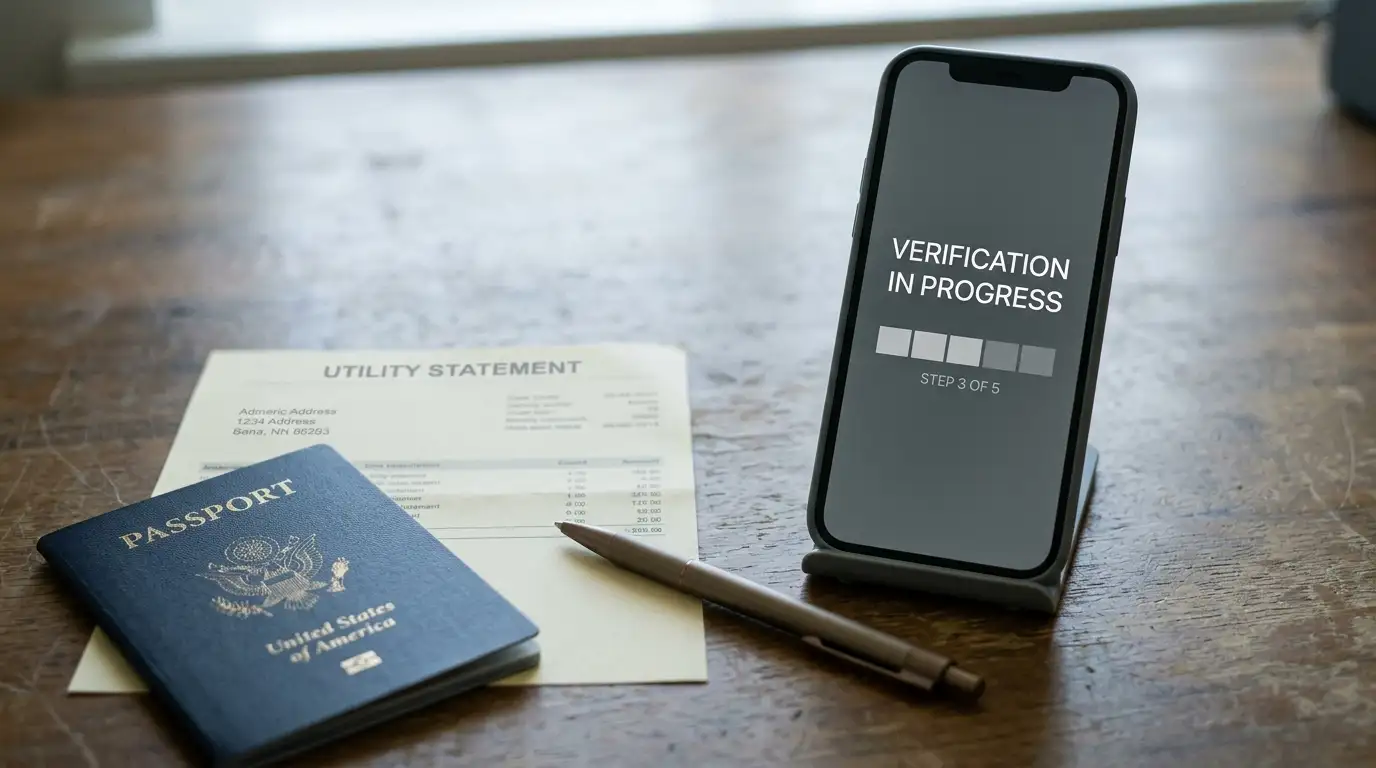
Read the first row again, because it is the single most consequential fact about this wallet and it appears on no Australian page covering the subject. A Classic account cannot send money to a bank account. Not slowly, not for a higher fee — not at all. Classic is the status you hold before completing identity verification, which means it is a compliance control wearing the costume of a loyalty tier. Skip the verification step and your wallet becomes a one-way valve: deposits flow in, casino winnings flow in, and the only exits are the prepaid Mastercard or a voucher. Upload a passport or licence plus proof of address, wait a day or two, and you are Silver with the bank transfer button switched on. It costs nothing. It is also the step most people postpone until the moment they have won something and want it out, which is the worst possible time to discover a document queue.
The tier thresholds themselves are worth reading carefully, since “eligible merchant deposits” is a narrow definition. Only transfers from your wallet into approved gambling merchants count. Funding the wallet from your bank does not count. Sending money to another wallet holder does not count. So the EUR 10,000 per quarter needed for Gold means ten thousand euros of actual casino deposits in three months — that is roughly A$1,250 a week of deposit volume, sustained, which puts Gold out of reach for anyone playing recreationally and makes the higher tiers a description of somebody else’s habits rather than a ladder you are climbing.
There is one more wrinkle, and it is the kind of detail that separates a fee schedule from a fee reality. Those conversion discounts at Gold and above apply to the wallet account only. The Payz Mastercard keeps a flat 2.99% conversion charge at every single tier, including True VIP. Spend in a foreign currency on the card as a Gold holder and you pay 2.99%, not the 1.49% your account gets. Skrill and Neteller both move their card rates with the tier; this one does not. If you were planning to reach a higher tier and then spend winnings abroad on the card, that plan does not work as advertised. Also relevant for Australians specifically: physical card issuance is restricted to holders in the European Economic Area and the UK, with other markets handled case by case, so the card route may not be available to you at all.
Can Australians open and use an ecoPayz (Payz) account for casino deposits?
Yes. Australia appears on the supported-countries list, sign-up is free, and the wallet handles Australian dollars natively among 50-plus currencies. Complete identity verification straight away — it upgrades you from Classic to Silver and is the only thing that unlocks transfers to an Australian bank account.

Depositing With ecoPayz: What It Costs Before the Money Reaches the Casino
Paying a casino from your wallet balance is free and lands instantly. Every page on this topic says so, and every page stops there, which leaves out the half of the transaction where money actually changes hands. The wallet is a middle step. Before you can pay a casino from a balance, the balance has to exist, and putting it there is the part with a price tag.
The published funding schedule runs like this. Bank transfer into the wallet costs anywhere from nothing to 8.5%, depending on your country and the specific rail — free once you hit Gold, and usually cheap or free on a verified account. Card funding costs 1.69% to 2.90%, with one source citing an upper band to 6.00%, plus a flat USD 0.36 surcharge on every transaction. Cash2Code is free. Vouchers are free. Crypto funding is free, with the network fee sitting outside the wallet’s schedule.
Put the A$10 minimum deposit next to that surcharge and the sums stop making sense. Fund A$10 by card and you pay roughly 2% of it, call it twenty cents, plus a fixed thirty-six US cents on top — north of 7% of the deposit gone before a single spin, and that is before the casino’s own terms come near it. Fund A$500 the same way and the flat component vanishes into the noise. The lesson is not “avoid the wallet.” It is that a flat fee is a percentage in disguise, and the smaller your transaction, the larger that percentage. Low advertised minimums are for people funding by bank transfer on a verified account. For anyone reaching for a card, the minimum that makes economic sense is several times the minimum the casino prints.
Sequence-wise, there is not much to it. Open the account at the wallet’s own site or app, verify your identity, fund the balance through whichever rail is cheapest where you live, then pick the wallet in the casino cashier — under either name — enter the amount, log in on the payment screen and confirm. Money is in the casino balance in seconds. The one habit worth building is checking the fee display in the app before confirming a funding transfer, because the cost varies by method and region and the app will tell you the number in advance.
Real money brings its own paperwork, separately from the wallet’s. Every offshore casino on this page runs identity checks, most trigger them on first withdrawal rather than first deposit, and some will ask where the money came from if the amounts get interesting. Holding Australian dollars in the wallet and playing at an Australian-dollar cashier keeps the conversion charge out of the picture entirely — a small piece of housekeeping that saves 2.99% on every movement, which over a year of regular play adds up to more than most welcome offers are worth after wagering.
Does ecoPayz charge fees on casino deposits and withdrawals?
Not on the casino leg. Paying a casino from your balance is free and instant, and casino payouts arrive in the wallet free within 24 hours. The costs sit either side: funding the wallet runs 1.69–2.90% plus USD 0.36 by card, and bank withdrawals cost EUR 5.90–10 flat.

Withdrawals: the Three Stages Nobody Separates
Search “instant ecoPayz withdrawal casino Australia” and you get a wall of pages promising minutes. The promise is not quite a lie. It describes one third of the journey.
Stage one is the casino approving your request. This takes anywhere from a couple of hours to several business days, it is gated by identity verification on your first cashout, and it is entirely at the operator’s discretion. Nothing about your choice of wallet affects it. Bizzo’s own reviews put this window at under 12 hours in one account and 24 to 72 in another; Katsubet, Ricky and Casinonic clear it fast; the multi-market tables show plenty of Curaçao brands sitting at one to five days and a few at seven.
Stage two is the money moving from the approved casino payout into your wallet balance. This is the fast bit, free, and typically inside 24 hours — often minutes. The Katsubet figure quoted earlier, 0 to 60 minutes against one to three business days for PayID, is a stage-two comparison. It is a genuine advantage and it is also the only stage anyone advertises.
Stage three is getting the money out of the wallet and into an Australian bank account. Here is where the wallet stops being free and starts being awkward. The transfer takes one to five business days. It requires Silver tier, meaning identity verification must already be done. And it costs a flat EUR 5.90 to 10.00 per transfer at Silver, Gold and Platinum, dropping to EUR 2.90 to 7.00 only at True VIP, which needs a quarter-million euros of deposit volume every three months.
Run that flat fee against realistic amounts and the picture sharpens. Withdraw A$100 and a EUR 5.90 to 10 charge eats roughly 6% to 10% of it, depending on the exchange rate and which end of the band your account lands on. Withdraw A$1,000 and the same charge is under 1%. Same fee, wildly different cost, purely as a function of how you batch. Anyone drip-feeding small cashouts to their bank is paying a percentage rate that would be illegal to advertise as a percentage rate. The behaviour that follows is obvious once the maths is visible: let winnings accumulate in the wallet and move them in fewer, larger transfers. The alternative exit the operator would rather you take is the prepaid Mastercard, with ATM withdrawals at 2% and a minimum of EUR 1.50, plus a daily ceiling of EUR 750 at Silver and Gold rising to EUR 1,500 at Platinum and above. On small amounts the card beats the bank transfer comfortably. It also requires the physical card, which Australians may not be able to get.
Two other numbers belong here. Crypto withdrawals from the wallet cost 2% plus network fees, which is a reasonable escape route for anyone already holding coins. And an account left dormant for twelve months starts accruing EUR 1.50 a month — a quiet drain on a wallet you funded, forgot and left with a small balance in it, which is exactly the situation a mismatched deposit and withdrawal floor tends to create.
Per-brand ceilings shape the batching decision too. Neospin allows A$6,000 a day, the loosest in the group. Lucky7even publishes $2,000 daily and $20,000 monthly, Spin Samurai 1,000 daily and 15,000 monthly, Rocket €1,000 daily and €15,000 monthly. 7Bit’s A$20,000 weekly headroom is the largest single figure found. If you have a five-figure win at a site with a four-figure daily cap, the payout arrives in instalments over a week or more regardless of how fast any individual transfer clears — a constraint that makes the wallet’s flat withdrawal fee more tolerable, since you will be batching anyway.
How long does an ecoPayz casino withdrawal take?
Three separate waits. Casino approval takes hours to several days and is identity-checked on first cashout. The transfer into your wallet then clears within 24 hours, often minutes. Moving money onward to an Australian bank adds one to five business days and costs a flat fee per transfer.
Why can’t I withdraw from my ecoPayz account to my bank?
Almost certainly because your account is still Classic, the default status before identity verification. Classic accounts have bank transfers disabled entirely — it is a compliance control, not a fee tier. Upload identity and address documents, wait 24 to 48 hours for Silver status, and the option appears.

The Legal Picture: Why Every Site on This Page Is Offshore
Online casino gaming is prohibited in Australia. Not restricted, not lightly licensed — prohibited. The Interactive Gambling Act 2001 makes pokies, roulette, blackjack, baccarat and live dealer games a prohibited interactive gambling service when supplied to a person in Australia, and no state or territory has ever issued an online casino licence. There is no register to check because there is nothing to register. That is why every licence in the table above reads Curaçao, Anjouan, Kahnawake or Tobique, and why any site claiming an Australian casino licence is lying about something checkable.
The prohibition binds providers, not players. An Australian individual who deposits at an offshore casino commits no offence under the Act; the operator supplying the service does. That asymmetry is the single most misunderstood thing about this market, and it cuts both ways — you are not breaking the law, and you also have no local consumer protection whatsoever. There is no Australian regulator to complain to when a payout stalls. The Curaçao Gaming Control Board is the recourse, and it is not the Gambling Commission.
Enforcement runs through the Australian Communications and Media Authority, which directs internet providers to block domains. The scale is not trivial: since the blocking regime began, 1,751 illegal gambling and affiliate websites have been blocked, and a further 230 services have withdrawn from the Australian market voluntarily under regulatory pressure. Blocking continues in batches through 2026 — one recent round of twelve domains included Slots Gem, a brand that appears on ecoPayz casino lists elsewhere. The regulator has also extended its attention to Australia-based people helping illegal operators reach local customers, social media promoters included. And it names the recurring obstacle itself: mirror sites, where a blocked operator relaunches on a replacement domain within days, which is why enforcement is continuous rather than a one-off cleanup.
For a wallet user, that produces a specific and rarely stated risk. A domain block does not touch your money. Your wallet balance is with an FCA-authorised institution in London and is unaffected by anything an Australian internet provider does. But your casino balance sits with the operator, and if the address you reach it through stops resolving, you have a balance and no interface. Mirror domains usually restore access, and a VPN often does too, but “usually” is doing real work in that sentence. The conclusion follows directly: keep the casino balance thin and the wallet as a staging post, not a savings account. Withdraw after sessions rather than letting a float build at a site whose domain has a shelf life.
One contrast confuses people constantly, so it belongs here: Australia does license online wagering. Sports and race betting operators hold state licences, sit under federal advertising rules, and are covered by the national self-exclusion register. None of them offer pokies, and none of them accept this wallet. So they cannot answer the question this page exists to answer, and their existence is the reason so many Australians assume online casino play must be licensed here too. It is not.
Two live developments are worth keeping half an eye on. New laws commence on 1 January 2027 strengthening the national self-exclusion register, including substantially higher penalties for breaches — the regulator has already fined one licensed operator A$1,069,200 in September 2026 over self-exclusion failures, so the enforcement appetite is real on the licensed side too. Separately, the federal government released a payments-system modernisation consultation package on 12 March 2026 covering how payment service providers are regulated. Nothing in it targets this wallet specifically. It is the kind of reform that eventually changes what foreign e-money institutions can do into Australia, and anyone relying on an offshore wallet for gambling should expect that landscape to keep moving.
Is it legal for an Australian to play at an offshore casino with ecoPayz?
The Interactive Gambling Act 2001 targets operators, not players. An Australian depositing at an offshore casino commits no offence under it. The trade-off is total absence of local protection — no Australian regulator oversees the site, and your only recourse is the offshore licensor that issued its permit.
What happens to my balance if a casino I use gets blocked in Australia?
Your wallet balance is untouched — it sits with an FCA-authorised institution and no blocking order reaches it. The casino balance is the exposure: the money still exists but the domain you access it through may stop resolving. Keep casino balances thin and withdraw after sessions rather than accumulating.
ecoPayz Against the Rails Australians Actually Use
Honest positioning first: this is not the default payment method for Australian casino play, and any page implying otherwise is padding its case. PayID is. It settles in about sixty seconds, costs nothing, needs no separate account, no separate login and no stored balance, and it appears on more Australian-facing cashiers than any e-wallet. If your only concern is getting money into a casino cheaply and fast, the local rail wins and the argument ends there.
The wallet’s case is built on the other leg of the trip. Casinos frequently process e-wallet payouts faster than bank transfers — the Katsubet comparison of 0 to 60 minutes against PayID’s one to three business days is the cleanest published example, and the pattern holds across the group. Second, the casino never sees your bank details; it sees a wallet confirmation. For anyone uncomfortable handing account numbers to an offshore operator with a Curaçao permit and a domain that might be replaced next quarter, that separation has genuine value. Third, multi-currency handling matters if you play at cashiers denominated in euros or US dollars, where a wallet holding the right currency avoids a conversion you would otherwise eat twice.
Against the direct comparisons: Skrill and Neteller are the two closest analogues and both are more widely integrated in Australian cashiers, though this wallet’s standard conversion rate of 2.99% undercuts their 3.99%, and both of them move card conversion rates with tier while this one does not. MiFinity and Neosurf both have steadier local coverage — MiFinity in particular turns up on Australian withdrawal menus where this wallet does not, which is exactly the SkyCrown situation described earlier. Neosurf is a voucher rather than a wallet, so it deposits and cannot receive payouts, which makes it a different tool rather than a competitor. Crypto is the fastest route out of any of these sites and the most volatile store of value in between; 7Bit and Bizzo both lean on it heavily. And PayPal is simply unavailable — gambling transactions are prohibited under PayPal’s own Australian policy, so no amount of searching will find a workaround.
Where does that leave the wallet? A reasonable second method rather than a first. Useful if your preferred casino runs a native euro or US dollar cashier, if PayID is missing or gated at the site you have chosen, or if you specifically want a buffer between the casino and your bank. Not the cheapest option for small amounts, given the flat withdrawal charge, and not the most widely accepted. That is a narrower recommendation than most pages on this subject will give you, and it is the accurate one.
Is ecoPayz safer than a direct bank transfer or card at a casino?
Safer in one specific way: the casino receives a payment confirmation rather than your bank or card details, so a data breach at the operator exposes less. The wallet operator is FCA-authorised with segregated customer funds. It does not make the casino itself any more trustworthy or its licence any stronger.
Bonuses on ecoPayz Deposits, and the Part the Banner Leaves Out
Bonuses are set by casinos, not by wallets, so most of what gets written about ecoPayz bonuses is filler. One wallet-specific fact does matter, and it is the exclusion rule: many operators bar e-wallet deposits from welcome offer eligibility, which is a clause that lives in the terms rather than on the banner. This wallet is reportedly excluded slightly less often than Skrill or Neteller, which is a mild point in its favour and nothing to plan around. Read the qualifying-methods line before your first deposit, because a deposit made through an excluded method cannot usually be retro-fitted to the offer afterwards.
Then the arithmetic, which is where the headline numbers on this page deserve a second look. Bet and Play advertises A$7,000 plus 1,000 free spins. Neospin builds to A$7,500 across five deposits. Both look enormous next to Tsars at around A$3,000. But the wagering multiple is the operative figure, not the ceiling: at 40x, clearing a bonus means cycling forty times its value through the games before the money is withdrawable, and the advertised maximum assumes you fund every deposit stage to the cap. Tsars at 30x asks a quarter less turnover per dollar of bonus than the 40x standard across the rest of this group. On the same nominal amount, that is the cheaper obligation by a distance, and it is worth more than a bigger banner.
The clause that catches people is not the multiple, though. It is the maximum bet while a bonus is active — around A$5 at Ricky, and similar ceilings are standard elsewhere. Exceed it once, mid-session, on a stake you raised without rereading the terms, and winnings can be voided entirely. That is the mechanism by which a “reward” turns into a forfeited afternoon. Nobody is being defrauded; the term was published. It is just published somewhere nobody looks, in a document written by people who would prefer the number stayed unread.
Do ecoPayz deposits qualify for casino welcome bonuses?
Often, but not always. Many operators exclude e-wallet deposits from welcome offer eligibility in the terms, though this wallet is excluded somewhat less frequently than Skrill or Neteller. Check the qualifying-methods clause before depositing, since a deposit made through an excluded method cannot normally be credited retroactively.
Games, Mobile and the Bits That Don’t Change With the Wallet
Your payment method does not touch the game library. Pokies, live dealer tables, roulette, blackjack, baccarat and crash titles are all available at every site listed above, and the studios behind them are the same studios regardless of how the money arrived. Lobby sizes in this group run from 3,000 titles at Ricky to over 5,000 at Lucky7even and past 7,000 at 7Bit, with Katsubet drawing from more than a hundred providers. Stated return figures sit around 96% to 97% where they are published at all.
One interaction between game type and payment method is worth flagging, because it undercuts a whole family of searches. Live dealer tables carry their own minimum stakes, and those minimums frequently exceed what a A$10 deposit sustains for more than a handful of hands. So the low-minimum sites — Rocket, Spin Samurai, Bizzo at their A$10 floors — are pokies propositions in practice. You can technically fund a live table with a tenner. You will be back at the cashier in four minutes.
On mobile, the useful fact is not that these casinos have mobile sites. They all do; it has been table stakes for a decade. The relevant thing is that the wallet’s own app on iOS and Android is where the transaction actually gets approved — biometric login, two-factor authentication, balance management across currency sub-accounts, transaction history, and crucially the fee display that tells you what a funding transfer will cost before you commit to it. Given that funding costs swing from free to 8.5% depending on rail and region, checking that screen is the highest-value thirty seconds in the whole process.
Can I use ecoPayz at a casino without a bank account?
For depositing, yes — fund the wallet by card, voucher, cash code or crypto and pay casinos from that balance without a bank account involved. Getting money out is the constraint: bank transfers need Silver tier, and the alternatives are the prepaid Mastercard, a voucher, or a crypto withdrawal at 2%.
Playing Within Limits
An e-wallet inserts a step between your bank and the casino. That is usually described as a benefit, and on privacy grounds it is. It also removes a small friction point that was quietly doing useful work — when a deposit requires opening your banking app, there is a moment where the amount registers as real money leaving a real account. Paying from a wallet balance that already exists does not produce that moment. If you know your play tends to run long, funding the wallet in deliberate amounts and treating that balance as the session limit is more effective than any deposit cap the casino offers, because the casino’s caps are advisory and this one is arithmetic.
There is a gap here worth naming plainly. Australia’s national self-exclusion register covers licensed wagering operators. It does not reach offshore casinos, because they hold no Australian licence to be bound by. Register with it and you will still be able to open an account at every site on this page. Anyone using self-exclusion as a genuine control needs to know that it stops at the border of the licensed market, and that the sites accepting this wallet sit outside it.
Free and confidential support in Australia is available through Gambling Help Online on 1800 858 858, twenty-four hours a day. Most of the operators listed also run their own deposit limits, cool-off periods and self-exclusion tools in the account settings; they are less robust than a regulator-run register, and they are better than nothing. Set them before a session rather than during one.
Casino Deposit Methods Australia 2026 — Full Comparison
Content created by the «CasinoPay» team