
Highest Payout Online Casino in Australia: What the RTP Numbers Actually Buy You in 2026
 Available in AU

Two different things wear the same label. When a site calls itself the highest payout online casino in Australia, it might mean the games in its lobby carry unusually generous return figures. Or it might mean the money actually turns up in your bank account before the weekend. Those are separate claims, they are measured differently, and plenty of operators are strong on one and hopeless on the other.
This breaks both apart. Which sites available to Australian players hold up on each axis, which games and which specific pokies carry the best documented return percentages, how a PayID cashout actually moves, and why not one of the casinos on this page — or on any page like it — holds an Australian licence.
Fair warning on one point up front, because it colours everything below: there is no such thing as an Australian-licensed online casino. Not a hard-to-find one. Not a grey one. The category does not exist in law. Every operator here runs offshore, and that has consequences for what “payout” means in practice.
What “highest payout” actually means in an Australian casino
Payout rate is the return-to-player figure, RTP, published against each game. A pokie listed at 96% is built to return $96 for every $100 wagered across millions of spins. Turn it around and you get the house edge: 4%. That is the operator’s expected take, and it is the only number in gambling that behaves predictably.
Payout speed is something else entirely. It is how long the operator takes to approve your withdrawal request and how long the payment rail takes to move the funds afterwards. A site can stock nothing but 97% builds and still sit on your cashout for three days. A site can pay in ninety minutes flat and fill its lobby with 94% variants. Both would happily print “high payout” across the homepage.
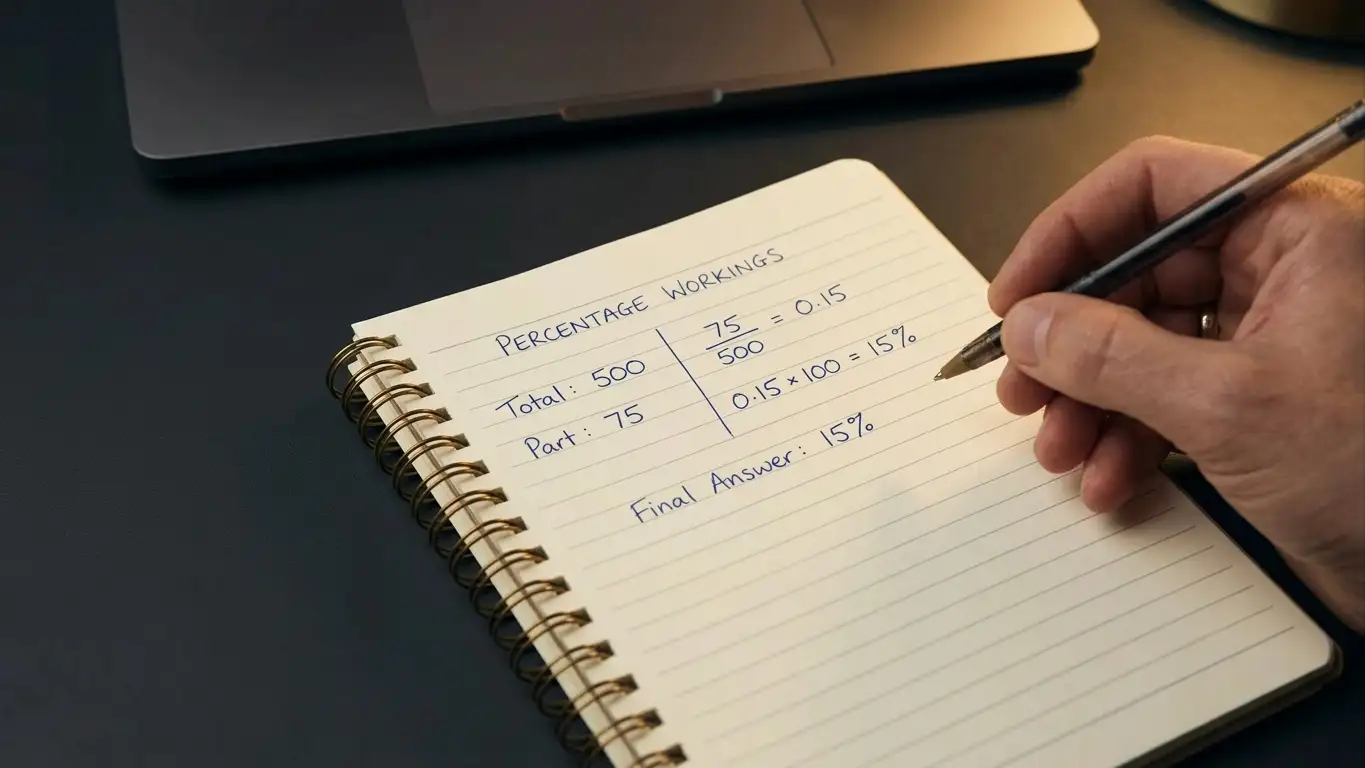
Here is where the RTP number stops being abstract. Take a dollar-a-spin session at a normal unhurried pace, roughly 600 spins in an hour. On a 96.5% build, the edge is 3.5%, so your expected cost is 600 × $1 × 0.035, which comes to $21 an hour. Run the identical session on a 94.07% build of the same title and the edge is 5.93%, giving 600 × $1 × 0.0593, or $35.58 an hour. The gap is $14.58 for every hour of play that looks and feels exactly the same on screen. Twenty hours a month and you have handed over an extra $291.60 for nothing.
That arithmetic is the entire argument for caring about RTP. Not the promise of winning — the maths guarantees the opposite over enough spins — but the rate at which the house takes its cut while you are entertained. A 2.4-point difference in a percentage nobody bothers to read is worth more than most welcome offers ever pay out.
Speed matters for a different reason. Money still sitting in a casino account is money you can lose. Every hour between “withdraw” and “funds available” is an hour the balance remains one bored click away from going back into a pokie. Fast payouts are a bankroll protection mechanism dressed up as a convenience feature.
The highest payout online casinos available to Australian players
Eight operators, ranked by how well they serve someone specifically chasing return rather than someone chasing a headline bonus figure. That distinction produces a different order than you will see on most comparison lists, where the site offering $30,000 in theoretical bonus funds lands on top regardless of whether anyone has ever extracted a cent of it.
The order below runs: live-table ceilings first, because live blackjack and baccarat carry the highest returns of anything in a casino lobby and a low table limit locks you out of them. Then cashier architecture, then withdrawal minimums, then operating track record, then the sites where loyalty tiers move actual withdrawal limits, then the ones honest enough to publish their caps, then licence verifiability.
| Casino | Licence | Withdrawal speed | Minimum deposit | What makes it a payout pick |
|---|---|---|---|---|
| VegasNow | Curaçao eGaming, Just Entertainment B.V. | Same-day on crypto and AUD rails | A$30 | High live-casino betting limits, so the 99%-class table games are actually playable at volume |
| Skycrown | Curaçao | Same-day, tested 2026 | A$30 | Three separate cashier lanes: standard, PayID, crypto |
| Neospin | Curaçao | PayID 3–6 hours after approval | A$30 | A$15 minimum withdrawal, the lowest here |
| Ricky Casino | Curaçao eGaming, Dama N.V. | PayID 2–4 hours, most inside 24 | A$30 | Five years of continuous AU operation under one named licensee |
| King Johnnie | Curaçao eGaming | 12–48 hours, verified e-wallet and crypto | A$30 | Loyalty tiers that raise withdrawal ceilings and cut processing time |
| Wolf Winner | Curaçao eGaming, Dama N.V. | Same-day on crypto, PayID available | A$20 | Publishes its weekly withdrawal ceiling: around A$10,000 |
| Joka Casino | Curaçao eGaming | Per-method times published in the cashier | A$20 | Cashier states limits and timeframes per method instead of “1–3 business days” |
| Lucky Ones | Curaçao Gaming Authority, OGL/2024/164/0246 | AUD and crypto, same-day on crypto | A$20 | Licence number checkable against the public CGA registry |
One thing that comparison lists never mention, and it belongs here before the breakdowns. Ricky Casino and Wolf Winner operate under the same licensee, Dama N.V. Lucky Ones and VegasNow both sit under Just Entertainment B.V. Four of the eight names above are two pairs. Same corporate parent, similar back-office, plausibly the same payout queue and the same KYC team. If your risk-management plan is “spread across several operators so one bad cashout does not sink me,” picking two brands from one licensee achieves nothing except two sets of verification documents.
VegasNow
Launched in 2024 under Just Entertainment B.V. with a Curaçao eGaming licence, VegasNow is among the newest names here and also among the largest — 2026 review data puts the pokie count above 12,000, with live tables, jackpot titles and a sportsbook attached. AUD accounts, crypto accepted, welcome package around A$8,000 with 500 free spins, A$30 minimum deposit, wagering in the region of 40 times.
The reason it sits first has nothing to do with that bonus. VegasNow runs high betting limits in its live casino, and that is the single most payout-relevant trait any operator can have. Live blackjack played with correct basic strategy returns around 99.3%. Baccarat’s banker bet sits near 98.94%. Nothing on a pokie reel comes close. What normally stops an Australian player from putting meaningful turnover through those tables is a ceiling of a few hundred dollars a hand, which caps your exposure to the best odds in the building. Raise the ceiling and the mathematics of your whole session changes. A player who moves A$2,000 through live blackjack instead of a 96% pokie is looking at an expected cost of roughly A$14 rather than A$80. That is what a table limit buys.
Skycrown Casino
Curaçao-licensed, offshore, roughly 7,000 pokies, and structurally the most interesting cashier in this group. Skycrown runs three distinct lanes: standard casino deposits and withdrawals, a dedicated PayID rail, and a crypto rail. Most AU-facing sites bolt PayID onto a generic cashier as an afterthought and inherit that cashier’s approval delays. Skycrown treats it as its own pipe. Welcome package around A$4,000 with 400 free spins, A$30 minimum deposit, roughly 40 times wagering, A$30 minimum withdrawal on most methods. Payout routes include crypto, Neteller, bank transfer and MiFinity, and 2026 hands-on reviews recorded same-day processing.
The library size matters more than it looks. Studios ship multiple maths models of the same game, and a small lobby is likelier to carry whichever build the operator got cheapest. Seven thousand titles improves the odds that the full-RTP version of a given pokie is sitting there rather than a trimmed variant. Not a guarantee. Just better odds than a 400-game shop.
Neospin
Curaçao licence, AUD accounts, built from the ground up around modern payment rails rather than retrofitted to them. Twenty-seven-plus payment methods including PayID, cards and crypto. Reported PayID payout window of three to six hours once approval clears. The lobby leans on Pragmatic Play, Hacksaw Gaming and Push Gaming, whose headline titles publish returns in the 96.4% to 96.7% band — respectable rather than exceptional, but consistent, which is worth more than one 99% outlier surrounded by 93% filler.
The number that actually matters at Neospin is A$15. That is the minimum withdrawal, the lowest in this shortlist, and it means a modest win is extractable instead of being held hostage until you grind it up to a A$50 threshold. Compare that to the headline: up to A$10,000 across multiple deposits, the largest welcome pool on file for any AU-facing operator. Run the numbers on the first tranche alone — a A$1,500 matched bonus at 40 times wagering requires A$60,000 of qualifying turnover before the bonus balance converts to withdrawable cash. On that same dollar-a-spin, 600-spins-an-hour pace, that is a hundred hours of play. The A$15 withdrawal minimum is a real benefit. The A$10,000 is a number on a banner.
Ricky Casino
Operating since 2021 under Dama N.V., a Curaçao-registered licensee, with something over 4,000 titles including the Mega Moolah progressive. AUD accounts, PayID for both directions, crypto supported. Welcome package around A$7,500 with 550 free spins across staged deposits, A$30 minimum, wagering near 50 times. Reported PayID payouts land in two to four hours on verified accounts, with the bulk of withdrawals clearing inside a day.
Five years is not a long time in most industries. In this one it is a track record. ACMA has had more than 1,700 gambling sites blocked since November 2019 and watched over 220 services withdraw from the Australian market entirely; brands appear, take deposits and evaporate on a cycle measured in months. A site that has kept a functioning AUD payment pipeline running through that churn has demonstrated something no RTP figure can demonstrate, which is that the cashier works when it is busy. Dama N.V. is also one identifiable legal entity rather than an anonymous holding structure — a single addressable name if a dispute ever needs escalating. Worth remembering that it is also the licensee behind Wolf Winner, further down.
King Johnnie
AU-facing since 2020 on a Curaçao eGaming licence, with three to four thousand titles from more than forty studios, live tables supplied by Evolution and Pragmatic Live, and progressive jackpot games in the mix. Welcome package around A$6,000 with 100 to 200 free spins depending on the current structure, wagering near 35 times — noticeably lighter than the 50 times several competitors here apply. Verified e-wallet and crypto withdrawals process in twelve to forty-eight hours.
King Johnnie’s loyalty programme is the one in this group where the rewards touch the payout mechanism instead of the decor. Higher tiers carry higher withdrawal limits and faster processing. For anyone cashing out regularly that is worth considerably more than another matched deposit. Let us be clear about what a “gift” like that is, though: no casino raises your withdrawal ceiling out of affection. It is retention spend, funded by the house edge you have already been paying, offered to the players whose turnover justifies the cost of keeping them. Useful, absolutely. Generous, no.
Wolf Winner
Accepting Australian players since 2021, operated by Dama N.V. under a Curaçao eGaming licence — the same licensee as Ricky Casino. Pokie-heavy lobby of 1,800 to 2,000 titles plus live dealer rooms. AUD, PayID, crypto for withdrawals. The welcome package is A$5,500 with 125 free spins across four deposits, structured 125% up to A$2,000 with the spins on the first, 100% up to A$1,500 on the second, 100% up to A$1,000 on the third, 80% up to A$1,000 on the fourth. Minimum A$20 per stage, 50 times wagering throughout. The free spins arrive in batches rather than all at once, roughly 25 on deposit day and the rest over following days.
What earns Wolf Winner its place is a stated number most operators bury: the weekly withdrawal ceiling sits around A$10,000, subject to account and payment conditions. That sounds like a restriction and reads like one. It is actually the most useful disclosure on the page. If you hit a A$40,000 win, you now know it takes four weeks to extract rather than discovering that fact mid-dispute. Vague caps are how a big win turns into a months-long negotiation. Published caps are how you plan. The Wolf Pack loyalty tiers lift those limits and speed processing for established accounts.
Joka Casino
Established in 2020, licensed in Curaçao — some current documentation cites the licence under the Curaçao Gaming Authority, consistent with the jurisdiction’s ongoing regime change. Two thousand-plus pokies with live dealer and table games alongside. Welcome package A$5,000 with 75 free spins across the first three deposits, A$20 minimum deposit, wagering around 50 times, e-wallets and crypto among the payout routes, live chat around the clock.
The 50 times requirement against a A$5,000 pool tells you the bonus is not the route to a payout here. Base-game play is. What Joka does better than most is publish per-method withdrawal limits and processing times explicitly in the cashier, rather than hiding behind “one to three business days” for every rail from crypto to bank transfer. That is a small thing on a review page and a large thing at 11pm on a Friday when you want to know whether the money arrives before Monday. An operator willing to commit to specific numbers per method is an operator whose payment operations are organised enough to meet them.
Lucky Ones
Run by Just Entertainment B.V. under Curaçao Gaming Authority licence OGL/2024/164/0246, and that string of digits is the reason it makes this list. Every other operator here says “Curaçao licensed” and expects the phrase to do the work. Lucky Ones publishes a reference number issued under the post-November-2023 online gaming policy, and that number can be checked against the CGA’s published OGL registry. The difference between a claim and a verifiable fact is not decorative when the entire consumer-protection question is whether anyone is actually supervising the operator holding your balance.
The library is enormous on paper: reported at 9,500-plus games including over 5,000 pokies, 140-plus live dealer tables, jackpot titles and sports betting. AUD payments alongside crypto, four-deposit welcome structure, wagering around 40 times, minimum deposit near A$20. Being straight about the limits of what is knowable here: the headline welcome figures quoted across various sources range from A$2,000 to A$20,000 for what is described as the same package, which tells you the marketing layer moves faster than anything auditable. Operational detail is thinner than for the 2020-era brands above, which is what a 2024 launch looks like. Read the terms on the operator’s own site, not on a list. Also note the shared licensee with VegasNow.
What is the highest payout online casino in Australia?
No single site wins both halves of the question. VegasNow offers the best access to the highest-returning games through its live-table limits, Neospin has the lowest withdrawal minimum at A$15, and Ricky Casino has the longest proven AUD payment record. Pick by which axis matters to how you actually play.
How this shortlist was put together
Four things were weighed, and none of them is a bonus figure. First, whether the operator stocks games from studios that publish real RTP data and whether the lobby is large enough to carry full-return builds. Second, the cashier: which rails, what minimums, what published caps, whether PayID exists as a genuine withdrawal route or only as a deposit funnel. Third, verifiable operating history and an identifiable licensee. Fourth, whether the bonus terms leave any realistic path from bonus balance to bank account.
What was deliberately ignored: the “99% Win Rate” badges that several Australian comparison sites print next to operator names. Those labels have no published methodology behind them. No operator on this page — and to be accurate, no operator anywhere in the AU-facing market — publishes an independently audited return figure across its whole lobby. What can genuinely be audited is a single game’s RTP against its provider’s specification, which is what eCOGRA and iTech Labs do. A lobby-wide “payout percentage” would require knowing the turnover distribution across every title, which is data no operator releases. When you see 99% printed beside a casino’s name, you are reading a design element.
The other deliberate exclusion: sites currently on ACMA’s blocked list, and sites whose Curaçao status appears to rest on a pending application rather than a granted licence. The transition to the new regime has left a number of operators running under transitional arrangements with applications still in progress. That is legal in Curaçao. It also means nobody has yet completed a supervisory review of them.
Which casino games have the highest payout
Pokies dominate every Australian casino lobby and they are not the best-paying product in the building. They are not close. The games that return the most sit at the tables, and they have done for as long as casinos have existed, which is precisely why the floor is arranged to funnel you past them.
| Product | RTP range | Typical figure | What decides where you land in the range |
|---|---|---|---|
| Live blackjack | 98% – 99.6% | ~99.3% | Whether you play correct basic strategy; deck count and dealer rules |
| Video poker | 95% – 99.5% | ~98% | Paytable version; full-pay 9/6 Jacks or Better reaches ~99.54% with perfect play |
| Baccarat | 98.5% – 98.94% | ~98.9% | Banker bet ~98.94%, player bet slightly lower, tie bet far worse |
| Live roulette | 94.7% – 98.6% | ~97.3% | European single-zero ~97.3%, American double-zero ~94.7% |
| Crash games | 96% – 99% | ~96.5% | Your own cash-out timing and the specific game’s maths model |
| Online pokies | 90% – 99% | ~96% | Which RTP build the operator licensed; most sit between 94% and 97% |
| Keno | 75% – 95% | ~88% | Number of spots picked and the specific paytable |
Read that table alongside a bonus and a contradiction appears. Bonus wagering weights pokies at 100%. Table games typically contribute 10% to 20%. Live dealer games frequently contribute nothing at all. So the moment you accept a welcome offer, the terms push you off blackjack at 99.3% and onto pokies at 96%, then require you to turn over the bonus thirty-five to fifty times there.
Work through it. A A$1,000 bonus at 40 times means A$40,000 of pokie turnover. At a 4% edge that is an expected cost of A$1,600 to unlock a A$1,000 bonus. Put the same A$40,000 through live blackjack at a 0.7% edge and the expected cost is A$280 — except the wagering barely moves, because live games contribute zero. The bonus is not free money being withheld from you. It is a fee for the privilege of playing worse games. Which is a strange sort of “gift”, and the reason experienced players decline welcome offers far more often than the promotional copy would have you believe.
There is one free way to read a game’s actual numbers before committing anything, and it is worth using. Demo mode loads the same build the operator has installed, with the same info panel and the same published RTP, using play credits with no cash value. That makes it the only risk-free way to confirm which variant of a title a site is running, and to feel out volatility before it costs you. What demo mode cannot do is pay you anything, so treat searches for high-return free pokies as a category error: return-to-player describes a proportion of real wagers returned, and a proportion of nothing is nothing.
The gap between demo and real money is also where a specific trap lives. Some players notice a demo session running unusually well and read it as a signal. It is not one. Demo builds use the same random number generator and the same maths, and a good run in play credits is ordinary variance that happens to have occurred while nothing was at stake. Use the mode for two things — checking the RTP figure and learning the mechanics — and ignore the results.
Keno deserves a note because of a peculiarly Australian irony. Keno is the one casino-style product an Australian can play online completely legally, through licensed local operators. It also returns around 88%, worse than every pokie in this article and worse than the legislated minimum on a club machine. The legal option is the worst-paying option. That is not an accident of design so much as a consequence of which products the law happened to leave alone.
Which casino game has the highest payout?
Live blackjack, at roughly 99.3% return when played with correct basic strategy — a house edge under one percent. Full-pay 9/6 Jacks or Better video poker runs it close at about 99.54% with perfect play. Baccarat’s banker bet returns near 98.94%. All three beat every pokie ever released.
The highest paying pokies and what their RTP figures really say
Now the titles. These are the games that turn up whenever someone asks which pokie pays the most, and the percentages beside them are real. The column on the right is the part every comparison table leaves out, and it is the part that decides whether the number means anything.
| Title | Studio | RTP | What the figure depends on |
|---|---|---|---|
| Book of 99 | Relax Gaming | 99.00% | Flat provider baseline, no mode conditions — the cleanest high-RTP claim available |
| Mega Joker | NetEnt | up to 99% | Supermeter mode at the specified stake only; documented range 85.25%–99% by play mode |
| Jackpot 6000 | NetEnt | up to 98.9% | Supermeter-dependent, same structure as Mega Joker |
| 1429 Uncharted Seas | Thunderkick | 98.60% | Provider baseline, low volatility, 25 paylines, max exposure 670× stake |
| Blood Suckers | NetEnt | 98.00% baseline | One current live deployment of the same title runs at 94.07% |
| Money Cart | Relax Gaming | 98.00% | Provider baseline, high volatility, feature-driven |
| Bounty 98 Hot 1 | Hot Rise Games | 98.00% | Distributed via Relax Gaming; availability depends on partner distribution |
| Jokerizer | Yggdrasil | 88.8%–98% | Published as a range, not a single figure |
| Starmania | NextGen | 97.87% | Operator-loaded value, not a provider baseline |
| White Rabbit Megaways | Big Time Gaming | 97.72% | Expanding reels and feature buy affect effective return |
| Blood Suckers Megaways | Red Tiger | 97.66% | Operator-specific deployment figure |
| Medusa Megaways | NextGen | 97.63% | High-RTP variant, balanced volatility |
| Big Bad Wolf | Quickspin | 97.34% | Stable baseline, frequent cascading wins |
Four kinds of claim are mixed together in that table and they are not equivalent. A provider baseline is a flat figure the studio ships as standard — Book of 99 at 99% is one, and it is why that game earns its name honestly. A provider maximum is a ceiling reachable only under specific conditions, and Mega Joker is the textbook case: the 99% requires Supermeter play at the stated stake, while the same game has been documented publicly at 85.28% with an official range of 85.25% to 99% depending entirely on how you play it. A published range, like Jokerizer’s 88.8% to 98%, is honest about the spread but tells you nothing about which end your session will sit at. An operator-loaded value, like Starmania’s 97.87%, is what one particular casino has deployed and says nothing about what another has.
Every comparison table you will find prints Mega Joker and Book of 99 side by side at 99% as though the two figures mean the same thing. They do not. One is a floor and the other is a best case reachable only by playing a specific way.
Which brings up the thing that should genuinely change how you shop for pokies. Studios license the same title at multiple RTP settings and operators choose which one to load. Blood Suckers is the clean demonstration. NetEnt’s baseline for it is 98%. A current live deployment of the identical game, same artwork, same features, same name on the tile, runs at 94.07%. That is a 3.93-point gap, which moves the house edge from 2% to 5.93% — very nearly triple. On a A$1 spin at 600 spins an hour the first version expects to cost you A$12 an hour and the second A$35.58. Same game. Nothing on screen tells you which one you opened.
So the advertised RTP of a pokie is not a property of the game. It is a property of the copy of the game a specific operator has installed. Chasing a title is close to pointless without checking the build.
Studio choice is a weaker signal than most players assume, but it is not worthless. Averaged across their catalogues, the major suppliers land within half a point of each other — figures circulating in the market put Playtech near 96.9%, Yggdrasil around 96.6%, Pragmatic Play about 96.5%, Microgaming near 96.4%, Play’n GO around 96.3% and NetEnt about 96.2%. Those averages are indicative rather than audited, and the spread between them is narrower than the spread between two builds of a single Blood Suckers. What the studio name genuinely tells you is whether documentation exists at all: Relax Gaming, Thunderkick, NetEnt, Push Gaming, Hacksaw and the other established names publish per-title specifications you can hold an operator against. A game from a studio nobody has heard of offers you no reference point, and that absence is the problem rather than any particular percentage.
Independent testing labs are the other half of the check. eCOGRA and iTech Labs certify that a deployed game’s live behaviour matches the specification it claims, which is a narrower guarantee than most players imagine but a real one. It confirms the maths is what the paperwork says. It does not confirm that the operator picked the generous build, and it says nothing at all about whether the cashier pays. Certification and payout reliability are separate questions, and a site can pass the first while failing the second comprehensively.
What is the highest paying online pokie?
Book of 99 from Relax Gaming, at a flat 99% baseline with no mode conditions attached. Mega Joker and Jackpot 6000 are quoted higher in places but only reach those figures in Supermeter mode at specified stakes; Mega Joker’s documented range runs from 85.25% to 99% depending on how it is played.
How do I check the real RTP of a pokie before I play it?
Open the game’s info or help panel and read the figure for that exact title in your currency and stake mode. Cross-check it against the studio’s own published specification. Where the two disagree, the studio’s figure is authoritative and the operator has deployed a lower variant. A site that hides RTP data entirely is telling you something.
Can a casino change the RTP of a game?
Not arbitrarily, no. Operators cannot alter a game’s mathematics. What they can do is choose which of several RTP builds the studio offers to install, and those builds can differ by several percentage points on the same title. The practical effect is identical to a change, which is why checking the in-game panel matters.
Getting the money out: PayID, crypto and the caps nobody advertises
“Instant withdrawal” is doing a lot of work in casino marketing, and it is technically true about the wrong half of the process. A cashout has two legs. The first is operator approval: someone or something at the casino reviews the request, confirms verification status, checks for outstanding wagering, and releases it. The second is settlement: the payment network moves the money. Every “instant” claim in this market describes the second leg.
PayID settles in seconds. It runs on the New Payments Platform, addressing payments to an email, mobile number or ABN instead of a BSB and account number, and Osko transfers on that infrastructure land around the clock including weekends. Deposits arrive in under a minute. Withdrawals arrive in under a minute too — after the approval leg, which is where one to twenty-four hours quietly lives, and considerably longer on a first cashout while identity verification completes.
| Rail | Network settlement | Operator approval leg | Realistic total | Where fees come from |
|---|---|---|---|---|
| PayID / Osko | Seconds, 24/7 | 1–24 hours, longer on first cashout | 15 minutes to 24 hours | Rarely any; occasional bank-side charges |
| Crypto | 2–60 minutes on-chain | 1–12 hours | 2 hours to half a day | Network gas, 0–1%; USDT on TRC-20 cheapest |
| E-wallets | Minutes | 1–12 hours | 1–12 hours | 0–2%, usually wallet-side |
| Debit and credit cards | 1–5 business days | 1–24 hours | 2–6 business days | 1–5% plus bank fees |
| Bank transfer | 1–3 business days | 1–24 hours | 2–5 business days | Bank and conversion charges |
| Prepaid vouchers | 1–3 business days | 1–24 hours | 2–4 business days | 0–2% |
Benchmarks worth holding onto. The quickest operators tested in the Australian market this year have landed PayID cashouts in under fifteen minutes end to end. One tested site averaged one hour forty-two minutes from request to funds available, which is a realistic best-case expectation rather than a marketing figure. King Johnnie’s published window of twelve to forty-eight hours for verified e-wallet and crypto withdrawals sits at the slower end of what is acceptable. Crypto after approval clears in two to sixty minutes.
Three details do more damage to a payout than any of the above. Minimum withdrawal thresholds: A$15 at Neospin, A$30 at Skycrown on most methods, higher elsewhere, and a A$50 floor means small wins are not extractable at all. Weekly and monthly caps: Wolf Winner’s roughly A$10,000 per week is typical of the market and means a five-figure win comes out in instalments. And reverse-withdrawal windows, where a pending cashout can be cancelled straight back into your playable balance — a feature that exists for exactly one reason, and it is not your convenience.
Complete verification before you need it. Upload identity documents, proof of address and payment confirmation when you open the account, not when you are trying to withdraw. Unverified accounts are where the forty-eight to seventy-two hour stalls happen, and the stall is not the casino being difficult; it is a compliance queue you joined late.
How long does a PayID withdrawal take at an online casino?
The PayID transfer itself completes in seconds through the New Payments Platform. The wait is operator approval, which runs one to twenty-four hours and longer on your first cashout while verification finishes. Fastest tested Australian operators deliver under fifteen minutes total; one to four hours is a realistic expectation on a verified account.

No Australian casino licence exists, and what that costs you
The Interactive Gambling Act 2001 makes it illegal for a provider to offer online casino services to a person in Australia. ACMA’s own wording lists online casinos first among banned services, alongside in-play sports betting, unlicensed sports betting and betting on lottery outcomes. Those services also may not be advertised here, and may not offer credit for online betting.
Which means there is no Australian online casino licence to hold, no register of approved casinos, no local RTP floor, no domestic dispute body and no payout guarantee. ACMA publishes a register of Australian-licensed interactive wagering providers — sports and race betting — and separately publishes a list of blocked gambling websites. There is no third list, because the category it would cover does not exist.
Enforcement is real and ongoing. Blocking works through section 313 of the Telecommunications Act 1997: ACMA asks internet service providers to cut off access. Since blocking began in November 2019, more than 1,700 illegal gambling sites have been blocked and over 220 services have exited the Australian market. Rounds continued right through 2026 — six sites in May, two more in August, a batch of twelve alongside the regulator’s 2026–27 compliance priorities. The Interactive Gambling Amendment (Gambling Reform) Bill 2026 passed Parliament on 19 August 2026, bringing advertising restrictions, a global advertising opt-out register, limits on direct marketing of inducements, a ban on staff and affiliate commissions tied to customer activity, expanded takedown powers and a strengthened BetStop. Most of it commences on 1 January 2027.
The important distinction: the Act targets the provider, not the player. No Australian has been prosecuted for having an account at an offshore casino, and the legislation is not drafted to make that possible. That is why these sites remain reachable and why the market exists at all. It is also why you have no recourse. If an operator refuses a withdrawal, Liquor & Gaming NSW cannot help, the VGCCC cannot help, and ACMA’s role is to block the site rather than recover your balance. Your protection consists of the offshore regulator’s willingness to act, and that varies enormously.
On which point, Curaçao — the licence stamped on nearly every site here — is mid-reform, and it is worth knowing what stage. The old Gaming Control Board has become the Curaçao Gaming Authority under the National Ordinance on Games of Chance, and a new online gaming policy took effect on 15 November 2023. Existing sub-licensees had to apply by 30 April 2024 to be grandfathered in. By early November 2024 the authority’s portal held 1,115 applications against 173 granted licences, and licences now carry reference numbers in the OGL format published in a public registry. The practical upshot for you: an operator can be legitimately trading under a transitional arrangement while its application is still pending, which is not the same as having passed a supervisory review. A licence number you can look up, like the one Lucky Ones publishes, is worth more than the word “licensed” on a footer.
Are high payout online casinos legal in Australia?
The operators are not legal to offer casino games here — the Interactive Gambling Act 2001 prohibits it, and ACMA has had over 1,700 sites blocked since 2019. Playing at one is not an offence for you; the law targets providers. The trade-off is that no Australian regulator can help if a payout is refused.

Do online pokies really pay better than the local pub
Yes, and the margin is not subtle. This is the comparison that puts every RTP figure above into perspective, and almost nobody makes it.
Australian gaming machines run to legislated minimum returns. New South Wales requires a machine to return at least 85% of the amount wagered over the long term. Queensland sets 85% in pubs and clubs and 90% on casino floors. Those are the only statutory payout figures that exist for an Australian gambler anywhere — actual regulated minimums, enforced by state authorities, applying to the machines in your local.
Eighty-five per cent is a 15% house edge. On that same dollar-a-spin hour, 600 spins, the expected cost is A$90. A 96.5% online build costs A$21 across the identical session. The offshore pokie is expected to take A$69 an hour less than the legislated worst case at the club down the road. Even against Queensland’s 90% casino-floor minimum, at A$60 an hour, the online game is nearly three times cheaper to play.
That comparison is not an endorsement, and it should not be read as one. What you gain in return rate you give up in counterparty protection: the club is licensed by a state regulator you can complain to, and the offshore site is not. You are trading a known payout floor with recourse for a better payout rate with none. Worth understanding clearly rather than pretending the trade does not exist. The point is simply that “offshore casinos are a worse deal” is false on the one metric this page is about, and the people who say it usually have not run the numbers.
Mobile play changes none of this. Return figures are identical on a phone browser and a desktop, the same builds load either way, and PayID works the same from a banking app. The only mobile-specific consideration is that a game’s info panel is fiddlier to open on a small screen, which is exactly the moment people skip checking the RTP. Do not skip it.
Do online pokies pay better than pub and club pokies in Australia?
Substantially, yes. NSW legislates a minimum 85% return on gaming machines and Queensland 85% in pubs and clubs. Reputable online pokies typically run 94% to 97%. On dollar spins at 600 an hour, that gap is worth roughly A$69 an hour — offset against having no local regulator to complain to.
Playing for the higher return without losing the plot
Chasing a higher RTP is a rational way to reduce the cost of playing. It is not a way to win, and the distinction gets blurry fast when a 99% figure is sitting on the screen. Ninety-nine per cent still means the house keeps a cent of every dollar, forever, and volatility means a 99% game can empty a bankroll in an afternoon while remaining perfectly true to its specification over a hundred million spins you will never play.
Set a deposit cap before you open the lobby, not after a losing run. Use session limits and reality-check reminders if the operator offers them. Cool-off and self-exclusion tools sit in account settings on every site in this article. And take note of what the strongest RTP figure in the world does not do: it does not shorten a losing streak, it does not make the next spin likelier to hit, and it does not care how much you need the money.
BetStop, the National Self-Exclusion Register at betstop.gov.au, blocks you from every Australian-licensed wagering service in one step. It has no reach over offshore casinos, which is a real gap and worth naming — self-exclusion there has to be requested operator by operator. The National Gambling Helpline is on 1800 858 858, free and confidential, twenty-four hours a day, and Gambling Help Online offers chat and email counselling at any hour. If the way you are reading this page feels less like research and more like looking for a way to get even, that number is the more useful one.
Fast Withdrawal Casinos Australia 2026 — Instant Payout Guide
Content created by the «CasinoPay» team