
Google Pay casinos in Australia: where the tap works, and where it quietly stalls
 Available in AU
Search this and you get two answers, both wrong. One camp tells you Google Pay casinos are banned outright in Australia and shoves you toward a coin-buying sweepstakes site. The other claims three hundred casinos accept the wallet, then names precisely none of them. Neither has looked at an actual cashier.
Here is the shape of it. Google Pay is not a wallet in the sense that Skrill is a wallet. It holds no balance. Tap it at a casino checkout and what moves is the debit card already sitting in your phone, wrapped in a token so the site never sees the card number. That single fact decides everything downstream: which sites can take it, what the payment is legally, why nobody pays you back through it, and why the button sometimes refuses to appear at all.
So this is a map of where the tap lands. Seven sites, each with the licence, the deposit floor and the route the money actually takes. Then the part the ranking pages skip — the way back out, the reasons a deposit gets knocked back, and what the Interactive Gambling Act does and does not say about you personally.
What actually happens when you tap Google Pay at a casino cashier
The mechanics matter here more than they would for most payment methods, because almost every practical question about Google Pay at a casino turns out to be a question about the card underneath it.
The wallet holds no money — the card behind it does
Add a Visa or Mastercard to Google Wallet and the app does not copy your card number. It requests a separate number from the card network — a device account number, tied to that specific phone — and stores that instead. When you tap at a cashier, the site receives that device number plus a one-time cryptogram, not your card details. Your statement still shows the casino’s merchant name, because the payment is a card payment. It always was.
There are two versions of what the checkout gets back, and the difference is more than academic. Google’s payment interface either hands the site a fully authenticated payload, cleared and ready to process without any further challenge, or it hands over a plain card number that the site then has to push through 3D Secure itself. Which one you get depends on Google’s own risk assessment of that transaction, on that device, at that moment. You never see which path you took. You only notice the consequence: sometimes the tap is instant, sometimes your bank throws up a verification screen, sometimes it dies quietly.
The token itself is fragile in ways people do not expect. Remove the lock screen from your phone and the stored card credential is deleted. Leave the device idle long enough and the same thing happens. Neither of those is a bank decision or a casino decision — it is the card network revoking a credential it no longer trusts, and re-adding the card is the only fix.
What all of this buys you is genuine: the casino never holds your card number, so a data breach on their side exposes a token that is useless anywhere else. That is a real security gain over typing sixteen digits into an offshore cashier. It just is not the same thing as a wallet.
Debit only, and the June 2024 reason why
From 11 June 2024, credit cards, credit-related products and digital currencies stopped being lawful funding methods for online wagering in Australia. That came in through the Interactive Gambling Amendment (Credit and Other Measures) Act 2023, and the wording covers the credit product, not the plastic rectangle.
Here is the bit nobody in the search results connects. Because Google Pay is a wrapper, the status of the card inside it passes straight through. Wrapping a credit card in a token does not convert it into a debit payment, and it does not make the funding source anything other than credit. The wallet is a delivery mechanism, not a laundering mechanism. If your phone holds three cards and you pick the credit one for a gambling merchant, you are attempting a credit-funded gambling transaction with extra steps — and issuers have got noticeably better at spotting exactly that.
Which leaves debit. A debit Visa or Mastercard in Google Wallet is the only card that has a clean path to a casino cashier, and it is the card you should have selected as the wallet’s default before you go anywhere near a deposit screen. Check that now rather than at the moment of the tap, because Google Wallet defaults to whichever card you added first, and that is usually the one with the rewards points.
Can you still use a credit card through Google Pay for a casino deposit?
No. The credit-funding prohibition that took effect on 11 June 2024 applies to the credit product itself, and tokenising it inside Google Wallet changes nothing about what it is. Pick a debit card as your wallet default. A credit card behind the tap is the single most common reason an otherwise valid deposit fails.
Why the button is an Android-phone thing
Google Pay works on iPhones for plenty of merchants, through the browser. At casino cashiers it mostly does not, and the reason is a configuration choice sites make rather than an Apple restriction.
A checkout can accept either of the two credential types described above, or it can insist on the authenticated device-token version only. Sites handling higher-risk payments frequently insist, because the authenticated version carries fraud protection the other does not. Google’s own developer documentation is blunt about the cost of that choice: restricting a checkout to device tokens only “sharply reduces Google Pay availability on desktop browsers.” Same logic applies to any device that is not the phone holding the provisioned card. Narrow the accepted credential to the one your Android handset produces, and the button stops rendering everywhere else.
So the honest version is this: on an Android phone with a debit card provisioned, expect the tap to be available where the site supports it. On an iPhone, on a laptop, on a tablet you never added the card to — expect the option to be missing rather than broken. Nothing is wrong with your account. The checkout simply decided it only trusts one kind of credential, and your device does not produce it.
The sites where the tap goes through
Seven options below. Six are real-money offshore casinos with AUD accounts; the seventh is the sweepstakes platform that the top of the search results keeps presenting as the answer, included because you will meet it and deserve to know what the trade is.
One thing to settle first. None of these six publishes a cashier button labelled Google Pay, and any page claiming otherwise has not opened a cashier. What they publish are card entries, wallet entries and e-wallet entries — and a Google Pay tap reaches a balance through those, either as a tokenised card payment at a checkout that accepts wallets, or through MiFinity, which takes Google Wallet top-ups directly and then sits in the casino’s method list as an e-wallet. That second route is the one nobody writes about, and it is the cleanest documented path there is.
How the list was put together
Four filters, applied in this order. First, an AUD account with Australian-facing support — a site quoting euros with a currency conversion on every deposit is not an Australian option regardless of what its landing page says. Second, a published licence with a number you can look up, or an honest note where the operator does not publish one. Third, a cashier that accepts either a wallet-capable card checkout or MiFinity, since those are the two routes a phone tap can actually take. Fourth, a payout rail that is not the same rail the wallet used, with a published timing, because that is where the money question actually gets decided.
What did not make the cut: anything launched inside the last twelve months, anything without a licence number or a named licensee, and anything whose payout claims came only from its own marketing with no method-level detail behind them. Ranking order below runs by how well each site handles the wallet question specifically, not by bonus size. The bonus figures are the least reliable numbers in this entire market and they change monthly.
| Site | Licence | Wallet route and deposit floor | Fastest payout rail | What sets it apart |
|---|---|---|---|---|
| RocketPlay | Curaçao 8048/JAZ, since 2020 | MiFinity from A$10, cards from A$20 | PayID, ~60 seconds after approval | Documented Google Wallet bridge via MiFinity, nine funding channels |
| SkyCrown | Curaçao GCB OGL/2023/176/0095, Hollycorn N.V., since 2020 | Apple Pay and MiFinity listed, cards from A$25 | PayID, 1–3 business days after approval | Only one of the six that names a phone wallet in its own method list |
| Wild Fortune | Curaçao 8048/JAZ2020-074, since 2020 | Wallet tier from A$20, plain cards from A$15 | Crypto and e-wallet inside 24 hours | Publishes a separate price for the wallet route |
| Neospin | Curaçao eGaming, Hollycorn N.V. | Cards from A$30 site-wide | Crypto, instant after approval | 8,000+ titles, and a published 2.5% fee on card payouts |
| Bizzo Casino | Curaçao 8048/JAZ2017-067 plus Kahnawake, since 2020 | Cards from A$10 | PayID, inside hours | Two named regulators with a numbered permit |
| Casinonic | Curaçao OGL/2023/174/0082, Dama N.V., since 2019 | Cards from A$20 on the payout floor | E-wallets inside 24 hours | Seven years of continuous AU-facing trading |
| RooVegas | No gambling licence — sweepstakes model | Google Pay direct, coin bundles | Google Pay redemption, 24–72 hours | The only route where the wallet works both ways |
RocketPlay
Trading since 2020 under Curaçao licence 8048/JAZ, RocketPlay runs AUD as a default currency with no conversion charge and operates web-only — no native app, which for a wallet payment is irrelevant since the tap happens in the mobile browser anyway. One gap worth naming: no corporate legal entity appears in its published material. SkyCrown tells you it is Hollycorn N.V. at a street address in Willemstad; RocketPlay tells you a licence number and stops. That is a real transparency deficit and it is the main mark against a site that otherwise handles money better than its competition.
The cashier is why it leads this list. Nine funding channels, and among them MiFinity at a A$10 minimum with a A$4,000 ceiling, credited instantly. MiFinity accepts Google Wallet as a top-up method on its own side, which means the full chain — phone tap, wallet top-up, casino deposit — is documented at every step rather than inferred. That is not true anywhere else in this market. Cards sit at A$20 with a A$5,000 cap, PayID at A$20 with A$10,000 daily, POLi and Neosurf both at A$10.
The payout numbers are the most detailed anyone publishes. PayID withdrawals cleared at a median of 54 seconds once approved, with approval itself averaging 87 minutes — total median 1 hour 29 minutes across fourteen tests. Ninety-four per cent of PayID withdrawals under A$2,000 cleared without manual review, which is a useful thing to know before you request A$2,100 and wonder why yours is sitting in a queue. Cards take one to five days. Crypto lands in ten to sixty minutes depending on the chain.
The library runs past 5,000 titles from more than sixty studios — Pragmatic Play, Evolution, BGaming, Hacksaw Gaming, NetEnt, Play’n GO, Yggdrasil, Relax Gaming — with 3,500-plus pokies and around 200 live tables. The welcome offer is A$1,500 plus 150 free spins across three deposits at 40x wagering. Do the arithmetic on that before it flatters you: 40x on a A$500 bonus is A$20,000 of turnover, and the Australian market median sits nearer 35x. The “free” spins cost you twenty grand of wagering. Nobody in this industry is running a charity, and the ones with the friendliest maths are usually the ones with the smallest headline.
SkyCrown
Hollycorn N.V., registration 144359, Scharlooweg 39 in Willemstad — SkyCrown publishes its licensee, its registration number and its street address, which puts it ahead of most of this field on basic disclosure. The permit is Curaçao Gaming Control Board licence OGL/2023/176/0095, live since the 2020 launch. Offshore, obviously. There is no Australian alternative to compare it against, for reasons the legality section deals with properly.
It is the only site among the six that names a phone wallet in its own published method list: Apple Pay appears explicitly, marked deposit-only, sitting alongside MiFinity, Visa, Mastercard, Maestro, bank transfer, CashToCode, Paysafecard and crypto. A cashier that has integrated one tokenised wallet has the plumbing for the other, and the MiFinity entry beside it gives the same indirect route RocketPlay offers. The catch is the card floor: A$25, the highest in this group, against A$20 for PayID and POLi, A$10 for Neosurf and A$30-equivalent for Bitcoin. Deposits cap at A$7,500.
Cashing out is where SkyCrown loses ground. The withdrawal minimum is A$30, bank transfer A$100, and PayID — which clears in under two minutes at RocketPlay — is quoted here as often taking one to three business days after approval. Cards run two to five. No fees are stated in either direction, though bank and network charges can still land. The reels come from Pragmatic Play, Play’n GO, Microgaming, Relax Gaming, Hacksaw Gaming and BGaming, with live tables from Evolution, Pragmatic Play Live and Ezugi. The welcome package advertises up to A$8,000 and 400 free spins spread across four deposits, and the tiers do reconcile to that total, which is more than can be said for most.

Wild Fortune
Operating since 2020, 6,000-plus games including more than 200 live tables, general deposit floor at A$10. The licence is where it gets untidy: 8048/JAZ2020-074 under Curaçao is the number cited most consistently, but at least one payment-focused source attributes it to Tobique instead, permit #0000064. Public sources do not resolve that, and pretending otherwise would be inventing certainty. Check the footer on the day you sign up.
This is the site that proves the point of the whole article. Wild Fortune publishes a separate deposit minimum for the wallet route — A$20 for the Apple Pay tier against A$15 for a plain Visa, Mastercard, Maestro or Neosurf entry. Five dollars is trivial as money. As evidence it is not trivial at all: it means the operator’s processing cost for a tokenised phone payment differs from a typed card payment enough to warrant its own floor. Every other cashier in this market buries that behind a single card minimum, which is why so many players assume the wallet is just a faster keyboard. It is a different rail with a different price.
The welcome package spreads across the first three deposits at 40x wagering, and the headline figure ranges from A$3,000 with 200 spins to A$7,500 with 250 across different sources — treat the structure as reliable and the number as marketing. Crypto and e-wallet withdrawals clear inside 24 hours, which is competitive. POLi, PayID, cards, e-wallets and crypto all accept deposits from A$10 if you skip the wallet tier.
Neospin
Same licensee as SkyCrown. Hollycorn N.V. runs both, under Curaçao eGaming, which makes them siblings sharing a payments backend rather than genuine alternatives — worth knowing if your plan was to spread risk across two sites. Neither a licence number nor a launch year appears in Neospin’s published material, and that gap is real. SkyCrown gives you both. Its sibling gives you neither.
The library is the largest here: 8,000-plus titles from more than eighty studios, headlined by Pragmatic Play, Evolution, NetEnt and KA Gaming. Deposits start at A$30 across the board, with no per-method breakdown published, through Visa, Mastercard, PayID, POLi and crypto. That flat A$30 is the least accommodating entry point in this group.
Where Neospin earns its place is a number nobody else prints. Card and bank withdrawals carry a fee of roughly 2.5%, against zero on PayID and crypto. That is the actual price of sending money back along the route a wallet tap sent it — and since a Google Pay deposit is a card deposit, that 2.5% is what return-to-source costs you if you take the lazy option on the way out. Withdrawal minimums: A$20 for Bitcoin or Ethereum, A$30 for PayID, A$45 for cards or bank transfer. Crypto is instant after approval, PayID same-day, cards and bank one to three business days on top of 0–48 hours of internal processing. Caps run A$6,000 daily, A$15,000 weekly, A$45,000 monthly, negotiable upward through an account manager if your losses make you interesting. Verification takes about a business day. The welcome offer is 100% to A$10,000 plus 100 spins at 40x with a A$5 maximum bet while clearing, released in stages by promo code, with daily cashback up to 20% of net losses.
Bizzo Casino
Founded in 2020, browser-only, pokies-first. Bizzo does the one thing this market almost never does: it names two regulators and attaches a number to one of them — Curaçao 8048/JAZ2017-067 plus a Kahnawake permit. Whether a Kahnawake licence gives an Australian player any practical recourse is a separate and much less encouraging question, but disclosure is disclosure, and in a field where “licensed in Curaçao” is the entire statement, two named jurisdictions counts.
Deposits open at A$10 on most methods, the joint-lowest here. A tested A$10 PayID deposit appeared in the lobby in about ninety seconds. Daily withdrawals cap at A$4,000, which is the tightest ceiling in this group and the thing to check before you win. PayID payouts clear within hours; cards are listed alongside it. The game count is quoted anywhere between 4,500 and 7,000 depending on which affiliate page you read — the honest answer is a range, since nobody publishing that figure is counting the same way twice. The welcome package opens with a 100% match plus free spins from a A$20 minimum.
For a wallet payment, Bizzo is a card-checkout proposition: no MiFinity, no named phone wallet, so the tap has to go through the card entry and will only work if that checkout accepts tokenised credentials. Try it with A$10 before you commit anything larger. That is what a ten-dollar floor is genuinely useful for.
Casinonic
The oldest site here by a clear margin. Dama N.V. launched Casinonic in 2019 under Curaçao licence OGL/2023/174/0082, and seven years of continuous Australian-facing trading is the closest thing to a substitute for a local licence that this market can offer. Dama N.V. is a named licensee with a findable dispute history, which is a meaningfully different proposition from a domain that appeared in March.
The withdrawal structure is unusual and cuts both ways. E-wallets and cards clear from A$20 — the lowest payout floor in this group — while bank transfer demands A$400. If your only fallback when a wallet payment fails is a plain bank account, that A$400 floor is a wall, and it is the single most important number on this site. A 24-hour pending period sits in front of everything, after which e-wallets clear inside a day and crypto lands close to instantly. End-to-end, the operator’s own quoted range runs from fifteen minutes to seven days, which tells you how much the rail choice matters here.
Games come from NetEnt, Pragmatic Play and the usual studio roster. The welcome offer is advertised anywhere from AU$5,000 to a AU$10,000 ladder with a AU$500 first-deposit match at the conservative end, and the spread across sources is wide enough that only the structure is worth relying on. As with the wallet routes at Bizzo, a Google Pay tap here means the card checkout, so test small.
RooVegas
Zoom Net Services LTD operates RooVegas, and it holds no gambling licence at all — by design, not by oversight. The sweepstakes model sidesteps the Interactive Gambling Act’s definition of a prohibited service by removing the cash wager entirely: you never hold an AUD balance, so on the Act’s terms you are not placing a bet. Available in Queensland, Victoria, Western Australia and Tasmania per its own conditions.
The reason it dominates the search results is genuine. RooVegas is the only option on this page where Google Pay is documented in both directions — optional coin-bundle purchases going in, prize redemptions coming out. Everywhere else the wallet is strictly one-way. Here it is a payout destination. That is exactly what a reader typing “google pay withdrawal casino” is looking for, and it is why three of the highest-ranking pages on this query abandon real-money casinos entirely and write about a coin shop instead.
Then the trade. Three currencies stand between you and money: Roo Coins for play with no cash value, Spin Coins as the promotional-play currency you cannot buy directly, and Spin Cash as the redeemable layer winnings convert into. Direct account top-ups are not permitted at all. Redemption needs 50 Spin Coins plus a 1x playthrough — better than the roughly 100 SC norm elsewhere in that sector, credit where it is due. Timing is where its own material falls apart: the comparison table says redemptions land within 72 hours, the body text says under 24, and slow cash redemption appears in the site’s own list of drawbacks. Take the 72-hour figure and be pleasantly surprised. The library runs past 1,000 titles from BGaming, ICONIC21 and Betsoft, with live-dealer and RNG table depth the reviewers themselves call thin. Verification before any purchase or redemption is the full chain: name, address, date of birth, photo ID, proof of address dated inside three months, possibly a liveness check, and wallet details that match your registration exactly.
Can you actually use Google Pay at an online casino in Australia?
Yes, but not as a labelled cashier button. The tap reaches a balance one of two ways: as a tokenised card payment at a checkout that accepts wallets, or through MiFinity, which takes Google Wallet top-ups directly and appears as an e-wallet at sites like RocketPlay from A$10. Every site that accepts it is offshore.

What it costs to get in, site by site
Deposit floors in this market are advertised as a single friendly number and delivered as a table with six rows. Knowing which row applies to you is the difference between a A$10 test and a A$30 commitment you did not intend to make.
Where ten dollars is genuinely ten dollars
Three sites here open at A$10, and only one of them opens at A$10 on a route a phone tap can use. Bizzo takes A$10 on most methods including cards, which is the checkout a wallet payment has to pass through. Wild Fortune takes A$10 on POLi, PayID, cards, e-wallets and crypto — but not on its wallet tier, which is priced separately. RocketPlay takes A$10 on POLi, Neosurf and MiFinity, with cards at A$20; since MiFinity is the documented Google Wallet bridge, RocketPlay is effectively a ten-dollar entry for a wallet user and a twenty-dollar entry for a card user, which is the reverse of what you would expect.
At the other end, Neospin asks A$30 flat with no per-method breakdown, and SkyCrown asks A$25 on cards specifically — its A$10 figure applies only to Neosurf, a voucher product that cannot receive a withdrawal and has nothing to do with a phone. Casinonic’s published figures are payout floors rather than deposit floors, which is a different and more consequential number.
One thing a small deposit does not do is buy you a small verification burden. Every site here runs the same identity chain regardless of amount, and the payout method has to match the verified identity behind the deposit. A ten-dollar test tells you whether the tap works and whether the lobby loads. It tells you nothing about whether a A$2,000 withdrawal will clear, and there is no way to find that out cheaply.
The wallet tier nobody else prices
Back to Wild Fortune’s five dollars, because it is the most useful number on this page. A$20 for the wallet route against A$15 for a typed card entry. Same card underneath, same network, same money — different floor.
That gap exists because the two payments are not the same transaction from the operator’s side. A tokenised wallet payment arrives with a different authentication profile, a different fraud-liability position and, for high-risk merchant categories, different processing economics. When an operator prices that separately, it is telling you the wallet route costs it more to accept. Extend that logic and you get the answer to the question everyone asks about the missing button: sites that will not absorb the difference simply do not expose the option.
Which is why the practical advice is unglamorous. If you are depositing at the floor, a plain debit card entry is cheaper to get in with at some sites, and identical at others. The wallet’s value is not price — it is that you never hand your card number to an offshore cashier, and that the payment authenticates with your fingerprint instead of a code sent to a phone you might not be holding.
What is the minimum deposit at a casino that takes Google Pay?
Between A$10 and A$30 depending on the site and the route. Bizzo takes A$10 on cards, RocketPlay A$10 through MiFinity, Wild Fortune A$20 on its wallet tier against A$15 for a plain card. Neospin sits highest at A$30 flat. SkyCrown’s A$25 card floor is the one most often misquoted as A$10.
The money only goes one way
This is the section the ranking pages skip, and it is the one that costs people money.
Why no casino pays out to a phone wallet
Two reasons, both structural rather than a policy any individual operator chose.
The first is that outbound wallet rails barely exist. Google Wallet is built to push a payment out from your device to a merchant. It is not built to receive an arbitrary credit from a merchant’s payment processor, and the processors serving offshore casinos do not offer that direction as a product in most markets. There is no account number for a casino to send money to, because your wallet is not an account.
The second is card-network rules, and this is the one with financial consequences. Refunds on card transactions are expected to return to source — back to the card that funded them. So when a casino processes a withdrawal against a wallet-funded deposit, the money attempts to travel back down the card rail. Some operators apply that literally, returning part of the balance to the underlying card and paying the remainder by a different method, which means one withdrawal arrives in two pieces on two timelines. And on the card rail, you inherit card timings: three to five business days, plus a fresh round of card-tied verification that most people do not expect to face on the way out.
Neospin puts a price on this, and it is worth quoting as a number rather than a warning. Card and bank withdrawals there cost roughly 2.5%. PayID and crypto cost nothing. On a A$1,000 withdrawal that is A$25 for the privilege of taking the same route your deposit took — and the slower route at that.
What they pay out on instead, with real timings
PayID has quietly become the default payout rail across every site in this group, and the reason is that it runs on the New Payments Platform, which settles bank-to-bank in seconds rather than in business days. The rest of the field sorts itself out from there.
| Payout rail | Typical time after approval | Minimum | Fee | Where it’s offered |
|---|---|---|---|---|
| PayID | Seconds to same day | A$30 at Neospin, A$30 at SkyCrown | None | RocketPlay, Bizzo, Neospin, SkyCrown, Wild Fortune |
| Crypto (BTC, ETH, LTC) | 10–60 minutes | A$20 at Neospin | Network fee only | All six real-money sites |
| MiFinity | Instant to 24 hours | Set per account | None stated | RocketPlay, SkyCrown |
| Cards (return to source) | 1–5 business days | A$45 at Neospin, A$20 at Casinonic | ~2.5% at Neospin | All six real-money sites |
| Bank transfer | 1–3 business days | A$100 at SkyCrown, A$400 at Casinonic | ~2.5% at Neospin | All six real-money sites |
| Google Pay redemption | 24–72 hours | 50 SC | None stated | RooVegas only |
Read that table with the deposit table above it and the strategy writes itself. You fund with a tap because it is fast and it keeps your card number off an offshore server. You cash out on a rail the tap has nothing to do with — PayID if you want it in your bank today, crypto if you want it in twenty minutes and already hold a wallet. What you do not do is default to the card option because it is the one you recognise, which is precisely what the return-to-source rule nudges you toward.
Where “instant” is honest and where it isn’t
Every published payout time in this market is measured from approval. That is not the same as measured from when you press the button, and the gap between the two is where the marketing lives.
RocketPlay is the only operator here that publishes both halves, and the arithmetic is instructive. The transfer itself took a median of 54 seconds. Approval took an average of 87 minutes. Total median, end to end: 1 hour 29 minutes. So “sixty-second PayID withdrawals” is true and also describes about one per cent of the wait. Ninety-four per cent of PayID withdrawals under A$2,000 cleared without manual review — meaning above that threshold, a human looks at it, and the 87-minute average stops applying.
Elsewhere the review window is stated openly and rarely factored in. Casinonic runs a flat 24-hour pending period before any rail speed starts, and quotes an end-to-end range of fifteen minutes to seven days. Neospin’s internal processing runs 0 to 48 hours before the transfer begins. A mandatory 24 to 48 hour operator review is standard practice across this market, and it sits in front of every number in the table above.
Two things actually shorten the wait, and neither is choosing the site with the boldest claim. Clear verification fully before you ever request a withdrawal, since incomplete identity documents are the most common cause of a payout stalling for days. And keep individual requests under the manual-review threshold where you know it — A$2,000 at RocketPlay, A$4,000 daily at Bizzo — because splitting a large withdrawal into automated-sized pieces is faster than waiting for someone to open a case file.
Can you withdraw casino winnings to Google Pay?
Not at a real-money casino. The wallet cannot receive a credit from a casino’s processor, and card-network rules push refunds back to the funding card instead. You cash out via PayID, crypto, MiFinity or bank transfer. RooVegas, the sweepstakes platform, is the sole exception — it redeems prizes to Google Pay in 24 to 72 hours.

Where you stand legally, and where the operator stands
Every site above is offshore. That is not a preference the industry has, it is a consequence of the law, and the pages telling you Google Pay casinos are “strictly banned in Australia” are gesturing at something real while getting the important part wrong.
What the Interactive Gambling Act actually prohibits
The Interactive Gambling Act 2001, Act No. 84 of 2001, makes it unlawful to supply a prohibited interactive gambling service to a person physically present in Australia. Online pokies, table games and in-play casino products sit squarely inside that definition. The prohibition applies to any operator, domestic or foreign, with no distinction — which is why there is no Australian online casino licence to hold. The product cannot be licensed here, federally or in any state or territory, so no register exists to check an operator against.
What Australia does license online is sports and race wagering and lotteries. This confuses a lot of people, reasonably: Sportsbet and TAB are locally licensed, they take card wallet payments, and they are obviously legitimate. They also do not offer pokies or table games, because they cannot. A licensed Australian wagering operator that accepts your Google Pay tap is not a Google Pay casino — it is a bookmaker, and if pokies are what you came for, that licence buys you nothing.
State regulators — Liquor & Gaming NSW, the VGCCC, Queensland’s Office of Liquor and Gaming Regulation — cover venues and retail wagering. Land-based casinos take Google Pay at the cage, which is a physical transaction in a licensed building and has nothing to do with the question.
Who the penalties are aimed at
Here is where the search results go vague and it matters. The IGA’s penalties are substantial: up to A$220,000 per day for an individual and A$1.1 million per day for a corporation. They attach to the person or company supplying the service.
The Act does not create an offence for the Australian resident who places the bet. Read that carefully, because it is a narrow statement and not an endorsement. It means the legal exposure in this arrangement sits with the operator, and enforcement has consistently been directed at operators and at the infrastructure carrying them. It does not mean the arrangement is safe. It means your risk is commercial rather than criminal — an offshore licensee with no Australian obligations holding your balance, no local ombudsman to escalate to, and a Curaçao complaints process that is a formality in the least flattering sense.
If a Curaçao-licensed operator decides your withdrawal needs another look, your practical recourse is the operator’s own support queue. That is the actual trade being made here, and it deserves a clearer statement than “strictly banned.”
The blocking regime, and what changes in 2027
ACMA — the Australian Communications and Media Authority — enforces the federal rules, and its main instrument is domain blocking. Since the regime started in late 2019, more than 1,700 illegal gambling and affiliate sites have been blocked, and more than 230 offshore operators have withdrawn from the Australian market rather than deal with it. Blocking continues in batches, six or eight or twelve domains at a time.
The practical effect for a player is mundane and irritating: a site that worked last month resolves to nothing, and the operator reappears on a near-identical domain with a digit appended. Your balance and your verification usually survive the move. Sometimes they do not.
The change worth putting in your calendar is 1 January 2027. From that date, banks and payment providers gain express authority to block transactions to illegal gambling operators at their own discretion — declining a flagged card merchant, a PayID payment, a BPAY biller code. Note what that does to this specific rail. A Google Pay tap is a card payment to a merchant with a gambling category code, which makes it precisely the transaction type that power is designed to catch. Anyone building a habit around wallet deposits at offshore cashiers should expect that route to get less reliable, not more, and the fallback rails to matter considerably more than they do today.
Is it illegal for an Australian to deposit at an offshore casino?
The Interactive Gambling Act 2001 targets the operator supplying the service, with penalties reaching A$220,000 a day for individuals and A$1.1 million for corporations. It creates no offence for the resident placing the bet. Your exposure is commercial instead: an offshore licensee, no local ombudsman, and no Australian consumer protection on your balance.
When the tap fails
A declined casino deposit produces the least useful error message in consumer finance — “payment could not be processed” — and the cause is almost always one of five things.
The five reasons a wallet deposit gets knocked back
Your card is credit, not debit. Covered above, and it remains the most common cause. The wallet does not change what the card is. Set a debit card as your Google Wallet default and this one disappears.
Your issuer blocks gambling merchant codes. Every gambling merchant carries a category code, and the relevant ones here are 7995 — betting, lottery tickets, casino gaming chips, off-track betting — and 7801, government-licensed online casinos. Australian banks routinely decline transactions to those codes, either by default or because you switched the gambling block on in your banking app and forgot. Some let you toggle it. Some do not.
The checkout does not accept your credential type. The two-credential situation from earlier. If the cashier only accepts authenticated device tokens and your browser cannot produce one, the button either does not appear or fails silently on submission. Switching to the Android phone that holds the provisioned card fixes it; nothing else will.
The card network’s fraud protection does not extend here. This is the reason underneath the reason, and no competitor page mentions it. Visa’s own liability-shift documentation excludes a list of high-risk categories from its fraud protection programme, and MCC 7995 and 7801 are on it — as is 6051, which covers account funding transactions. Mastercard device tokens carry no such exclusions. So for a Visa payment to a casino, the merchant absorbs fraud liability that would be the issuer’s problem anywhere else. That is why cashiers are cautious about exposing the wallet button at all, and why a payment that would sail through at a supermarket gets scrutinised here.
Price or currency mismatch at authorisation. Technical, and occasionally the culprit. The payment interface requires a real non-zero amount and a currency code matching the acquiring bank’s country. A cashier that mishandles either — common when a site quotes AUD but settles in euros — produces a decline at authorisation with no useful explanation. The tell is that the same card works elsewhere on the same site with a different amount.
What to reach for instead
PayID first, in almost every case. It runs on the New Payments Platform, settles in seconds, costs nothing, works in both directions, and never touches a card network — so none of the five failures above can affect it. You set it up in your banking app against your phone number or email. Bizzo credited a A$10 PayID deposit in roughly ninety seconds, and PayID is the fastest payout rail at four of the six sites above.
POLi second, for a direct bank transfer where PayID is unavailable — A$10 minimums at RocketPlay and SkyCrown, instant credit, and deposit-only, so you will need something else for the way out. Neosurf third, if you specifically want to fund without your bank seeing a gambling merchant on your statement: a prepaid voucher bought with cash, from A$10, capped around A$500, and equally deposit-only. Crypto last in preference but first in speed once you are set up, and it is the only rail that consistently beats PayID on payouts.
BPAY sits awkwardly here. It is a genuine Australian rail and it does appear at some offshore cashiers, but biller codes are exactly what the 2027 blocking power is written to catch, and BPAY payments carry a lag measured in days rather than seconds. As a fallback it works. As a primary method it is the slowest option on this page.
Why did my Google Pay casino deposit get declined?
Five usual causes: the wallet defaulted to a credit card, your bank blocks gambling merchant codes 7995 and 7801, the checkout only accepts device tokens your browser cannot produce, the site quoted a currency mismatching its acquirer, or the amount fell outside the method’s limits. PayID bypasses all five.
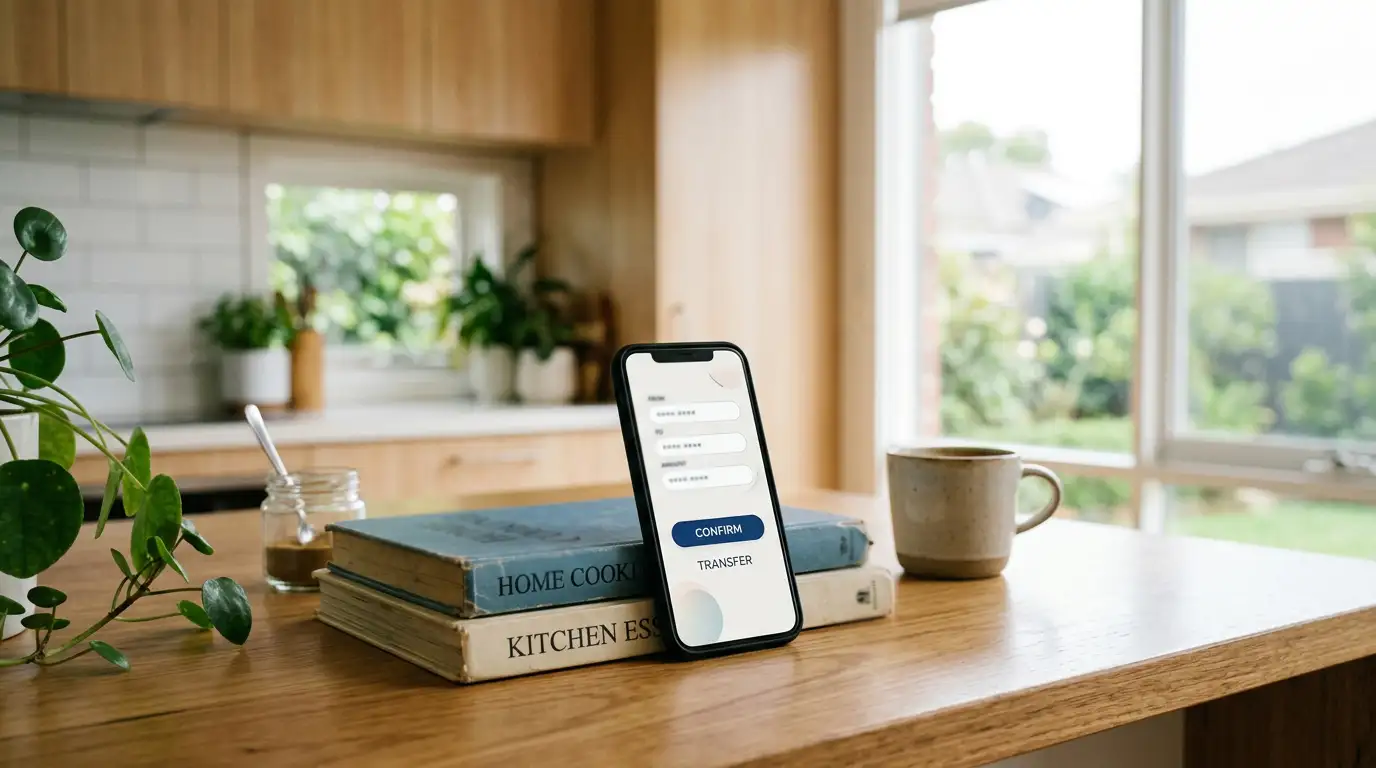
Google Pay against the rails Australians actually use
Ranking payment methods in the abstract is a waste of everyone’s time. Each of these exists because it solves a problem the others do not.
PayID, POLi, Neosurf, crypto — what each is for
PayID is the local default and deserves to be. Bank-to-bank over the New Payments Platform, settling in seconds, no fees, working in both directions, addressed by your phone number or email rather than a BSB and account number. Its only real drawback is visibility: the transaction appears in your banking app with the recipient’s name attached, so if a gambling merchant on a statement is a problem for you, PayID is not the answer.
POLi routes a payment through your internet banking session without giving the merchant your card. Instant, A$10 minimums, and deposit-only everywhere it appears — which makes it a funding tool rather than a payment method. Neosurf solves the visibility problem outright: a prepaid voucher bought with cash at a newsagent, redeemed at the cashier, no bank connection at any point. A$10 in, roughly A$500 ceiling, and it cannot receive a withdrawal, so pair it with something else before you win anything.
Crypto is the fastest way out and the clearest signal you are on an offshore site, since no locally licensed operator touches it. Ten to sixty minutes on a payout, network fee only, and it beats every other rail at every site above. The cost is the on-ramp — buying AUD-priced Bitcoin, holding a wallet, absorbing the spread — which is only worth it if you are cashing out regularly rather than once.
Google Pay’s specific contribution to this list is narrower than its marketing suggests and still real. It is the only method that funds a casino balance without your card number reaching the casino at all, and it authenticates with a fingerprint rather than a code sent to a device you might have left in another room. As a deposit rail on an Android phone, mid-session, that is genuinely convenient. As a payments strategy it is half a strategy, because the other half has to be PayID or crypto.
The phone is the cashier now
None of the six real-money sites above has a native app, and that is not a shortcoming. Both app stores refuse real-money casino apps for Australian users, so the entire market runs in the mobile browser — a full-screen web wrapper that behaves like an app without being one. Every wallet payment therefore happens in a browser session on the device holding the card, which is the same device running the pokies.
That collapses a distinction people still make between “playing on my phone” and “banking on my phone.” They are one session now. The upside is obvious: you never leave the game to top up. The downside is the same fact viewed honestly — the friction that used to exist between deciding to deposit and completing a deposit has been reduced to a fingerprint, and friction was doing useful work for some people. Which is the argument for the next section.
Does Google Pay work for pokies on an iPhone?
Rarely. Casino cashiers handling high-risk payments often accept only the authenticated device-token credential an Android phone produces, and that configuration removes the button from other devices. Google Pay itself supports iOS in browsers; the restriction is the checkout’s. On an iPhone, PayID is the practical route.
Bonuses, coins and the sweepstakes detour
Three loose ends, and none of them deserves the space that ranking pages give it.
Whether the funding method changes your bonus
Mostly not, and where it does, the exclusion runs the other way from what people expect. Wallet and card deposits qualify for welcome offers at every site above. What gets excluded, when anything does, is the voucher and prepaid end — Neosurf and paysafecard occasionally sit outside promotions because they are harder to tie to a verified identity.
The number that actually matters is the wagering multiple, not the eligibility. RocketPlay’s welcome offer runs at 40x against an Australian market median nearer 35x, and on a A$500 bonus that difference is A$2,500 of extra turnover before anything is withdrawable. Neospin caps bets at A$5 while you clear, which stretches the same requirement across considerably more spins than the headline implies. Read the multiple and the maximum bet together, because separately they each look survivable.
No-deposit offers are the ones to treat with real suspicion. Neospin states its welcome structure is deposit-based rather than a free chip, which is at least honest; several sites in this market advertise a “no deposit bonus” that requires a card on file, verification, and a deposit before anything clears. A “gift” that costs twenty thousand dollars of turnover to unwrap is a pricing structure with a bow on it. Nobody here is giving away money, and the ones who say they are have simply moved the price somewhere you will not read.
Coins instead of a balance
The sweepstakes model gets its own paragraph because three of the highest-ranking results on this search have rebuilt their entire pages around it, and you should understand what they are offering before you assume they have found a loophole worth using.
They have found a real one — the coin economy removes the cash wager, which takes the product outside the Act’s definition. The cost is that you are three currencies away from money at all times, you cannot top up an account directly, redemption thresholds and playthrough requirements govern when value becomes withdrawable, and the game libraries are a fraction of what the offshore sites carry. RooVegas is the best-executed version of it in this market and the only place Google Pay works in both directions. If the wallet’s two-way capability is genuinely your deciding factor, that is where to go. If pokies are, you now know the trade you are making.
New sites, untested cashiers
Recency has no bearing on whether a wallet payment works. A cashier built last quarter uses the same processors as one built in 2020, and a new site has one thing an established one does not: no payout history. Nobody has cashed out of it under pressure yet, which is the only test that matters. All six sites above have been trading since at least 2020, Casinonic since 2019, and that was a filter rather than an accident.
Do casinos give bonuses on Google Pay deposits?
Yes — wallet and card deposits qualify for welcome offers at all six sites above. Voucher methods like Neosurf are the ones sometimes excluded. Focus on the wagering multiple instead: 40x is common here against an Australian median nearer 35x, which on a A$500 bonus means A$20,000 of turnover.
Setting your own ceiling
The wallet is the fastest deposit method on this page, and speed is the thing worth thinking about rather than celebrating. A fingerprint between deciding and depositing is not much of a pause.
Two controls are genuinely useful and neither depends on the casino. Your banking app almost certainly has a gambling merchant block — a toggle that declines transactions to codes 7995 and 7801 at the issuer, before they reach any cashier. Turn it on and the wallet route closes at the source, on a switch some banks deliberately make slow to reverse. Card-level daily limits do similar work with less finality. And Google Wallet keeps its own transaction history, which is a plain unsentimental log of what actually left your account this month, unmixed with the rest of your banking. Most people who look at that number for the first time are surprised, and the surprise is the point.
BetStop, the national self-exclusion register, is the formal route and it works — for licensed Australian wagering operators, which none of the sites above are. That gap is not a technicality. An offshore casino has no obligation to check BetStop and no mechanism to receive it, so self-exclusion here means closing accounts individually with each operator and asking each to block re-registration. Enforcement depends entirely on the operator’s goodwill, and goodwill is not a compliance framework.
If the deposit pattern has stopped looking recreational, Gambling Help Online runs a free national service on 1800 858 858, twenty-four hours, with chat and counselling that does not require you to have hit a crisis first. Lifeline is on 13 11 14. The offshore sites in this article carry those numbers in their footers because their licensing requires the link, not because anyone checks whether it helps — which is a reasonable summary of what a Curaçao permit is worth, and a reasonable note to end a payments guide on.
Casino Deposit Methods Australia 2026 — Full Comparison
Content created by the «CasinoPay» team