
Casino sites that accept paysafecard in Australia: the voucher, the cap and the way out
 Available in AU
A paysafecard deposit is the closest thing to handing cash across a counter that the online casino world still allows. You buy a code, you type sixteen digits into a cashier, the balance moves. No bank sees it. No card number leaves your hands. Nothing lands on a statement for someone to read later.
That is the pitch, and it holds up. What the pitch leaves out is everything on the other side of the transaction: a hard A$200 ceiling per payment that sits awkwardly beside welcome banners quoting five figures, a store locator on paysafecard’s own Australian site that currently returns not one sales outlet, a monthly fee that quietly eats codes you forget about, and a one-way door on the way out. Money goes in through the voucher. It does not come back that way.
So this page does two jobs. It names the sites that take the voucher from an Australian account in Australian dollars, with the licence, the minimum and the payout rail for each. And it walks through the plumbing — including the bits where the plumbing has changed recently and nobody has updated the guides.

What a paysafecard deposit actually looks like in an Australian casino cashier
The mechanics are genuinely simple, which is most of the appeal. A paysafecard is a prepaid code — sixteen digits, bought for a fixed face value, spendable once until the value runs down. Paysafe Group owns it, the same parent that runs Skrill and Neteller, and the product has been going since Vienna, 2000. What separates it from those two is the absence of an account. Skrill wants a registration and a funding source behind it. A paysafecard code wants nothing. You hold it, you spend it, it is gone.
At the cashier you pick paysafecard from the payment list, type the sixteen digits, name an amount, confirm. Crediting is effectively immediate — under half a minute at every site examined here, with no pending window and no verification step standing between the code and the balance. If you spend A$40 of a A$50 code, the remaining ten stays on the PIN for next time. Real money play throughout, in Australian dollars, with the same games and the same limits as a card deposit would buy you.
Then there is the part the cashier does not advertise.
Direct PIN entry versus the third-party detour
Not every site that displays the paysafecard logo takes your PIN directly. A fair number route the voucher through an intermediary — UTORG turns up most often in the Australian-facing market, with EazyPayz and Chain Valley appearing at other operators. In that arrangement the code does not fund your casino balance. It funds a wallet held by the processor, and the processor funds your balance. Two hops instead of one.
One of the bigger Australian ranking pages waves this away as a change that “really doesn’t concern players.” It concerns them in four specific ways. A redirect to a domain you have never seen, asking for a code you paid cash for, is exactly the shape of a phishing page — so you now have to verify a page you cannot easily verify. A processing fee may attach at the intermediary that the casino’s own fee schedule does not mention. A declined PIN produces an error at the processor, not at the casino, which means the support desk you can reach is not the support desk holding your money. And bonus eligibility is written against the casino’s payment list, so a deposit arriving as “wallet transfer” rather than “paysafecard” can miss an offer it was supposed to qualify for.
The distinction is worth thirty seconds of your time before you buy a code. Load the cashier while logged in, select paysafecard, and see whether the next screen asks for sixteen digits or sends you somewhere else. Among the sites below, Need for Spin and Rolling Slots list the voucher directly. MyEmpire and Neon54 have both been flagged as routing it.
The A$200 ceiling nobody mentions next to the A$10,000 welcome banner
Paysafecard publishes its Australian limits plainly, and they are lower than the guides suggest. The maximum combined PIN transaction is A$200. Not A$250, which is the figure floating around several of the bigger comparison pages. Two hundred, per payment, whether that is one code or several combined. A registered paysafecard account raises what you can store — A$1,000 held in the account, A$6,000 in used PIN value across a year — but the per-transaction wall stays where it is.
Now put that next to the marketing. Ricky Casino advertises A$7,500 and 550 free spins. Lucky Ones quotes A$20,000. Rolling Slots has been published at A$6,400 across four deposits. To reach the top of a A$7,500 package on voucher money alone, at A$200 a transaction, you would be feeding the cashier thirty-eight separate times — and that is before noticing that these packages spread across ten deposits with fifty-times play-through attached. The headline number and the payment method are describing two different universes. Nobody puts them in the same paragraph, which is precisely why the arithmetic is worth doing once.
For the way people actually deposit — A$10, A$20, A$50 at a time — the cap never binds. It only bites if you meant to chase a bonus tier, or if you had a good night and wanted to reload in one go.
What is the maximum I can deposit with one paysafecard voucher?
Paysafecard caps a combined PIN transaction at A$200 for Australian users. Single vouchers sell in A$10, A$20, A$50 and A$100 face values, and several codes can be combined in one payment up to that A$200 wall. Storing more requires a registered account, which permits A$1,000 held and A$6,000 in used codes annually.
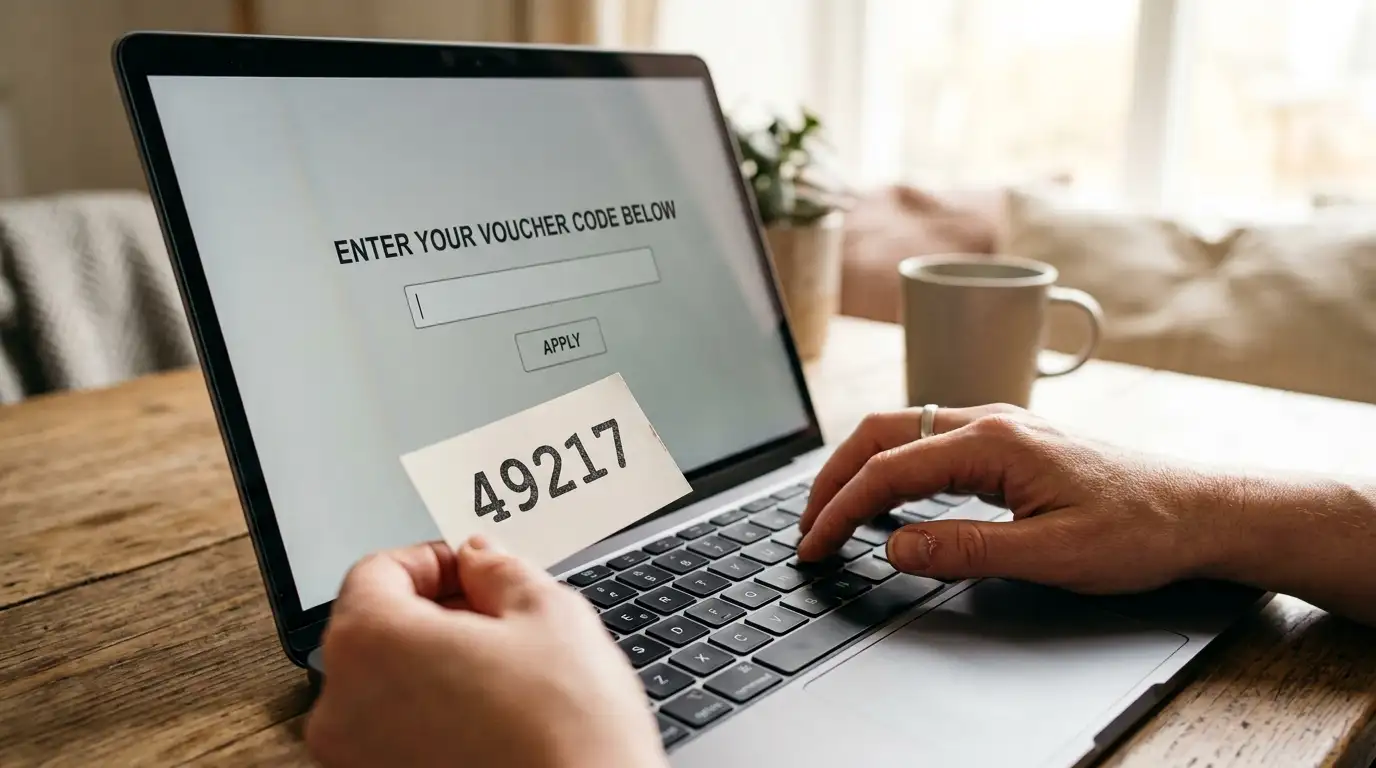
Where an Australian actually buys an AUD voucher in 2026
Here the guides and the provider stop agreeing with each other, and the disagreement is not small.
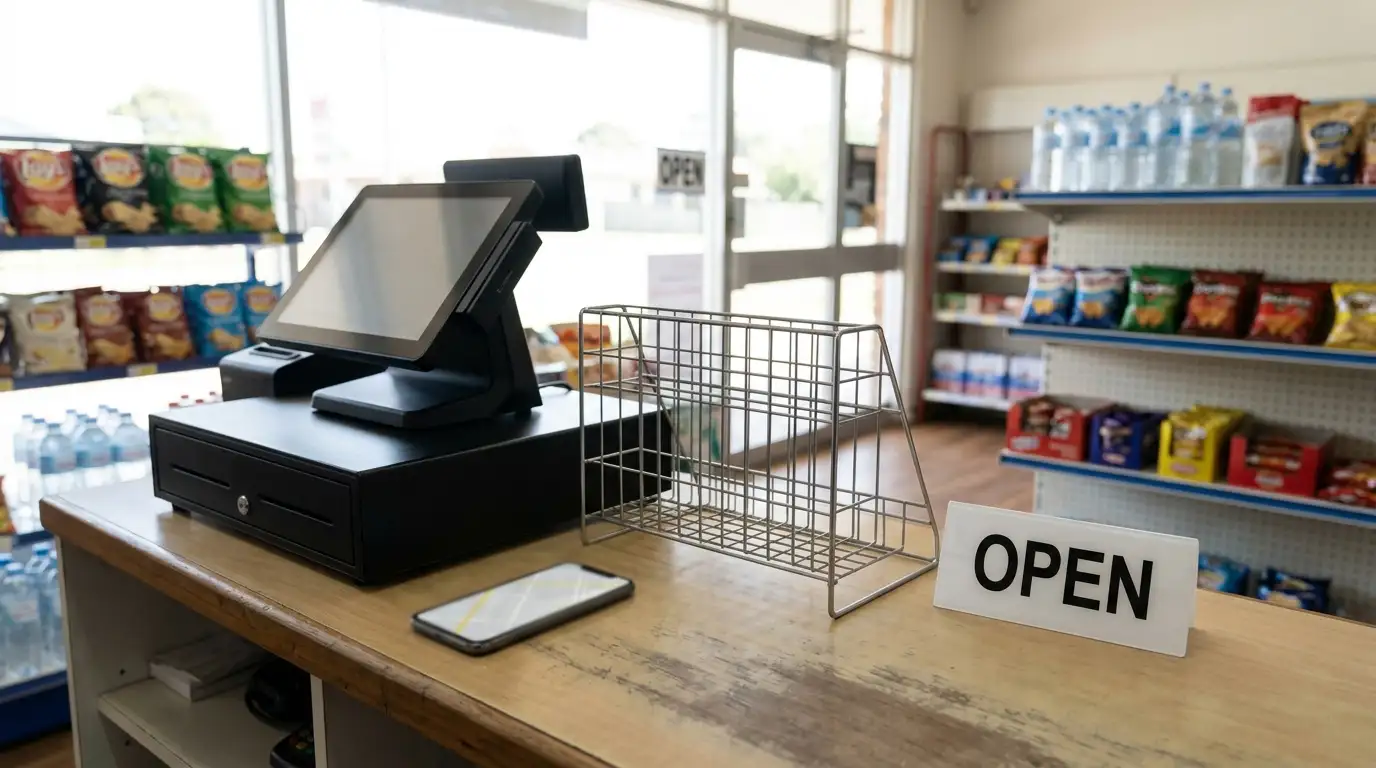
Read the Australian comparison pages and you will be told paysafecard vouchers sit on the rack at 7-Eleven, Woolworths, Coles Express, IGA, Myer, Harvey Norman, Australia Post and independent newsagents — “over 30,000 retail locations nationwide,” according to one, “650,000 retail outlets worldwide,” according to another. Confident stuff. Then open paysafecard’s own Australian store locator, the tool built for exactly this question, and it returns zero outlets. The companion locator for PaysafeCash partner payment points returns zero as well. And a rival market analysis published in September 2026 states flatly that paysafecard “withdrew from the domestic retail network years ago” and that “there is no active retail presence for new punters to rely on.”
Three sources, three answers, and every ranking page in the top ten repeating the first one without checking.
The store locator problem
The honest reading is that the retail lists are inherited. They read like a legacy of the mid-2010s, when paysafecard did have shelf presence in Australia, copied forward from guide to guide as the underlying distribution thinned out. Some outlets may still carry stock; a locator returning nothing is not proof that no shop in the country has a code behind the counter. What it does prove is that the provider will not point you to one.
Which makes the practical instruction straightforward. Do not plan a session around a drive to the servo. If a local shop happens to stock codes, treat that as a bonus discovered by accident rather than a supply line. And if you want the retail-cash experience specifically — walk in, hand over notes, walk out with a PIN — Neosurf is the voucher that currently holds the Australian shelf space, across Woolworths, Coles, 7-Eleven and newsagency distribution. Flexepin exists too, with a patchier footprint that readers consistently report needing two or three tries to find. That is a different payment method, not a workaround, but it is the honest answer to “where do I buy a voucher in this country today.”
Authorised online resellers and the region lock
The channel that reliably works is online. Dundle sells AUD paysafecard codes as an authorised distributor, with delivery by email in seconds; Startselect, Recharge.com and Refilled operate the same way. Face values on the Australian catalogue run A$10, A$20, A$50 and A$100 — four denominations, not the five that several guides list. There is no A$30 code, whatever the step-by-step walkthroughs say. Payment at these resellers goes through cards, PayPal, Apple Pay and similar, which means the anonymity argument bends a little: your bank sees a purchase from a digital-goods retailer rather than a casino, which is a meaningfully softer footprint than a gambling merchant code, but it is not the clean nothing that cash-at-the-counter gives you.
One rule catches people out. Codes are region-locked, and the region of the code must match the region of your paysafecard account. An AU code needs an AU account. Buying a cheaper or larger denomination from a European storefront to sidestep local availability breaks that match, and the code will not redeem. Region shopping is not a clever hack here; it is just money parked somewhere you cannot reach it.
Where can I buy a paysafecard voucher in Australia in 2026?
Online, through authorised resellers such as Dundle, Startselect, Recharge.com and Refilled, in A$10, A$20, A$50 and A$100 denominations with instant email delivery. Paysafecard’s own Australian store locator currently lists no physical outlets, so retail lists naming 7-Eleven or Woolworths should be verified before you rely on them.
Casino sites that accept paysafecard from Australia
Ten operators, ordered by what matters when the voucher is your deposit method: how fast money leaves the site, and whether the minimum deposit fits the code in your hand. Not by bonus size. A A$6,000 welcome package is worth precisely nothing if the payout takes five working days and your A$10 code could not open the account.
Every one of these is licensed offshore. That is not a shortcoming of the list, it is the structure of the market — Australian law prohibits supplying online casino games to people here, so an Australian-licensed pokies site cannot exist to be recommended. More on that further down, because it changes what recourse you have.
| Operator | Licence | Withdrawal speed | Minimum deposit | Distinguishing feature |
|---|---|---|---|---|
| Wild Tokyo | Offshore, no AU licence | PayID under 15 min to 1h48m in published tests | A$10 | Fastest documented AU payout on this list |
| Neon54 | Curaçao | 1–3 hours | A$10 | Five welcome packages to pick between; voucher routed, not direct |
| BitStarz | Curaçao 8048/JAZ | 1–24 hours | A$10 | Operating since June 2014; 6,920+ games from 78 providers |
| Need for Spin | Offshore, no AU licence | Crypto same-day, PayID under 24h | A$10 | Voucher, Mastercard and Bitcoin side by side, direct PIN entry |
| Ricky Casino | Curaçao 8048/JAZ2020-13 | 12–48 hours, PayID within 24h tested | A$10 account, A$20 on some methods | AU-native since 2021, AU$ cashback loyalty |
| iWild Casino | Curaçao | Under 3 hours claimed, 1–5 working days in one test | A$10 | RTP shown on every game tile |
| Rolling Slots | Offshore, no ACMA licence on record | 12–24 hours | A$20 on published packages | Native Android and iOS apps; direct voucher listing |
| MyEmpire | Curaçao | 12–24 hours | A$10 | Voucher goes to a wallet first, then to your balance |
| Pistolo | Curaçao | 12–24 hours | A$15 | Casino and sportsbook in one account |
| Goldenbet | Curaçao, Santeda International B.V. | 12–24 hours | A$10 | A$100 cash across three deposits, no wagering — and an ACMA warning on record |
Wild Tokyo
An offshore site that accepts Australian players with AUD accounts, running PayID alongside Skrill and card options. It says out loud in its own documentation what most of this segment mumbles: it holds no Australian licence and is regulated by no Australian authority. Small thing, but a site willing to write that down is a site less likely to surprise you with the fine print elsewhere.
The reason it leads this list is a single number. PayID withdrawals here averaged under fifteen minutes in one tested review from May 2026, and one hour forty-eight minutes in a separate test. For a voucher player that is the most important figure on the page, because paysafecard cannot pay you — PayID is your only fast way out, and this is the site where that rail moves quickest. The welcome offer is scruffier: the banner quotes 250% up to €3,000 with 600 free spins, in euros, on a site that otherwise handles Australian dollars throughout. Elsewhere the same package appears as AU$5,300, AU$4,900 and A$4,300 depending on which page you land on. The second deposit runs 80% up to A$700 from a A$30 minimum, or 80% up to A$1,300 with 200 bonus spins if you put in A$80 or more — meaning two A$50 codes get you into the better tier and one does not.
Neon54
Rock-and-roll dressing over a Curaçao-licensed lobby, with AUD accounts and PayID support. Payouts land in the one-to-three-hour band on the AU rankings, which puts it second only to Wild Tokyo among the sites here.
Its practical advantage is the A$10 minimum, which is the same as the smallest AUD voucher denomination. That sounds trivial until you have stood in the situation it solves: a A$10 code in hand at a site that wants A$15, which means buying a second code to unlock a deposit worth less than the codes you bought. Neon54 removes that friction entirely. Five different welcome packages are on offer rather than one, which is either useful flexibility or five sets of terms to read depending on your appetite for homework. One caveat, and it is the reason this site is not higher: at least one Australian ranking page flags Neon54 as handling paysafecard indirectly rather than by direct PIN entry. Check the cashier flow before you buy the code.
BitStarz
The oldest operation on this list by a wide margin. It launched in June 2014 under the name BitStars, at bitstars.net, as one of the first Bitcoin-native casinos, built on SoftSwiss platform infrastructure. Licensing sat with Direx N.V., then Dama N.V. under Curaçao licence 8048/JAZ, and the brand is now associated with Gareton B.V. as its licensed entity. Eleven years of continuous trading in a segment where brands routinely appear for one season and vanish is worth something on its own.
It is also worth knowing the ugly chapter. In June 2024 a Curaçao court declared Dama N.V. bankrupt in proceedings connected to roughly €800,000 of unpaid-winnings judgments — a ruling the company contested. The brand kept running, the licensing entity changed, and the catalogue is still one of the few in this market you can actually count: 6,920 games from 78 providers, with a licence number printed in the footer that matches the public register. Deposits start at A$10 with no fees on any published method, and payouts run one to twenty-four hours. If you weigh a long operating record above a shiny landing page from last month, this is the entry that rewards you — with the bankruptcy filing as the reason to keep your balance moving rather than parked.
Need for Spin
Racing-themed, AUD-focused banking, crypto support, round-the-clock assistance and responsible-gambling tooling that is actually published rather than buried. The welcome package runs 260% up to A$4,100 with 530 free spins.
What earns it a place this high is the cashier layout. Paysafecard sits alongside Mastercard and Bitcoin as a direct listing, PIN entered in the casino’s own interface, no wallet detour. And with crypto on the withdrawal side, this becomes the cleanest bank-free loop available: a code bought with cash goes in, a Bitcoin payout comes out, and no Australian bank sees either end of it. Whether that reads as a feature or a red flag depends entirely on why you wanted the voucher. If the answer was privacy from a shared bank account, it is the former. If the answer was that you are trying to hide the habit from yourself, the section at the bottom of this page is the one to read.
Ricky Casino
Live since 2021, built narrow and deliberately: pokies-led, Australian dollars natively, positioned for local punters rather than adapted for them. Reviews place it with Dama N.V. under Curaçao licence 8048/JAZ2020-13. The library has grown past 3,000 pokies and table games, and PayID went in as a primary Australian deposit and withdrawal channel, which is the rail that matters most when your deposit method cannot pay you back.
The bonus needs unpacking, because the headline is doing a lot of work. A$7,500 and 550 free spins, says the banner. Spread across ten deposits, says the terms — with fifty-times wagering, the heaviest play-through demand among its direct rivals. Independent testing puts realistic first-deposit value at A$30 to A$500 plus 100 free spins, which is a perfectly reasonable offer and roughly one-fifteenth of the advertised figure. Note also that the A$10 account minimum is not universal: POLi and certain e-wallets set their own floors, typically A$20, so the cashier dropdown is the binding number rather than anything printed on a landing page. Tested AUD withdrawals have cleared inside 24 hours by PayID, against a published band of 12 to 48.
iWild Casino
A hybrid casino-and-sportsbook that the largest Australian paysafecard ranking page puts at number one overall. The catalogue is counted between 8,000 and 10,000-plus titles across 52 or more providers, with cashback up to 20% and a Curaçao licence behind it.
One feature genuinely separates it: RTP is displayed on every game tile in the lobby. In a segment where return-to-player figures are usually a paragraph in a help file, if they appear at all, putting the number on the thumbnail is the only verifiable transparency measure among the ten sites here. Against that, the payout picture does not reconcile. The Australian ranking claims under three hours; one independent review reports one to five working days. Those cannot both be right, and averaging them into “a couple of days” would be inventing a number to paper over a disagreement. Treat the payout speed here as unverified and test it with a small first withdrawal before you trust it with a large one. The welcome package is similarly slippery across sources — up to A$4,000 with 550 spins, €4,000, or 200% up to $1,000 with 200 spins, depending on where you read.
Rolling Slots
Another rock-and-roll theme, this one built for the Australian market with AUD support and native apps for both Android and iOS — a rarity in a segment that mostly shrugs and points you at a mobile browser. Over 5,000 games, and paysafecard listed in the cashier next to MiFinity and Skrill as a direct option.
Independent testing confirms Australian registration works and AUD is supported, while stating the obvious corollary plainly: operational access is not a licence, and ACMA records show no Australian authorisation. Then there is the bonus, which is where this entry becomes genuinely instructive. Across four sources the welcome package appears as 310% up to A$6,400 with 570 spins, 300% up to A$6,400 with 550 spins over four deposits, 300% up to A$5,000 with 300 spins, and 260% up to A$4,500 with 260 spins. Four different offers, one site, all published as current. Minimum deposit sits near A$20 on the multi-stage packages, with 45× wagering where the terms bother to state it. The lesson generalises to every entry on this page: whatever number a comparison table shows you — including the one above — the cashier and the terms page on the day you deposit are the only versions that can take your money.
MyEmpire
Curaçao-licensed, AUD accounts, PayID, a lobby quoted at 10,500 pokies, and a mini-game layer bolted over the standard experience. Payouts fall in the 12-to-24-hour band. Deposits open at A$10.
It sits this low for one structural reason: MyEmpire is explicitly flagged as handling paysafecard indirectly. Your code buys wallet credit, and the wallet credit funds your casino balance. Two hops, an extra interface, and a deposit that may not register as a paysafecard payment when the bonus system checks your eligibility. Worth confirming with live chat before you commit a code, not after. The published welcome figures are unstable in the same way Rolling Slots’ are — up to A$5,500 with 200 free spins on one source, up to A$800 with 300 spins on another — and the operator carries a documented complaints history on casino.guru, which is public and worth ten minutes of reading before you deposit rather than after something goes sideways.
Pistolo
Casino and sportsbook in a single account, with a mission-and-quest progression layer over the top and a Curaçao licence behind it. Payouts run 12 to 24 hours. Welcome terms are quoted as 100% up to A$750 with 200 free spins on one source and up to A$5,500 with 200 spins on another.
The A$15 minimum deposit is the reason it ranks here rather than higher, and it is a better illustration of voucher friction than anything abstract. Australian codes come in A$10, A$20, A$50 and A$100. A A$15 floor means the A$10 code is unusable on its own and the A$20 code overshoots by five dollars that sit in your balance whether you wanted them there or not. Five dollars is nothing. Having to buy a second code, or start a session with a balance you did not choose, is the kind of small annoyance that decides where a voucher-funded evening actually happens. For a player who deposits A$50 at a time it is irrelevant. For the A$10-code crowd — and a large slice of voucher players are exactly that — it is the whole decision.
Goldenbet
Operated by Santeda International B.V. under a Curaçao licence, trading under this brand since 2021. Over 10,000 games, PayID and crypto banking, and a reported maximum win per spin of A$168,000.
It also carries the most interesting offer on this page and the worst paperwork behind it, which is not a coincidence worth ignoring. The Australian welcome is A$100 in cash across the first three deposits with no wagering attached — no play-through, no 45× churn, the money is yours. In a segment where 35× to 50× is the standard tax on a “gift,” that is genuinely unusual. Now the other column: Goldenbet received a formal ACMA warning dated 4 December 2023, after which its domain was referred to Australian internet service providers for blocking. Casino.guru rates it 5.7 on its safety index, which the site itself classifies as below average.
Put those side by side and you have the argument of this entire page compressed into one brand. The sweetest terms in the list sit at the operator with a regulator’s warning on file and a below-average independent safety score. That is not a coincidence — generous, low-friction offers are how a site with a compliance problem buys attention it cannot earn on reputation. Deposit here with the assumption that the domain may not resolve next month, keep nothing in the balance you would mind losing access to, and understand that a prepaid voucher offers no chargeback if it does go dark.
Can you use paysafecard at an online casino from Australia?
Yes. Offshore operators accepting Australian players in AUD list paysafecard in their cashiers, and the ten sites above have all been identified as accepting it. No Australian-licensed online casino takes it, because supplying online casino games to people in Australia is prohibited. Deposits credit in under a minute.

How the selection was made
Four filters, applied in this order. Does the site accept a paysafecard deposit from an Australian account in Australian dollars, confirmed at cashier level rather than inferred from a payment logo on a footer. Does it offer a withdrawal rail that actually works for an Australian — PayID or crypto, not a bank wire quoted in euros — because a deposit method that cannot pay out makes the payout method the whole question. Is the minimum deposit compatible with the denominations you can actually buy. And is the licensing claim checkable, with a named entity and a licence number rather than a Curaçao badge floating in a footer.
What did not count: bonus size. It is the loudest variable in this market and the least informative, for a reason the research made unavoidable. Rolling Slots’ welcome package appears as four materially different offers across four sources, all presented as current. MyEmpire’s appears as two. Wild Tokyo’s is quoted in euros on one page and in three different AUD figures elsewhere. iWild’s payout speed is “under three hours” in one place and “one to five working days” in another.
The temptation is to average those and print a tidy number. That would be manufacturing a fact to fill a cell. So where sources conflict, the conflict is stated above and the reader gets the only instruction that survives contact with reality: whatever the table says, the cashier and the terms page on the day you deposit are the versions that govern. Comparison tables in this segment — including the one on this page — are snapshots of somebody’s affiliate feed, and affiliate feeds go stale.
Twenty-odd brands were named across the Australian pages examined. Ten made this list by appearing in at least two independent sources as accepting the voucher. The rest — Snatch, SpinJo, Lucky 7, Bets.io, Slots Gallery, Aussie Play, Vegas Now, Lucky Ones, Richard Casino and a handful of others — were single-source mentions. That does not make them bad sites. It makes them unverified, and a list built on one page’s word is not a list, it is a rumour with formatting.

Getting money out when the voucher only works one way
Every guide in this niche tells you paysafecard is deposit-only. They are right about the outcome and wrong about the reason, and the reason has changed recently enough to be worth the paragraph.
Paysafecard does operate a payout product. Its own business documentation describes it clearly: when an operator carries out a withdrawal, the funds are credited instantly to the balance of the customer’s paysafecard account, and from there the customer can spend the balance online again, withdraw cash at an ATM using the paysafecard Mastercard, or make a bank transfer to their own bank account. So the rail exists. It is documented, it is live, and it is used in other markets.
Why the payout rail exists on paper and not in practice
Follow that chain to its end for an Australian and it stops dead. The paysafecard Mastercard — the ATM exit at the end of the rail — has been discontinued since 31 July 2025. Existing cards keep working until their printed expiry date, residual balances transfer automatically into the account balance when they expire, and no card is being replaced or renewed. The nominated successor product is PaysafeWallet, which offers an IBAN account, virtual and physical debit Mastercard and SEPA transfers. SEPA is the euro-area payments network. It does not reach an Australian bank account.
There is a further catch upstream. Refunds and payouts through paysafecard require the payer to hold a myPaysafeCard account, and where that account type is unavailable in a payer’s country, the merchant is instructed to refund through a different route entirely.
So the practical advice — do not expect to cash out to your voucher — is correct. But the honest version is more useful than the usual one-liner, because it tells you the door was not missing, it was bricked up, and it explains why an old forum post promising a paysafecard withdrawal is not a lie so much as an artefact. Plan your exit on a different rail from the start.
PayID, crypto, bank transfer: what each one costs you
PayID is the default answer for Australians, and it is a good one. Built on the New Payments Platform, it moves Australian dollars between Australian accounts in real time, free, with no currency conversion. Tested casino payouts have landed between one hour forty-eight minutes and four hours, with Wild Tokyo reported under fifteen minutes. The catch is identity: your first PayID withdrawal triggers photo-ID verification.
Which produces the single most useful piece of advice on this page, and the one most people learn the expensive way. Set up your withdrawal method and clear verification before you play, not after you win. The voucher path skips KYC on the way in — no bank, no card, no documents — so it is entirely possible to deposit, play and win without ever proving who you are. Then the payout request arrives and the checks all happen at once, with your money sitting in someone else’s account while a document queue moves at its own pace. Twenty-four hours if you are lucky. Longer if the photo is blurry.
Crypto is the fastest rail if you already hold a wallet — under an hour at most of these sites, with network fees rather than operator fees, and no bank involvement at either end. It also hands you exchange-rate exposure between the payout and the moment you convert, which is a real cost dressed up as a technicality. Bank transfer takes one to five business days and is a fallback, not a plan. And Neosurf, which some sites list, is a voucher like paysafecard — deposit-only, same wall.
| Withdrawal rail | Speed | Fees | What it needs from you |
|---|---|---|---|
| PayID | 15 min to 4 hours in tests | None | Australian bank account, photo-ID verification on first use |
| Bitcoin, Ethereum, Litecoin | Under 1 hour typically | Network fees, no operator fee | An existing wallet, tolerance for rate movement |
| Bank transfer | 1–5 business days | Usually none | Full account details, completed verification |
| Paysafecard | Not available to Australians | — | Nothing; the Mastercard exit closed 31 July 2025 |
Can I withdraw my casino winnings to paysafecard?
No. Paysafecard operates a payout rail that credits an account balance, but its exit routes — the paysafecard Mastercard, discontinued since 31 July 2025, and SEPA transfers through the successor wallet — do not serve Australian bank accounts. Australian players withdraw by PayID, cryptocurrency or bank transfer instead.

Fees, limits and the quiet cost of an unspent voucher
Paysafecard publishes its Australian fee schedule, and the published version is worth more than the summarised versions. Buying and spending a code is free. What costs money is time, currency and reversal.
A service fee of A$4 a month is deducted from the residual credit on a PIN from the second month onward. That is the fee people meet by accident. You buy a A$50 code, deposit A$40, forget the ten dollars for four months, and the balance is gone — not spent, administered away. It is avoidable in one step: redeem the code into a registered paysafecard account and the service fee does not apply. A code sitting loose in a drawer or an email is a code slowly evaporating. Registered accounts have their own slower version of this, with a A$2 monthly inactivity fee applying from the thirteenth month if nothing moves.
A conversion fee applies to any transaction requiring a currency change, which is the argument for insisting on AUD-native casino accounts. A site that holds your balance in euros converts twice — once on the way in, once on the way out — and you pay both times. A refund fee of A$7.50 comes off any amount refunded, and refunds need a myPaysafeCard account to be possible at all.
The transaction limits, restated in one place: A$200 maximum combined PIN transaction; A$1,000 maximum value held in a registered account; A$6,000 annual total across used codes. Compare that to what circulates in the guides — “up to around A$250 per transaction” — and you can see how a wrong number survives by being repeated.
Matching voucher denominations to site minimums
Four AUD face values exist: A$10, A$20, A$50 and A$100. Against that, most of the sites above set A$10 minimums, Pistolo wants A$15, and Rolling Slots’ multi-stage packages start around A$20. The A$10-code player therefore has eight of these ten sites available for a single-code deposit, and Pistolo requires either two codes or a A$20 one.
That is the whole low-stakes calculation, and it is why “$10 deposit” queries dominate this topic. A A$10 session is a genuinely rational way to test a site you have not used before — one code, one deposit, one withdrawal request to see whether the payout machinery works before anything meaningful is at stake. Spend A$10 learning whether a site pays out. It is the cheapest due diligence available in this market, and the only kind that tests the thing the reviews cannot verify for you.
Does paysafecard charge a fee if I do not spend the whole voucher?
Yes. From the second month, A$4 a month is deducted from whatever credit remains on an unspent PIN. Redeeming the code into a registered paysafecard account avoids that fee entirely, though registered accounts incur A$2 monthly from the thirteenth month of inactivity. Refunds carry a separate A$7.50 charge.
Bonuses on voucher deposits, and the offer that cannot exist
Prepaid vouchers usually survive the bonus exclusion list, which is a modest piece of good news. Casinos routinely bar Skrill and Neteller deposits from welcome offers, and paysafecard often escapes that clause — so a voucher deposit can generally claim the same package a card deposit would. Generally. Terms vary by operator and change without ceremony, so the exclusion list in the bonus terms is the only version that counts, and reading it takes less time than arguing with a support agent afterwards.
There is one wrinkle specific to routed deposits. If your voucher reaches the balance via a processor wallet, the transaction may be recorded as a wallet transfer rather than a paysafecard payment — and wallet transfers are exactly the category that bonus terms like to exclude. At MyEmpire and Neon54, both flagged for indirect handling, that is a question worth putting to live chat before the code is spent rather than after the bonus fails to appear.
Then there is the search that will not go away: no deposit bonus paysafecard. Pokies with no deposit bonus, paysafecard casino no deposit, instant paysafecard withdrawal no deposit bonus — variations of it arrive constantly, and the phrase is a contradiction in terms. A no-deposit bonus is credited for registering, with no payment involved. There is no deposit for the voucher to be. Asking for a no-deposit paysafecard bonus is asking which brand of shoe to wear while you are not walking. What people actually want, reading past the phrasing, is either a genuine no-deposit offer (which exists at some sites, has nothing to do with your payment method, and comes with wagering that usually makes it decorative) or the smallest possible real deposit — which is the A$10 code, eight of the ten sites above, and no contradiction required. Every guide either ignores this or quietly plays along by listing “paysafecard no deposit offers” that are simply no-deposit offers at sites that also take paysafecard. Now you know which one you are looking at.
Are there paysafecard casinos with no deposit bonuses?
Not as a payment-specific offer — a no-deposit bonus involves no deposit, so no payment method attaches to it. Some sites accepting paysafecard do run genuine no-deposit promotions for new registrations, but eligibility is unrelated to how you later fund the account, and wagering requirements typically absorb most of the value.
What you can play with voucher money
Nothing about a paysafecard deposit restricts what you can open afterwards. The voucher sits in the payment layer; once the balance credits, it is indistinguishable from money that arrived by card, PayID or crypto. Pokies, live dealer tables, roulette, blackjack, crash titles, scratch games — the full lobby, at the same stakes.
Where a voucher deposit does interact with game choice is through bonus terms rather than access. Free spins attach to nominated pokies, and table games commonly contribute 10% or less toward wagering, which is a games question dressed as a payment question. On the provider side these lobbies run the usual studios: Pragmatic Play and Play’n GO across most of the ten, with iWild counting 52-plus providers and BitStarz 78, and Ainsworth turning up where a site has bothered to court Australian tastes specifically.
Mobile deserves one line, because the answer is boring in a good way. These sites are browser-based on phones, with Rolling Slots the exception offering native Android and iOS apps. Entering sixteen digits on a phone keypad works exactly as well as entering them on a desktop, and the deposit flow is identical. No app download, no separate mobile cashier, no difference in limits.
Do paysafecard deposits qualify for casino welcome bonuses?
Usually yes. Prepaid vouchers commonly escape the payment-method exclusions that block Skrill and Neteller deposits from welcome offers. The exception is deposits routed through a processor wallet, which may register as a wallet transfer and fall foul of exclusion clauses. Confirm with support before depositing if the bonus matters.

Where the law actually stands for an Australian using a voucher
The Interactive Gambling Act 2001 is the governing statute, administered by the Australian Communications and Media Authority. It makes it illegal for gambling providers to offer certain online services to people in Australia, and the banned list includes online casinos outright — the Department responsible for the policy specifies casino-style games such as online blackjack and roulette, and pokies or slot machines. Banned services must not be advertised here, and must not offer credit for online betting.
Read that sentence carefully, because the direction matters more than the prohibition. The Act binds the provider. It does not create an offence for an individual in Australia who deposits at an offshore casino. That is a statement of what the law does, not encouragement — and the consequences of the asymmetry all fall on you. There is no Australian licence behind these sites, so there is no Australian regulator to complain to, no local dispute process, and no domestic protection over your balance. ACMA maintains a register of Australian-licensed interactive wagering providers, but it covers sports and race betting only. There is no register of licensed Australian online casinos because supplying one is prohibited. BetStop, the National Self-Exclusion Register, blocks you from every Australian-licensed wagering service in a single step — and has no reach whatsoever over an offshore casino.
The regime is also tightening. The Interactive Gambling Amendment (Gambling Reform) Bill 2026 passed Parliament on 19 August 2026, bringing advertising restrictions across television, radio, online and sports venues, a global opt-out register for gambling advertising, limits on direct marketing of inducements to new account holders in their first fourteen days and to customers identified as at risk of harm, a ban on commissions to staff or affiliates based on customer activity, stronger takedown powers against illegal services, and a strengthened BetStop. Most of it commences 1 January 2027. Since the 2017 reforms, more than 220 online gambling services have withdrawn from the Australian market, and ACMA can refer the directors of offending companies to the Australian Border Force.
What ACMA blocking feels like from the player’s side
ACMA directs Australian internet providers to block illegal offshore gambling sites in periodic tranches — six more domains were ordered blocked in May 2026, and the count has been running since 2019. From your chair it is undramatic. A domain that loaded yesterday does not resolve today. No warning email, no notice period, no transition arrangement.
For most payment methods that is an inconvenience with a fallback: a card deposit has a chargeback behind it, a bank transfer has a paper trail and a bank willing to ask questions. A paysafecard deposit has neither. You spent a prepaid code at a merchant, the code is consumed, and the merchant’s website no longer answers. Operators typically remain reachable on a mirror domain and support usually keeps working, so this is a nuisance far more often than a loss — but it is a nuisance with no consumer-protection mechanism underneath it, and that is a direct consequence of choosing the most anonymous payment method available. Anonymity cuts in both directions. It protects you from your bank knowing, and it removes your bank as an ally when something goes wrong. Keep your balance low and withdraw promptly, and the exposure stays theoretical.
Is it illegal for an Australian to deposit at an offshore casino with paysafecard?
The Interactive Gambling Act 2001 prohibits providers from supplying online casino services to people in Australia; it creates no offence for the individual depositing. The trade-off is practical rather than legal — no Australian licence means no local regulator, no dispute process, and no chargeback behind a prepaid voucher.
Keeping a voucher habit from becoming an expensive one
The best argument for a paysafecard deposit is the one the marketing makes least of. Buying a physical code is friction, and friction is the thing that a tap-to-deposit card removes. You decide on fifty dollars away from the reels, you buy fifty dollars, and when fifty dollars is gone the session is structurally over. No stored card, no one-click reload, no top-up during a losing run. Players who fund by voucher do tend to be more disciplined than card players, and it is not because they have better character — it is because the payment method made the decision for them in advance.
That advantage lasts exactly as long as you let it. A second code takes ninety seconds to buy online, delivered by email, and at that point the “built-in spending limit” is a limit you renew at will. This is where the anonymity that made the voucher attractive turns awkward: no bank statement means no record, and no record means nothing to review at the end of the month when you try to work out what the year actually cost. The friction is real. It is also entirely voluntary, and the sites above are not going to remind you of that.
So the practical guardrails. Set deposit and session limits inside the casino account itself, on the day you register, while the decision is boring and cheap. Buy one code per session and treat a second purchase as the signal it is, not the solution it feels like. Keep some record of what you spend — the anonymity that hides your play from a bank also hides it from you. And if any of that reads as more difficult than it should, free and confidential help is available around the clock: the National Gambling Helpline on 1800 858 858, and Gambling Help Online for chat and email counselling. BetStop, at betstop.gov.au, blocks you from every Australian-licensed wagering service in one step, though it does not touch the offshore casinos discussed here — which is one more reason to set your own limits rather than assume a system is holding them for you.
Why does my paysafecard deposit go through a company I have never heard of?
Many operators route voucher payments through an intermediary — UTORG, EazyPayz and Chain Valley are the ones seen most in the Australian market. Your code funds the processor’s wallet, which then credits your casino balance. It works, but it can add a fee and may affect bonus eligibility, so confirm the flow first.
Casino Deposit Methods Australia 2026 — Full Comparison
Content created by the «CasinoPay» team