
$20 minimum deposit casino Australia: the three numbers that decide whether twenty bucks works
 Available in AU

What twenty dollars actually buys at an Australian online casino
A twenty-dollar deposit is the most misrepresented number in the Australian online casino market. Search for it and you will find dozens of pages headed “$20 deposit casinos” listing operators whose cashiers will not accept anything under A$30. One of the larger Australian comparison sites states plainly in its own body copy that the cashier minimum and the bonus minimum are two different numbers, then publishes six brands underneath at “Minimum deposit: 30.00”. Another prints a A$20 comparison table with A$30 rows sitting in it. Nobody is lying, exactly. They are just using A$20 as a page title rather than as a test.
So here is the test, and it has three parts.
The cashier floor is the smallest amount the payment page will accept. That is the number every ranking site publishes and the only one most of them check. The bonus trigger is the smallest deposit that activates the welcome offer, and it is frequently higher — Joka Casino takes A$10 in the cashier but wants A$20 before the advertised package appears, and Wild Fortune takes A$15 while holding its offer back until A$30. The withdrawal floor is the smallest amount you are permitted to take out, and it decides whether the whole exercise can ever end with money coming back. Deposit A$20 somewhere with a A$50 cashout minimum and you need to more than double the balance before withdrawal is even mechanically possible. Deposit A$20 at Ricky Casino, where the floor is A$30, and you need a 1.5× run instead.
Three numbers. Most pages give you one.

Three numbers decide whether A$20 works
Once you hold those three figures side by side, the ranking sorts itself out without much editorial help. A site with a A$20 cashier floor, a A$20 bonus trigger and a A$30 withdrawal minimum is genuinely functional at twenty dollars. A site with a A$15 cashier floor, a A$30 bonus trigger and a A$30 withdrawal minimum is functional at thirty and merely tolerant of twenty — a distinction that matters enormously if you deposited expecting the offer that filled the landing page.
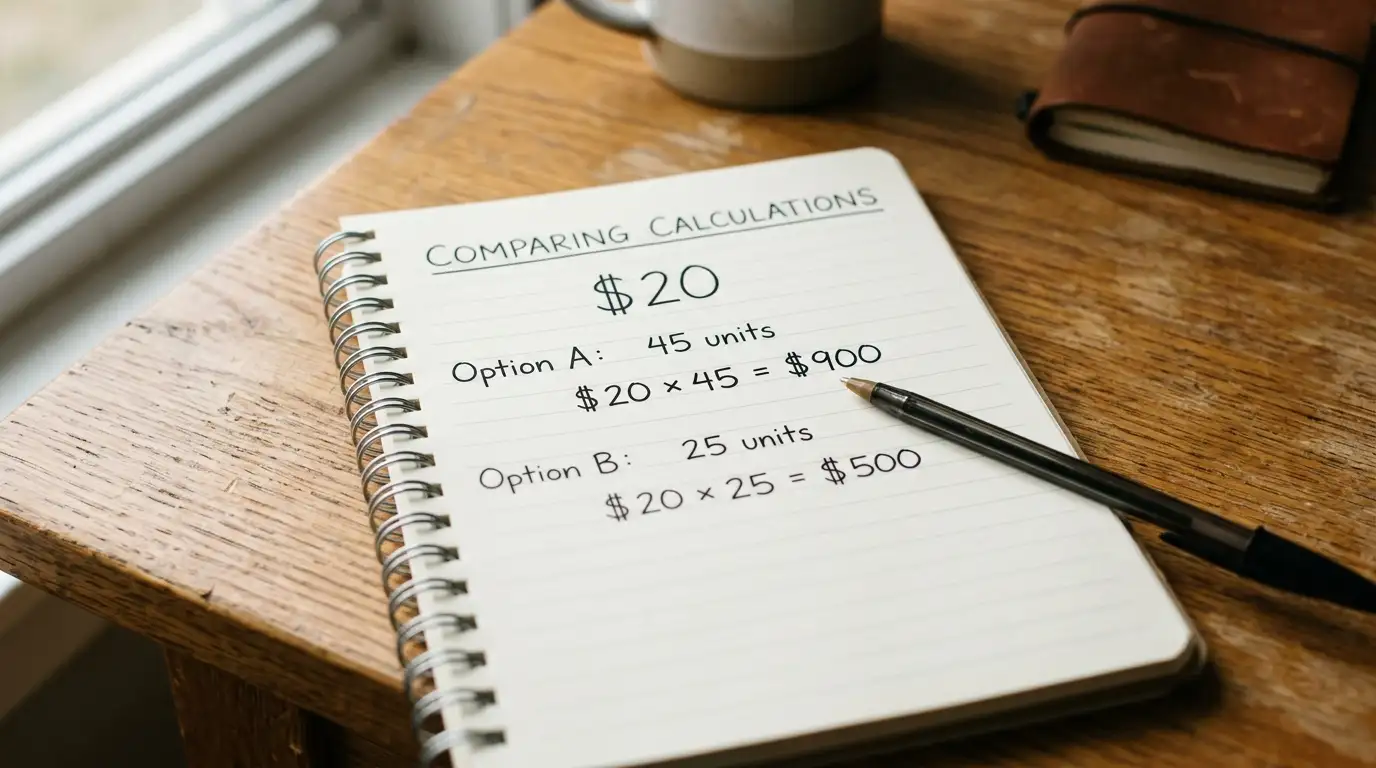
The wagering multiple is the fourth figure, and it turns the bonus from an asset into a chore. Multiples in the current Australian-facing market run from 25x at the light end to 45x calculated on deposit plus bonus at the heavy end, which is a materially different animal from 45x on the bonus alone. Twenty dollars of bonus at 25x means A$500 of qualifying turnover. The same twenty at 45x on deposit-plus-bonus means A$1,800. Same headline “welcome package”, nearly four times the work.
That is the arithmetic worth doing before you pick a site, and it is the arithmetic almost nobody does. Percentages get quoted — 300%, 450%, 750% — and the turnover behind them never appears.
Does a $20 deposit qualify for the welcome bonus?
Sometimes. At Ricky Casino, NeoSpin, Betya, Lucky Ones and Stellar Spins, A$20 is the stated trigger and the offer activates. At Joka Casino the cashier takes A$10 but the bonus needs A$20. At Wild Fortune the cashier takes A$15 and the bonus needs A$30, so twenty dollars gets you playing with nothing attached. Check the promotions page, not the cashier.
The sites that genuinely open at A$20
Ten operators below. Nine of them work at or under twenty dollars in the cashier; the tenth is here because it appears on nearly every Australian “$20 deposit casino” list in existence and its own minimum is A$30. Naming it seemed more useful than pretending it does not exist.
Every one of these holds an offshore licence. None holds an Australian one, because no Australian licence for online casino games exists — that section comes later, and it changes how you should read the licence column rather than the column being decorative.
| Operator | Licence | Cashier floor | Bonus trigger | Withdrawal floor | Wagering | Distinguishing feature |
|---|---|---|---|---|---|---|
| Ricky Casino | Curaçao | A$20 | A$20 | A$30 | 50x across ten deposits | Tightest deposit-to-cashout ratio located, 1.5× |
| NeoSpin | Tobique #0000064 per operator, Curaçao per third parties | A$20 | A$20 | Not published | Varies by tranche | Deepest pokies catalogue at this floor, 5,000–5,800+ titles |
| Betya Casino | Curaçao | A$20 | A$20 | Not published | 25x | Lightest multiple in the market: A$500 turnover on a A$20 bonus |
| King Johnnie | Curaçao | A$10 | A$10 first rung | Not published | Tiered across ten deposits | Ten-deposit ladder, so A$20 funds two rungs |
| Wolf Winner | Offshore, number not published | A$10 | A$10 | Not published | Not published | Pokies-first lobby at the lowest floor tier |
| Joka Casino | Curaçao Gaming Authority | A$10 | A$20 | Not published | 35x on bonus | Single wallet across casino and sportsbook |
| Stellar Spins | Disputed — see breakdown | A$10 | A$20 | Not published | 40x–50x depending on source | Best mobile cashier, worst-documented terms |
| Lucky Ones | Curaçao | A$20 | A$20 | Not published | 30x | Largest headline ceiling at an exact A$20 trigger |
| Wild Fortune | Curaçao OGL/2023/176/0095 and Anjouan ALSI-202509073-FI2 | A$15 | A$30 | A$30 | 45x on deposit plus bonus | A$1,000 daily and A$5,000 monthly withdrawal caps |
| SkyCrown | Curaçao | A$30 | A$30 | A$50 | 35x–40x depending on source | Does not accept A$20 despite the listings |
Where a figure is not published, it is not published. Filling those cells with “standard” would be worse than leaving them honest.
Ricky Casino
Ricky arrived in the Australian-facing market in 2021 and has run a pokies-led lobby under a Curaçao licence since. More than a dozen deposit methods sit in the cashier, PayID among them, and the AUD account is native rather than a converted balance. What earns it the top slot here has nothing to do with the game count. It is the pairing of a A$20 cashier floor with a A$30 withdrawal floor — the only combination in this group where twenty dollars needs to become just thirty before you are allowed to take it out.
The welcome package runs to a headline A$7,500 with 550 free spins, spread across ten deposits. Read that structure carefully. Ten deposits means the headline figure is the sum of ten separate matches, not something a first deposit reaches, and the play-through attached — 50x by one Australian reviewer’s reading — was described by that same reviewer as demanding more turnover than any rival on its list. For a twenty-dollar player the sensible move is the first rung and nothing else: take the initial match, clear it or don’t, and treat rungs two through ten as marketing furniture rather than a plan.
NeoSpin
NeoSpin runs a A$20 floor with the largest genuinely attested pokies catalogue among sites that open at or below that number — the operator quotes 5,000-plus titles, one Australian review puts it at 5,800-plus. Deposits and withdrawals are in Australian dollars with no conversion fee applied at account level, which sounds like a small thing until you have watched a A$20 deposit shrink to A$18.40 on the way in somewhere else.
The licensing picture deserves a flag. The operator’s own review page states it holds licence #0000064 from the Tobique Gaming Commission and operates under Metlait SRL; an independent Australian review site instead attributes a Curaçao licence. Both cannot be current, and neither is Australian. That kind of discrepancy is ordinary at this tier and it tells you something about how much weight a licence line deserves in your decision. The 24-hour payout claim is the operator’s, not a tested figure, so treat it as a target rather than a promise.
Betya Casino
Betya’s welcome offer is 100% up to A$1,400 on a A$20 minimum, and the ceiling is irrelevant to you. What matters is the 25x — the lightest wagering multiple found anywhere in this research. Run it through: a A$20 deposit produces a A$20 bonus, and 25x on that bonus is A$500 of qualifying turnover. The same twenty dollars at 45x on deposit-plus-bonus is A$1,800. If you intend to actually clear a bonus rather than admire it, that gap is the entire decision.
Public detail on Betya is thinner than on the other brands here, and it would be dishonest to pad the paragraph out. The listing site that ranks it first states it holds a Curaçao or Maltese licence without publishing a number, flags 24/7 support and notes the responsible-gambling tooling. No withdrawal floor is published anywhere I could find, which is precisely the figure you should ask live chat for before depositing. Light wagering with an unknown cashout minimum is not automatically a good deal.
King Johnnie
Serving Australian players since 2020 under a Curaçao licence, with independent RNG testing and a A$10 cashier floor. The welcome structure is a ten-deposit ladder — the first rung is 100% up to A$1,000 with 20 spins, the full sequence is quoted at 600% up to A$6,000 with 200 “Kash Spins” and a fourteen-day window on the lot. Neosurf, cards and crypto all sit in the cashier, the lobby runs to somewhere between 1,000 and 1,500 games depending on whose count you trust, and Mega Moolah is on the shelf for anyone who enjoys losing to a progressive.
This is the one site where splitting your twenty dollars is arguably the better play. A A$10 floor against a ten-rung ladder means A$20 funds two matched deposits rather than one, and two smaller bonuses with two smaller turnover requirements clear faster than one large one. The Kash Kings loyalty tiers add cashback on top. Fourteen days is not long for a ten-deposit sequence, though, so the ladder is designed for someone depositing weekly, not someone with twenty dollars and a Saturday.
Wolf Winner
A A$10 cashier floor, a A$5,500 headline package with 125 free spins tied to Wolf Saga, and a lobby that leads with pokies rather than burying them under a sportsbook. PayID and crypto both work. For a twenty-dollar deposit that means two clean sessions or one deposit with change, and the low floor genuinely functions rather than existing as a technicality.
The catalogue is the honest weakness. Counts run from 1,200 pokies by one Australian reviewer to 1,600-plus total games by another, which is a fraction of what NeoSpin or SkyCrown carry. If you want a specific Hacksaw or Nolimit City title, check the lobby before you deposit rather than after. No licence number appears in any of the Australian coverage I found, and no withdrawal floor is published — two blanks worth filling in with support before you commit.
Joka Casino
Established 2020, licensed in Curaçao, and the single cleanest illustration of the two-thresholds problem in the whole Australian market. The cashier accepts A$10. The welcome package — A$5,000 with 75 free spins across the first three deposits, at 35x on the bonus — requires A$20. Deposit ten dollars here expecting the offer that filled the landing page and you get a balance and nothing else. An Australian review site states this in exactly those terms, which is more transparency than most of the market manages.
Beyond that, Joka’s distinguishing feature is structural: one reviewer notes it was the only operator on its shortlist running a casino and a sportsbook on a single unified wallet, which means a twenty-dollar balance can move between pokies and a footy market without a transfer step. Hundreds of pokies, live dealer tables, e-wallets and cryptocurrency in the cashier. The 35x sits mid-market — better than 45x, worse than Betya’s 25x.
Stellar Spins
Stellar Spins has the best mobile cashier of this group and the worst-documented terms, and both statements belong in the same breath. The lobby is built for portrait mode rather than retrofitted from desktop, it carries 3,000-plus games, crypto is supported, and the A$20 bonus trigger sits above a A$10 cashier floor. On a phone it is the smoothest twenty dollars on this list.
Then the terms. One Australian review site records 50x wagering on the welcome bonus; another publishes 40x. That is not a rounding difference, it is A$800 versus A$1,000 of turnover on a A$20 bonus. More seriously, casinoaudit.org states the site operates unlicensed and raises safety concerns, while other Australian listings present it without qualification. I cannot resolve that disagreement from public sources and will not pretend otherwise. A site whose licence status is contested and whose wagering multiple is reported two different ways is a site to test with twenty dollars you have written off, not twenty dollars you want back.
Lucky Ones
Launched in 2024 under a Curaçao licence with a hybrid fiat-and-crypto cashier, Lucky Ones carries the largest advertised welcome ceiling attached to an exact A$20 trigger — a headline A$20,000 with 500 free spins at 30x bonus wagering. The 30x is genuinely below market. On a A$20 bonus that is A$600 of turnover, and the number is real even though the twenty-thousand ceiling has nothing to do with you.
The counterweight is age. A 2024 launch has no payout history worth the name, and at this tier payout history is the only thing that reliably separates an operator that honours a A$40 withdrawal from one that discovers a verification requirement the moment you request it. Curaçao licensing does not fix that; it establishes that somebody filed paperwork. Two years of trading is not enough to know how a site behaves when it would rather not pay.
Wild Fortune
The domain is wildfortune.io, the operator is Hollycorn N.V., the platform is SoftSwiss, and the launch was 2020. It holds two licences — Curaçao CGA OGL/2023/176/0095 and a Comoros/Anjouan AOFA licence, ALSI-202509073-FI2 — which is more paperwork than most of this list publishes. Worth knowing before you go looking: an older wildfortune.com, run by N1 Interactive Ltd on a Maltese licence, closed in June 2025. Different company, different licence, same brand name. Several comparison pages still link to the dead one.
Wild Fortune is the reverse trap. The cashier floor is A$15, which is how it lands on twenty-dollar lists. The bonus needs A$30. The withdrawal floor is A$30. So A$20 is the one amount that satisfies neither objective: too much for a bare minimum test, not enough for the offer, and short of the cashout threshold before you have even spun. The package itself is A$7,500 with 250 spins across five deposits, spins on Aztec Magic Deluxe released in batches with a 24-hour window each, at 45x on deposit plus bonus — the heaviest structure here.
Two further clauses deserve daylight. Withdrawals are capped at A$4,000 per request, A$1,000 per day and A$5,000 per month, which is workable for small stakes and immediately restrictive if you land something. And the terms permit balance voiding after account inactivity, plus winnings confiscation for detected “low-risk play” and betting techniques. Read that second one again: careful, low-variance play is described by the contract as grounds for confiscation. Ten cryptocurrencies run through CoinsPaid, Neosurf sits alongside Visa and Mastercard, there is a real mobile app, and support is 24/7. Good product, sharp paper.
SkyCrown
SkyCrown does not accept twenty dollars. Its cashier floor is A$30, attested both by pokiesaustralia.com in its own headline and by a comparison site that lists SkyCrown at A$30 inside a table on a page about A$20 casinos. The withdrawal floor is A$50. It is here because it appears on more Australian “$20 deposit casino” lists than almost any other brand, and quietly leaving it out would let the mistake keep circulating.
The product itself is substantial — Hollycorn N.V. again, Curaçao licensed, AUD native, PayID and crypto, and a library quoted between 7,000 and 10,000-plus titles of which more than 80% are pokies. One reviewer recorded a nine-minute average across its own test cashouts, which is genuinely fast. Against that, an Australian review site rates it 2.5 out of 5 and marks it High Risk, citing documented unpaid winnings, verification-loop withdrawal delays and responsible-gambling handling failures, while judging it acceptable for small recreational deposits and unsuitable for bonus play. Same corporate parent as Wild Fortune, comparable catalogue, cashier floor half again above the number you searched for. If you have A$30 the conversation changes. With A$20 it is not an option, whatever the listings say.
Where the twenty dollars comes from — rails that work at this size
The cashier floor is only half the story of a small deposit. The other half is the rail, and at twenty dollars the rail matters more than it does at two hundred, because a percentage fee on a small amount is a large fee and because a A$20 transfer is exactly the size that bank-side friction eats without explanation.
PayID: the default, and the hold nobody mentions
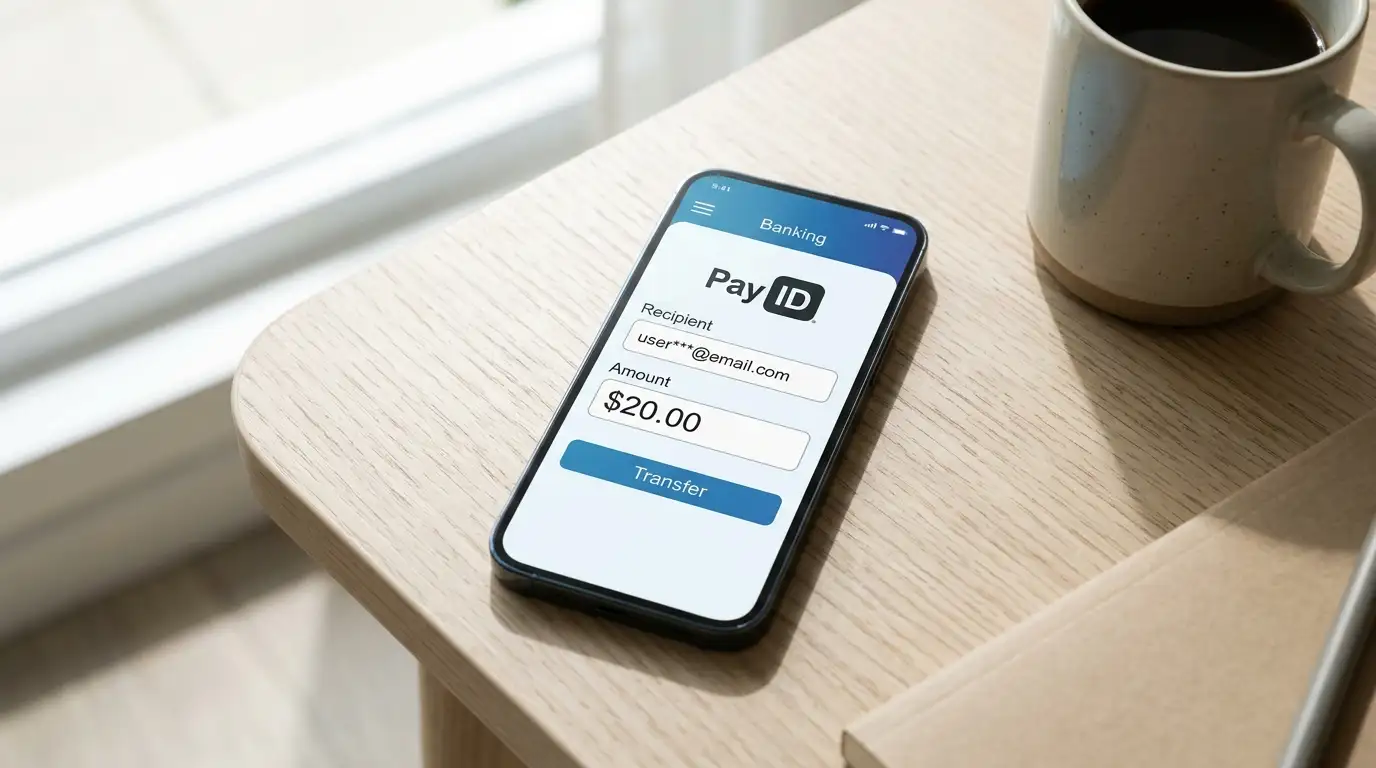
PayID is the standard Australian route and deservedly so. It moves through the New Payments Platform, funds land in seconds rather than days, and it does not expose a card number to the merchant. Deposits of A$20 clear the minimum at every site in the table above that accepts A$20 at all.
Here is what no ranking page tells you. Your first PayID payment to a new payee is frequently held, and the hold has nothing to do with the casino. Commonwealth Bank applies a default hold of up to 24 hours on Osko and PayID transfers to any new payee; once the first payment clears, subsequent transfers to that same payee go through instantly. Classic ANZ accounts hold new payees up to 24 hours as well and require Voice ID above A$1,000. ING has been reported at roughly twelve hours on a first PayID payee. So the sequence that reads like a failed deposit — money gone from the bank, balance still zero at the casino, live chat saying they cannot see it — is very often an entirely normal first-payee hold working as designed.
Daily caps are the second bank-side variable, and they matter less at twenty dollars than the coverage suggests. Defaults sit around A$1,000 at Commonwealth Bank and classic ANZ, A$1,000–3,000 at NAB depending on account type, A$2,000 at Westpac, BankSA and Bank of Melbourne, A$2,500 at Bendigo, A$3,000 at Macquarie with the Authenticator app, and A$5,000 at ANZ Plus, ING and UBank. Every one of those clears a A$20 deposit without needing to be touched. What can bite is a gambling sub-cap layered on top: Commonwealth Bank, classic ANZ and the Westpac group all operate opt-in soft caps around A$5,000 a day on gambling merchants, and NAB’s gambling block is card-based rather than PayID-based, so it does not affect a PayID transfer at all.

| Bank | Default daily PayID limit | First-payee hold | Raisable to |
|---|---|---|---|
| Commonwealth Bank | A$1,000 | Up to 24 hours | A$10,000–20,000 in NetBank |
| NAB | A$1,000–3,000 by account type | Generally instant | A$15,000–20,000 in internet banking |
| ANZ classic | A$1,000 | Up to 24 hours, Voice ID above A$1,000 | A$10,000 in the ANZ app |
| ANZ Plus | A$5,000 | None | A$30,000 |
| Westpac | A$2,000, A$1,000 on some legacy accounts | Possible on high-value new payees | A$15,000 with a security token |
| Macquarie | A$3,000 with Authenticator, A$2,000 without | Generally instant | A$10,000 per account |
| ING Orange Everyday | A$5,000 | Around 12 hours reported on a first payee | Hard-capped, not raisable |
| UBank | A$5,000 | Generally instant | A$25,000 |
| Bendigo Bank | A$2,500 nominated at registration | Variable | A$10,000 self-service, A$50,000 by phone |
| BankSA | A$2,000 | Westpac group policy | A$15,000 with a security token |
| Bank of Melbourne | A$2,000 | Westpac group policy | A$15,000 with a security token |
Neosurf: cash at the counter, at a price
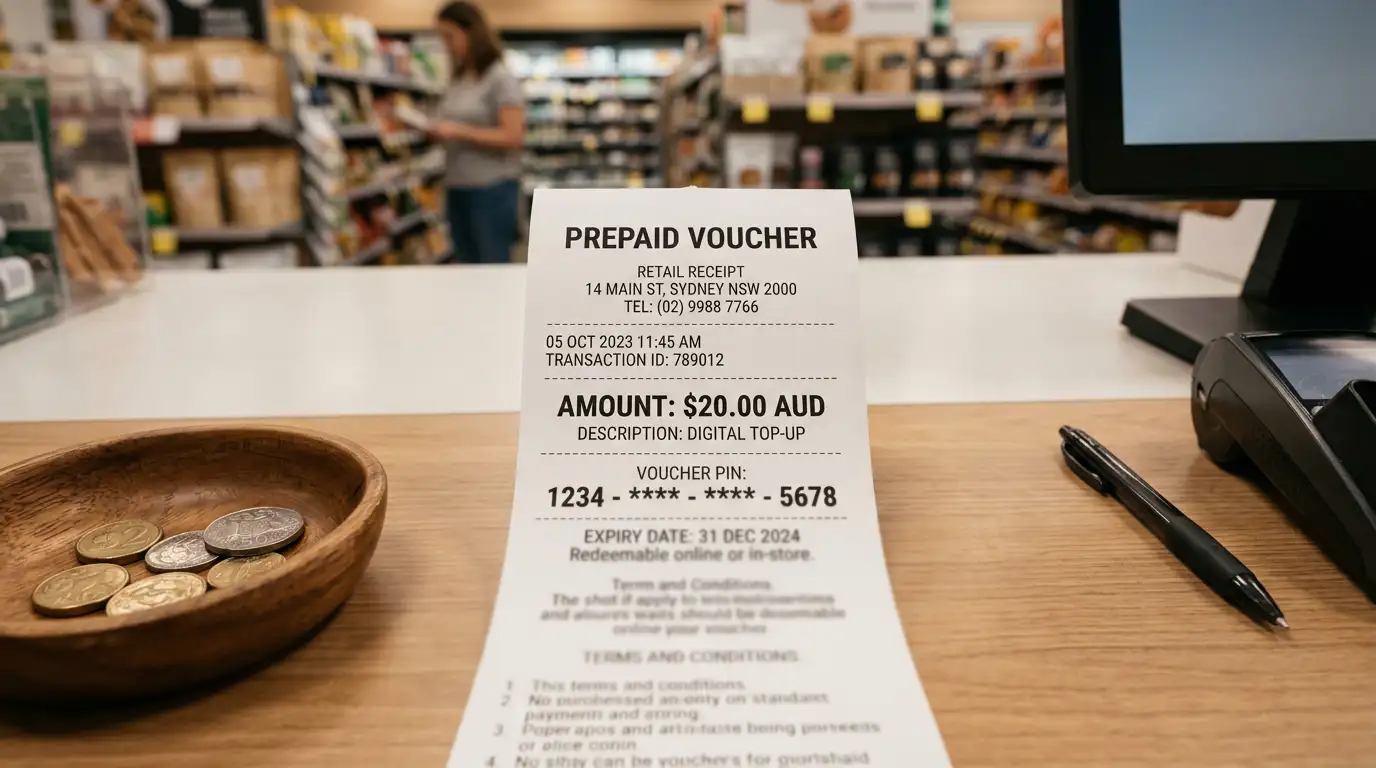
Neosurf is a prepaid voucher from Neosurf Cards SAS, a French payment institution regulated by the ACPR. You pay cash at a retailer, receive a ten-digit PIN on a receipt, and redeem the PIN at the casino cashier. No bank appears anywhere in the chain, which is the entire appeal — no gambling merchant code on a statement, and a hard ceiling on the session set by the denomination in your pocket. Distribution in Australia runs through selected Coles stores, some 7-Eleven outlets, selected Australia Post branches and independent newsagents, with common face values of A$10, A$20, A$30, A$50 and A$100.
Now the part that matters at this deposit size. The retail purchase fee is levied per voucher and falls as the denomination rises. Indicative Australian pricing puts a A$20 voucher at around A$21.50 — a real 7.5% cost — against roughly 5% on a A$30 voucher, 4% on a A$50 and 3.5% on a A$100. The A$10 voucher is worst of all at about 15%. So a A$20 Neosurf deposit costs you A$21.50 before a single spin, and the house edge has not even been introduced yet. Buying one A$100 voucher is far more efficient than five A$20s, which is sound advice for someone with A$100 and useless advice for someone with A$20.
Two more Neosurf facts worth carrying. Vouchers left unused past roughly twelve months start losing value to a dormancy fee, so buy it when you intend to spend it. And Neosurf is deposit-only, as every prepaid voucher is — winnings come back by card or crypto, which means the withdrawal rail is a separate decision you have not made yet.
Cards, crypto and what the 2024 ban removed
The rules here changed materially and recently. Since 11 June 2024, following the Interactive Gambling Amendment (Credit and Other Measures) Act, it has been illegal to fund online wagering in Australia with a credit card, with funds drawn from a credit-card-linked account or digital wallet, or with digital currency. The ban commenced after a six-month transition period from the legislation’s passage in late 2023 and brought online wagering into line with land-based venues, where credit was already prohibited. ACMA oversees compliance and ran a consumer awareness campaign from 22 May 2024 ahead of the start date. Operators are separately prohibited from extending credit to you or helping you reach third-party credit such as payday lenders.
Debit cards remain available. Visa and Mastercard debit sit in every cashier in the table above, they clear A$20 without difficulty, and card withdrawals typically take one to three business days — slower out than in, as usual. The practical wrinkle is that some banks decline gambling merchant codes on debit as a matter of policy or customer-set preference, so a declined card is not necessarily the casino’s doing.
Crypto is where the legal picture and the market picture diverge most sharply. Offshore sites accept ten or more coins — Wild Fortune runs Bitcoin, Bitcoin Cash, Litecoin, Ethereum, Ripple, Cardano, Tron, Tether, Dogecoin and Binance Coin through CoinsPaid — and crypto withdrawals typically clear in hours rather than days, making it comfortably the fastest way out. Set against that: the digital-currency deposit prohibition, the network fee on a A$20 transfer, and the fact that acquiring twenty dollars of a coin in order to gamble it is a two-step process with two sets of friction. At this deposit size crypto rarely earns its overhead.
Can I use PayID to deposit $20 at an online casino?
Yes, at every site in the comparison table with a cashier floor of A$20 or below. PayID moves through the New Payments Platform, so funds normally arrive within seconds and the transfer carries no fee from the casino side. The one thing to expect is a first-payee hold of up to 24 hours at some banks on your very first transfer to that payee.
What happens if my $20 PayID deposit doesn’t arrive?
Check your bank before you contact the casino. Commonwealth Bank and classic ANZ hold first transfers to a new payee for up to 24 hours by default, and ING has been reported near twelve hours. The funds have left your account and are sitting in the hold, not lost. Subsequent transfers to the same payee clear instantly once the first one settles.
The legal position, stated plainly
Every operator in the comparison table holds an offshore licence. None holds an Australian one, because no Australian licence for online casino games exists. That is not a loophole or an oversight — it is the law working exactly as written.
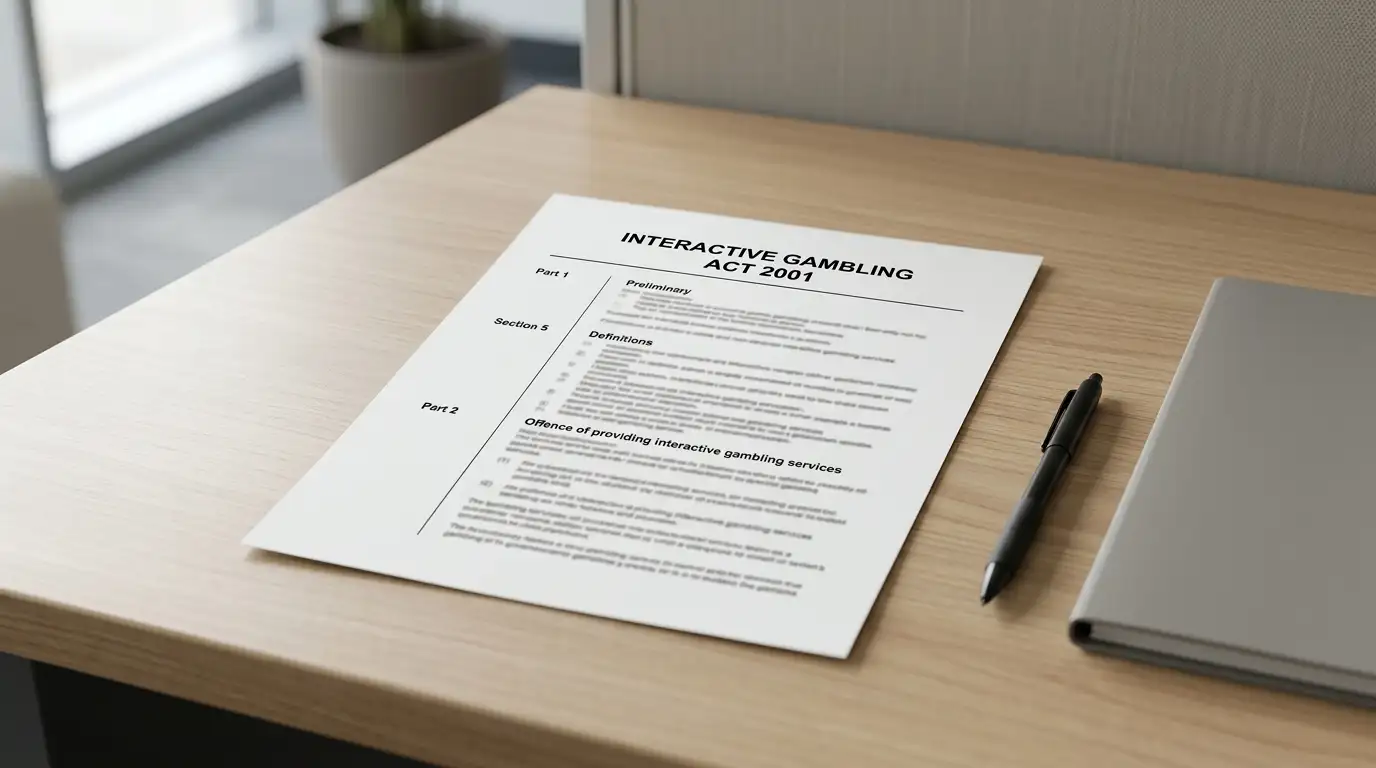
The Interactive Gambling Act 2001 prohibits providing “prohibited interactive gambling services” to people in Australia. ACMA’s own wording names “online casinos, online slot machines and services that allow in-play online sports betting.” The prohibition attaches to the provider, not the customer. Section 15 of the IGA makes it an offence for a person to provide an interactive gambling service to customers in Australia; section 61EA allows for civil penalty proceedings against the provider. There is no customer-side offence for playing at an offshore site. ACMA does not prosecute players, does not fine players, and has never fined a player.
What ACMA does instead is block. Under section 313 of the Telecommunications Act 1997 — not the IGA itself — ACMA can direct Australian ISPs and financial institutions to take reasonable steps to prevent access to illegal gambling services. Since November 2019, ACMA has blocked 1,640 sites. More than 230 services have withdrawn from the Australian market voluntarily under ACMA enforcement action. Six sites were blocked in May 2026 (Play Jonny, ACO96, TCL99, Waboom77, Wonaco, WooSpin), twelve more later in 2026, and two in August 2026. The blocking continues, it is routine, and it is aimed at the supply side.
Who commits the offence under the Interactive Gambling Act
The operator does. Not you.
Section 15 of the IGA creates the offence of providing a prohibited interactive gambling service to customers in Australia. The maximum penalty for an individual is A$220,000 per day or two years imprisonment, or both; for a body corporate it is A$1.1 million per day. The offence has been on the books since 2001 and the penalties were increased in the 2017 amendments. ACMA has never brought a customer-side prosecution, because the Act does not create one.
That is not the same thing as saying the sites are legal. They are not. The operator is breaking Australian law by offering the service, and by playing you are participating in a transaction that Australian law prohibits the other party from completing. But the legal risk sits almost entirely with the operator, and the practical risk for you is that the site disappears, your balance is frozen, or ACMA blocks it mid-session.
What a Curaçao, Anjouan or Tobique licence does and does not mean
Curaçao, Anjouan and Tobique are the three offshore licensing regimes that actually appear on AU-facing casino sites. Wild Fortune holds Curaçao CGA licence OGL/2023/176/0095 and Comoros/Anjouan AOFA licence ALSI-202509073-FI2. NeoSpin states it operates under Metlait SRL with Tobique Gaming Commission licence #0000064, though an independent Australian source instead attributes a Curaçao licence. That kind of discrepancy is ordinary at this tier.
What these licences establish is that somebody filed paperwork with a regulator outside Australia. They do not establish permission to offer gambling services in Australia — the IGA does not recognise them, and ACMA does not defer to them. A Curaçao licence means the operator met Curaçao’s requirements and paid Curaçao’s fees. It does not mean the operator is allowed to take Australian customers under Australian law.
The practical value of an offshore licence is narrow. It tells you the operator has submitted to some external oversight, that there is a dispute-resolution process of some kind, and that the operator intends to stay visible enough to maintain the licence rather than vanish overnight. It does not protect you from an ACMA block, it does not give you standing in an Australian court, and it does not make the site “legal in Australia” no matter how the promotional copy reads.
Licensed Australian operators, and why they cannot offer pokies
Sportsbet, Ladbrokes, TAB, PointsBet and the other large Australian wagering operators hold genuine Australian licences — typically Northern Territory racing and sports betting licences under the Racing and Betting Act 1983 (NT), recognised nationally under the IGA’s carve-out for telephone and internet betting on racing and sports. Those licences permit sports and race wagering. They do not permit pokies, roulette, blackjack, baccarat or any other casino game.
That restriction is not an accident of drafting. The IGA was written to quarantine online casino games while allowing online wagering on sport and racing to continue under state and territory oversight. Licensed Australian operators are allowed to take a A$20 deposit, and many of them do. They are not allowed to let you spend it on a pokie. So when the pool asks for “licensed $20 deposit casino australia,” the honest answer is that no such thing exists — Australian-licensed operators cannot offer casino games, and the offshore operators offering casino games do not hold Australian licences.
The same split explains why BetStop — the National Self-Exclusion Register, launched 21 August 2023 — does not reach the offshore casinos in this article. BetStop covers Australian-licensed interactive wagering services, which is exactly the category that cannot offer pokies. If you exclude yourself via BetStop, Sportsbet will block you. Ricky Casino has never heard of you.
Is a $20 minimum deposit casino legal in Australia?
No operator offering online pokies or table games to Australian players holds an Australian licence, because the Interactive Gambling Act 2001 prohibits providing those services. The offshore sites in this article operate under Curaçao, Anjouan or Tobique licences, none of which gives them permission under Australian law. The offence attaches to the provider, not the player — ACMA does not prosecute customers — but the transaction itself is prohibited.
Is a $20 minimum deposit casino different in NSW?
No. The Interactive Gambling Act 2001 is federal, and it applies uniformly across all states and territories. NSW law regulates land-based venues and certain forms of wagering, but it does not create a carve-out for online casino games. The position in NSW is the same as the position in Victoria, Queensland, or any other state: no Australian-licensed operator may offer pokies or table games online.
Twenty dollars on the pokies — the arithmetic
A twenty-dollar deposit buys somewhere between ten minutes and two hours of play, depending on the stake you pick, how tightly you chase the bonus, and whether variance goes your way or against you. The marketing headlines quote percentages — 100%, 300%, 750% — and the percentages sound large. The turnover behind them is what decides whether the bonus is an asset or a chore.

Spin size against balance
At A$0.10 per spin, a A$20 balance funds 200 spins before it hits zero if every spin loses. At A$0.20 it funds 100 spins. At A$0.50 it funds 40. Nobody plays through a balance in a straight line — wins recycle the money, dead spins eat it faster, and variance dominates the short term — but the denominator sets the pace.
Most Australian-facing pokies let you stake between A$0.10 and A$5.00 per spin, with the bulk of the lobby designed around A$0.20–0.50 as the comfortable middle. Ricky Casino, NeoSpin and SkyCrown all carry pokies down to A$0.10; King Johnnie and Wolf Winner do the same. At A$0.10 the pace is slow enough that a A$20 balance has time to move, and lucky runs at that stake can realistically double or triple the balance before it drains. At A$1.00 per spin you are through the deposit in twelve to fifteen minutes unless something hits, and what hits at A$1.00 on a A$20 bankroll needs to be large.
The RTP spread across the lobby typically runs 94%–97%, with the promotional figure — “up to 97% RTP” — quoting the top end rather than the median. A 96% RTP means the house edge is 4%, and on A$20 of turnover the expected theoretical loss is A$0.80. But that is per unit of turnover, and a A$20 deposit recycles. Deposit A$20, bet it once at A$0.10 per spin across 200 spins, and your turnover is A$20. Win some of it back, and the turnover rises. The balance does not drain in one pass.
The honest model is time to ruin under repeated play, and time to ruin depends on stake relative to balance and on variance. At A$0.10 per spin on a A$20 balance, twenty to forty minutes is realistic before you either double up or drain. At A$0.50, five to ten. The stake picks the speed.
What a 40x bonus really asks of A$20
A A$20 deposit at a site offering 100% up to some ceiling gives you a A$20 bonus. Wagering multiples in this group run from 25x (Betya) to 50x (Ricky, across ten deposits). Take 40x as the middle case.
Forty times a A$20 bonus is A$800 of qualifying turnover. Not A$800 wagered and lost — A$800 passing through the reels, wins and losses together, before the bonus converts to withdrawable cash. At A$0.10 per spin, A$800 of turnover is 8,000 spins. At a pace of 400 spins per hour — which is brisk but achievable on autospin — that is twenty hours of play.
Set against that twenty hours is the house edge. At 4% on A$800 of turnover, the expected cost of clearing the bonus is A$32. The bonus is worth A$20. You are underwater before variance even enters.
The same A$20 bonus at 25x (Betya) requires A$500 of turnover, 5,000 spins at A$0.10, twelve and a half hours at 400/hour, expected cost A$20 against a 4% edge. You break even in expectation and rely on variance to finish ahead. At 50x (Ricky, if the reviewer’s reading is right) the turnover is A$1,000, 10,000 spins, 25 hours, expected cost A$40 against the A$20 bonus. You are paying double to clear it.
This is why Betya’s 25x is the standout and Wild Fortune’s 45x on deposit plus bonus is the warning. Wild Fortune’s structure applies the multiple to the sum: deposit A$20, receive a A$20 bonus, and 45x is levied on A$40, giving A$1,800 of required turnover. At A$0.10 that is 18,000 spins. At 4% edge the expected cost is A$72, nearly four times the bonus, and nobody clears that in expectation.
The percentage is the advertisement. The turnover is the bill.
How many pokie spins does $20 actually buy?
At A$0.10 per spin, 200 spins if you play straight through without a win. At A$0.20, 100 spins. In practice the balance recycles — small wins fund further spins — so the real session length depends on variance and RTP. Twenty to forty minutes at A$0.10 per spin is a realistic middle case before you either double the balance or drain it.
Getting the money back out
The withdrawal floor is the number every ranking page omits and the number that decides whether a A$20 deposit can ever produce a payout. Deposit twenty dollars somewhere with a A$50 cashout minimum and you need to more than double the balance before withdrawal is mechanically possible. Deposit twenty at Ricky Casino, where the floor is A$30, and you need a 1.5× run. Deposit twenty at SkyCrown, where the floor is A$50, and you need 2.5×.
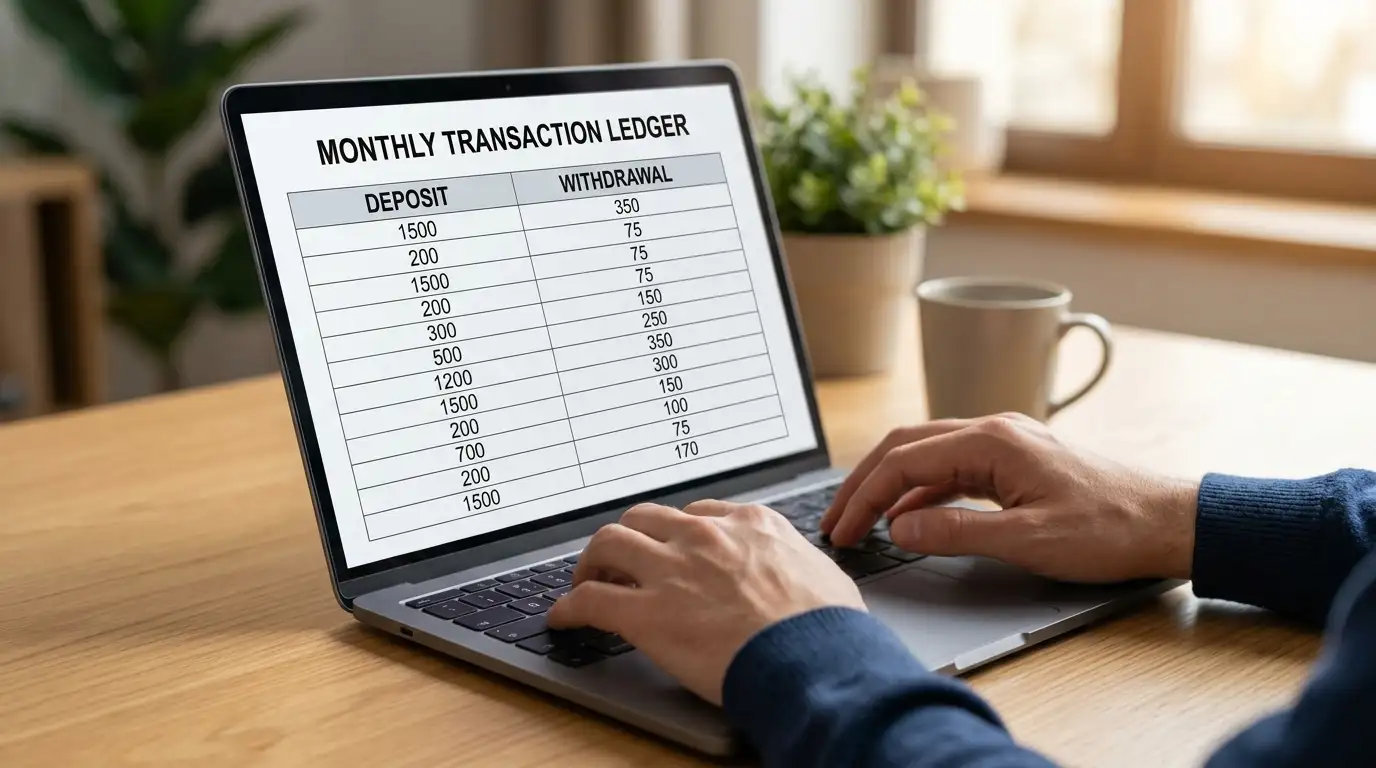
The withdrawal floor as a multiple of your deposit
Express the cashout threshold as a multiple of the deposit and the ranking reorders itself. Ricky’s A$20 deposit against a A$30 withdrawal floor is 1.5×. Wild Fortune’s A$15 deposit against a A$30 floor is 2.0×. A hypothetical A$20 deposit against a A$50 floor is 2.5×. The operator with the lowest cashout floor relative to its deposit floor wins, because it gives the player the shortest distance to travel before a payout is possible.
That multiple interacts with volatility. Low-volatility pokies pay frequent small wins and produce slow, steady drain. High-volatility pokies pay rarely but larger, which means long losing runs and occasional large corrections. On a A$20 balance chasing a 1.5× target, low volatility gives you more attempts before you run dry. Chasing 2.5×, you need high volatility because the steady grind will not get you there — you need a feature trigger or a line hit worth ten or twenty times stake, and those come from variance, not RTP.
None of the operators publish an expected time to 1.5× or an expected time to 2.5×, because both depend on game choice, stake and session variance. But the direction is clear: the lower the multiple, the more often you will reach it, and reaching it is the precondition for cashing out at all.
Caps, KYC and the inactivity clauses
Withdrawal caps sit on top of the floor. Wild Fortune publishes A$4,000 per request, A$1,000 per day, A$5,000 per month. At a A$20 deposit size those caps are invisible — you will never hit them — but they tell you something about how the site will behave if you do hit a multiplier worth A$800. The A$1,000 daily cap means an A$800 win comes out in one payment. A larger win gets sliced, and slicing creates verification windows.
KYC — know your customer, the identity-verification process — typically triggers on a first withdrawal or on a withdrawal above a threshold the operator does not publish in advance. Passport, proof of address, sometimes a selfie holding the document. Turnaround ranges from instant to five business days depending on the operator’s backlog, and it is the point where a withdrawal request stalls. Every offshore operator in this comparison requires it eventually. Some require it immediately.
Then the inactivity clauses. Wild Fortune’s terms permit balance voiding after account inactivity, which is standard, and they also permit winnings confiscation for detected “low-risk play” and betting techniques. That second clause is not standard, and it is worth reading twice: careful, low-variance play is described by the contract as grounds for confiscation. Other operators flag “bonus abuse” or “irregular play patterns” with similar vagueness. At a A$20 deposit the exposure is limited, but the principle is not.
Can I withdraw winnings from a $20 deposit?
Yes, if your balance reaches the site’s withdrawal minimum. At Ricky Casino that minimum is A$30, so you need to turn A$20 into A$30 — a 1.5× run. Sites with higher cashout floors demand a larger multiple. Once you reach the threshold, withdrawal is permitted, subject to KYC verification and the site’s processing time.
Playing at A$20 from a phone
Every site in the comparison table runs in a mobile browser, and the better ones — Stellar Spins, NeoSpin, Ricky — have cashiers that work in portrait mode without zooming or horizontal scrolling. Wild Fortune offers a dedicated app. The rest are mobile-web only, which is the norm at this tier rather than a limitation.
PayID works identically on a phone and on desktop — you authenticate through your banking app, approve the transfer, and the payment clears in seconds or sits in a first-payee hold exactly as it would from a laptop. Neosurf requires you to carry the voucher receipt with the PIN, which is no harder on a phone than on anything else. Cards work as they do everywhere.
The catalogue difference is minor. Lobby sizes are the same mobile and desktop; what changes is how much of the lobby you can see at once, and whether the filters are where you expect them. Stellar Spins is noted as having the best mobile cashier of this group because it was built for portrait rather than adapted from desktop. The rest work but feel retrofitted.
The bankroll considerations do not change. A A$20 balance lasts the same number of spins on a phone as on a desktop, the bonus turnover requirements are identical, and the withdrawal floor is the same. What does change is session context. A phone session is more likely to be interrupted, more likely to be squeezed into ten-minute gaps, and less likely to run for the two or three hours that clearing a 40x bonus actually demands. If you deposit A$20 on a phone expecting to clear a welcome offer, the device is not the obstacle — the available time is.
New sites at the A$20 tier
Lucky Ones launched in 2024 under a Curaçao licence with a hybrid fiat-and-crypto cashier, a A$20 floor, and a headline A$20,000 + 500 spins package at 30x. The 30x is genuinely below market, and the A$20 floor is genuine. The counterweight is age. A 2024 launch has no payout history worth the name.
At the low-deposit tier, payout history is the only thing that reliably separates an operator that honours a A$40 withdrawal from one that discovers a verification requirement the moment you request it. Curaçao licensing does not fix that — it establishes that somebody filed paperwork, not that the operator pays quickly or at all. Two years of trading is not enough to know how a site behaves when it would rather not pay, and 2026 is Lucky Ones’ second year.
The structural risk is brand-name discontinuity. Wild Fortune is a worked example: wildfortune.io under Hollycorn N.V. launched in 2020 and holds two licences. Wildfortune.com under N1 Interactive Ltd on an MGA licence closed in June 2025. Same brand name, different operator, different licence, different platform. Several Australian comparison pages still link the dead one. A two-year-old brand at this tier has not yet faced a regulatory shift, a payment-processor withdrawal, or a parent company restructure, and any of those can turn a working cashier into a closed site in a single announcement.
The flip side is that new sites often offer lighter terms to build a player base. Lucky Ones’ 30x is better than the market midpoint, and the A$20 trigger is clean. If you are testing with twenty dollars you have written off, a new site is a reasonable place to test. If you are depositing twenty dollars you want back, a site with two or more years of documented payouts is the safer choice.
Why can’t I use my credit card for a $20 casino deposit?
Since 11 June 2024, under the Interactive Gambling Amendment (Credit and Other Measures) Act, it has been illegal to fund online wagering in Australia with a credit card, with funds drawn from a credit-card-linked account or digital wallet, or with digital currency. The ban applies to credit cards, not debit cards. Visa and Mastercard debit remain available at every site in the comparison table.
Why A$20 rather than A$5, A$10 or A$50
Twenty dollars is the amount that clears most bonus triggers without requiring a balance large enough that the withdrawal floor becomes unreachable. It is a threshold chosen by friction, not by preference.
A A$5 deposit clears very few welcome offers. King Johnnie and Wolf Winner will take A$10 and trigger their first-rung bonuses at that level, but Ricky, NeoSpin, Betya, Lucky Ones and Stellar Spins all require A$20 before the advertised package activates. Joka takes A$10 in the cashier but wants A$20 for the bonus. Wild Fortune wants A$30. A A$5 deposit gets you a balance and nothing attached, which is fine if you want a clean test, and prohibitively expensive if you wanted the match.
A A$50 deposit clears every bonus floor in this comparison and gives you a starting balance large enough that the withdrawal minimum is comfortably within reach. The problem is not the entry — it is the exit. If you deposit A$50 somewhere with a A$50 cashout minimum, you need to finish at 1.0× to withdraw, which is a break-even rather than a win. If the floor is A$30, you can lose nearly half the deposit and still cash out. A$50 gives you more room to move, but it also raises the stakes on a session that might end in fifteen minutes.
A$20 sits at the point where the bonus activates, the withdrawal floor is a realistic target, and the loss if the session goes badly is contained. That is not a recommendation — it is an observation about why the market clusters there. Go lower and you lose the bonus. Go higher and you gain headroom but raise the entry cost. A$20 is the floor that clears friction without creating new exposure.
Keeping a small deposit small
If you deposit A$20 intending to keep it at A$20, set the deposit limit in your bank rather than relying on the casino to enforce it. NAB, Commonwealth Bank, ANZ and Westpac all offer per-merchant or category-level spending caps, some of them labelled explicitly as gambling controls. They work, they are free, and they sit outside the casino’s control.
BetStop — the National Self-Exclusion Register, launched 21 August 2023 — covers Australian-licensed interactive wagering services. It does not cover the offshore casinos in this article, because they do not hold Australian licences and are not part of the BetStop framework. If you exclude yourself via BetStop, Sportsbet will block you. Ricky Casino has never heard of you. That is a structural limitation, not an implementation gap, and it is worth knowing before you rely on it.
The reforms that passed Parliament on 19 August 2026 — the Interactive Gambling Amendment (Gambling Reform) Bill 2026 and two accompanying cost-recovery levy bills — commence 1 January 2027. They restrict wagering advertising, ban direct marketing of inducements to at-risk customers, and strengthen BetStop. They do not create a deposit cap, and they do not extend Australian licensing to offshore casino operators. A A$20 deposit will still be possible in 2027 at exactly the same sites, under exactly the same legal position, with exactly the same gap in BetStop coverage.
If you want a hard cap on a session, the bank is the place to set it. If you want self-exclusion that reaches offshore sites, the only mechanism that works is closing your payment rail to them — blocking the PayID payee, blocking the card, removing Neosurf as an option. The casino will not do it for you.
Min. Deposit Casinos Australia 2026 — $1, $5, $10 & No Deposit
Content created by the «CasinoPay» team